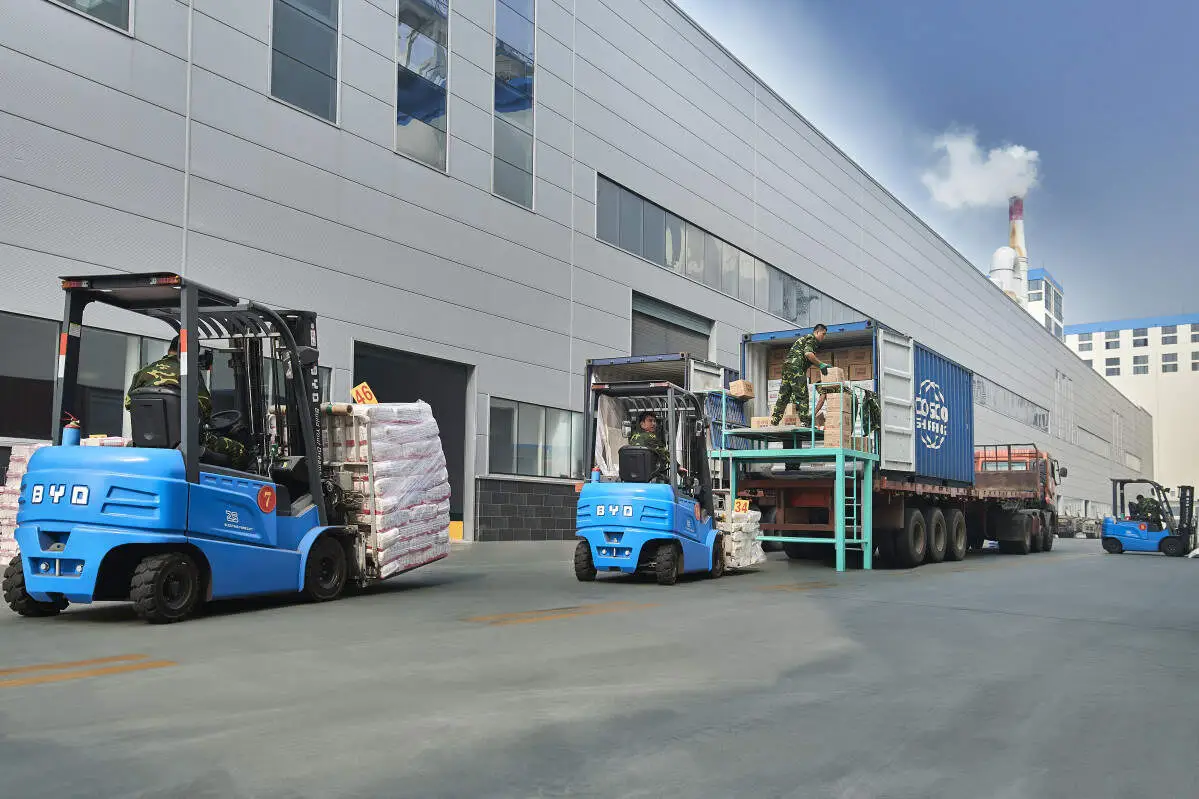
When it comes to heavy-duty material handling in warehouses, construction sites, and manufacturing facilities, 7-ton industrial forklifts are workhorses that balance power, capacity, and versatility. However, not all units are created equal, and evaluating the right core specifications is key to selecting a forklift that aligns with your operational needs while ensuring safety and efficiency.
Load capacity and stability ratings are foundational considerations. While a 7-ton forklift is labeled for a maximum 7-ton load at a standard load center, real-world capacity adjustments matter. Load capacity often decreases as lifting height increases, so verify the forklift’s capacity at the maximum lifting height your operations require. Additionally, check the stability rating, which accounts for factors like uneven terrain, ramps, and lateral loads. A robust stability rating ensures the forklift can safely handle loads in less-than-ideal conditions, reducing tip-over risks.
The power source directly impacts performance, operating costs, and workspace suitability. Electric models are ideal for indoor environments, offering zero emissions, low noise levels, and lower routine maintenance needs compared to internal combustion (IC) variants. IC forklifts, powered by diesel or gasoline, are better suited for outdoor use where extended run times and heavy-duty cycles are required. Evaluate fuel efficiency, refueling or recharging times, and local emissions regulations when choosing between power sources.
Lifting height and mast design are non-negotiable for operations involving storage racks. Measure the maximum height you need to reach, then review the forklift’s mast configuration—two-stage masts work well for moderate heights, while three-stage masts offer greater vertical reach. Also, prioritize mast visibility: some designs balance reach with unobstructed operator views, which is critical for precise load placement and safety in crowded spaces.
Maneuverability and physical dimensions determine how well the forklift fits your workspace. In tight warehouse aisles or congested job sites, review the turning radius, overall length, and width to ensure seamless navigation. Narrow-aisle operations may require a smaller turning radius, while outdoor sites might benefit from a longer wheelbase for enhanced stability. Don’t overlook ground clearance, especially if your workspace has uneven surfaces or varying dock heights.
Safety and operational features should be a top priority. Look for essential elements like operator seat belts, overhead guard protection, rearview mirrors, and audible reverse alarms. Advanced features such as load weight indicators, automatic speed reduction during turns, and emergency stop buttons add extra protection layers. Additionally, consider maintenance accessibility—features like easy-to-reach service points and built-in diagnostic tools can reduce downtime and long-term operational costs.
By thoroughly reviewing these core specifications, you can select a 7-ton industrial forklift that not only meets immediate material handling needs but also supports long-term efficiency and safety. Taking the time to assess each specification ensures an informed investment aligned with your workspace, load requirements, and compliance standards.