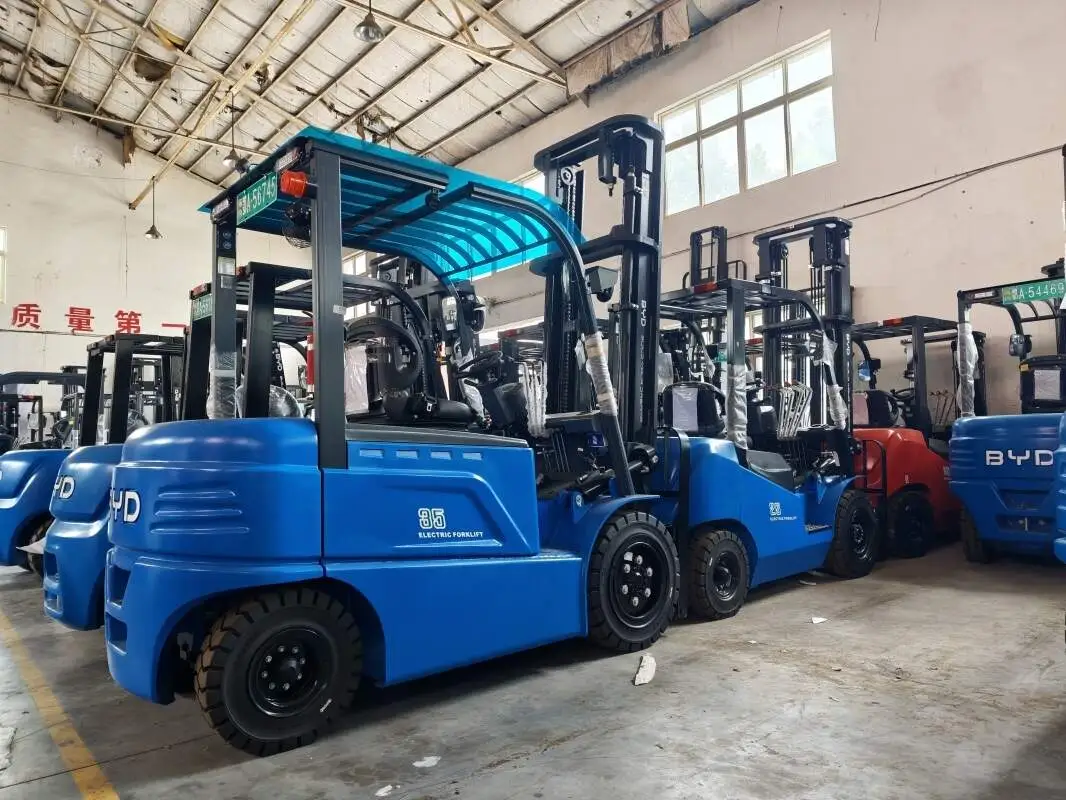
In today’s busy warehouses, distribution centers, and urban logistics hubs, navigating tight spaces efficiently is a top priority for material handling operations. Compact electric forklifts have emerged as a practical solution for these environments, thanks to specific design features that enhance their maneuverability without compromising core performance. Let’s delve into the key design elements that make these forklifts stand out in confined areas.
Optimized Steering Systems. One of the most critical design features for maneuverability is a precision-engineered steering system. Many compact electric forklifts incorporate articulated steering, which allows the front section of the forklift to pivot independently from the rear. This design drastically reduces the turning radius, enabling the forklift to make sharp turns and navigate narrow aisles that would be inaccessible to larger, rigid-frame models. Additionally, variable-ratio steering systems adjust the steering response based on the forklift’s speed, providing greater control at low speeds when maneuvering in tight quarters and stable handling during longer travels.
Compact Body Dimensions. Tailoring the forklift’s physical size to fit constrained spaces is another core design focus. Manufacturers reduce the overall length by shortening the wheelbase while maintaining a stable platform for lifting loads. Narrower body widths ensure the forklift can pass through tight doorways and between closely spaced storage racks without scraping or causing damage. Even the mast design is optimized—slimmer mast profiles reduce side-to-side width, allowing operators to position the forklift more precisely when accessing racked goods, especially in high-density storage setups.
Balanced Weight Distribution. Proper weight distribution is essential for both maneuverability and safety. Compact electric forklifts are designed with their battery packs placed low and centered within the frame. This lowers the vehicle’s center of gravity, making it more stable during sharp turns and when operating on uneven surfaces. A lower center of gravity also allows the forklift to maintain control while lifting loads, reducing the risk of tipping and enabling smoother, more confident maneuvering in tight spaces. Additionally, lightweight materials are used in non-structural components to keep the overall weight manageable, further enhancing agility.
Ergonomic Operator Controls. The operator’s ability to control the forklift directly impacts maneuverability. Compact electric forklifts feature intuitive, ergonomically placed controls that reduce operator fatigue and allow for precise movements. Responsive joysticks and adjustable steering wheels enable operators to make small, accurate adjustments when navigating narrow aisles or positioning the forks for loading and unloading. Some models also include visual aids, such as rearview cameras or proximity sensors, to help operators navigate tight spaces with greater awareness, minimizing the risk of collisions.
These design features work together to make compact electric forklifts highly maneuverable, ideal for operations where space is at a premium. If you’re looking for reliable compact electric forklifts tailored to your material handling needs, Jianshu New Energy specializes in BYD electric forklifts. For more information, reach out to us at 17399989919@163.com.