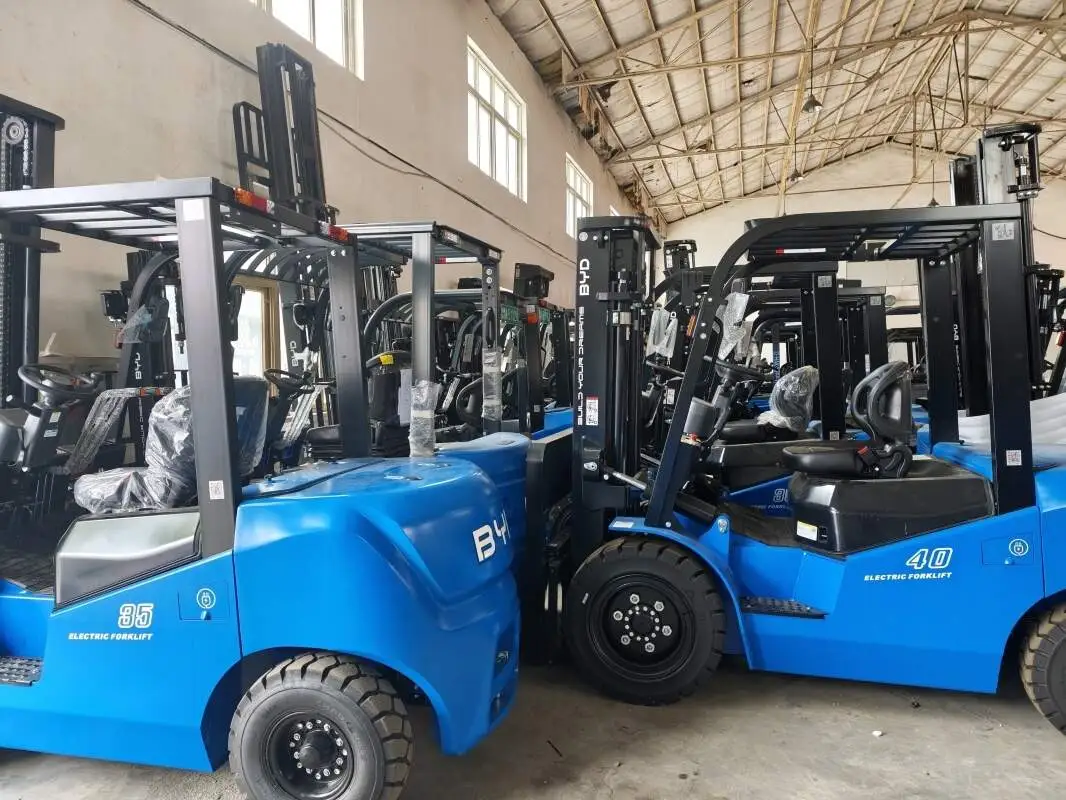
Standard forklifts are essential equipment in warehouses, distribution centers, and manufacturing facilities, designed to lift, move, and stack heavy loads efficiently. To understand how these machines operate seamlessly, it’s critical to familiarize yourself with their core components, each playing a unique role in ensuring safety, performance, and reliability.
The mast assembly is the vertical backbone of a standard forklift, responsible for lifting and lowering loads to varying heights. Composed of inner and outer steel rails, heavy-duty chains, and hydraulic cylinders, it enables smooth vertical movement of the load-bearing carriage. When the hydraulic system activates, the cylinders extend, pushing the inner rails upward to elevate the carriage and attached forks. The mast’s robust design ensures stable load handling even at maximum lift heights, minimizing the risk of tipping during operations.
Mounted directly to the mast, the carriage and forks form the primary load-handling components. The carriage is a sturdy frame that moves along the mast’s rails via precision rollers, ensuring consistent vertical travel. Forks, crafted from high-strength steel, are inserted under pallets or loads to lift and transport materials. Operators can adjust the distance between forks to accommodate different load sizes, enhancing the forklift’s versatility for various tasks.
For electric standard forklifts, the powertrain consists of a rechargeable battery, electric motor, and transmission system. The battery supplies clean, emission-free energy to the motor, which drives the wheels and powers hydraulic functions. The transmission transfers power from the motor to the wheels, allowing the forklift to move forward, backward, and maneuver in tight spaces with ease. This electric setup makes the forklift ideal for indoor use, where air quality is a priority.
The steering and braking systems are critical for safe and precise operation. Most modern standard forklifts feature power steering, which reduces operator effort and improves control, especially when navigating narrow aisles. The braking system, typically equipped with disc or drum brakes, ensures reliable stopping even when carrying heavy loads. Many models also include anti-lock braking systems (ABS) to prevent wheel lock-up during sudden stops, further enhancing workplace safety.
The hydraulic system powers key functions like lifting, lowering, and tilting the carriage. It includes a hydraulic pump, fluid reservoir, reinforced hoses, and cylinders. When the operator engages the lift or tilt controls, the pump pushes hydraulic fluid through the hoses to the cylinders, creating pressure that moves the components. Regular maintenance, such as checking fluid levels and inspecting hoses for leaks, is essential to keep the hydraulic system operating smoothly and prevent costly downtime.
The operator cabin provides an ergonomic and safe workspace, with controls for all forklift functions positioned within easy reach. Comfort features like adjustable seats and padded handles reduce operator fatigue during long shifts. Safety elements, including seat belts, overhead guards, and rearview mirrors, protect the operator from potential hazards like falling loads or collisions with other equipment.
Each component of a standard forklift works in tandem to deliver efficient, safe, and reliable performance. Understanding these parts not only helps operators use the equipment correctly but also aids in routine maintenance and troubleshooting, extending the forklift’s lifespan and optimizing operational efficiency.