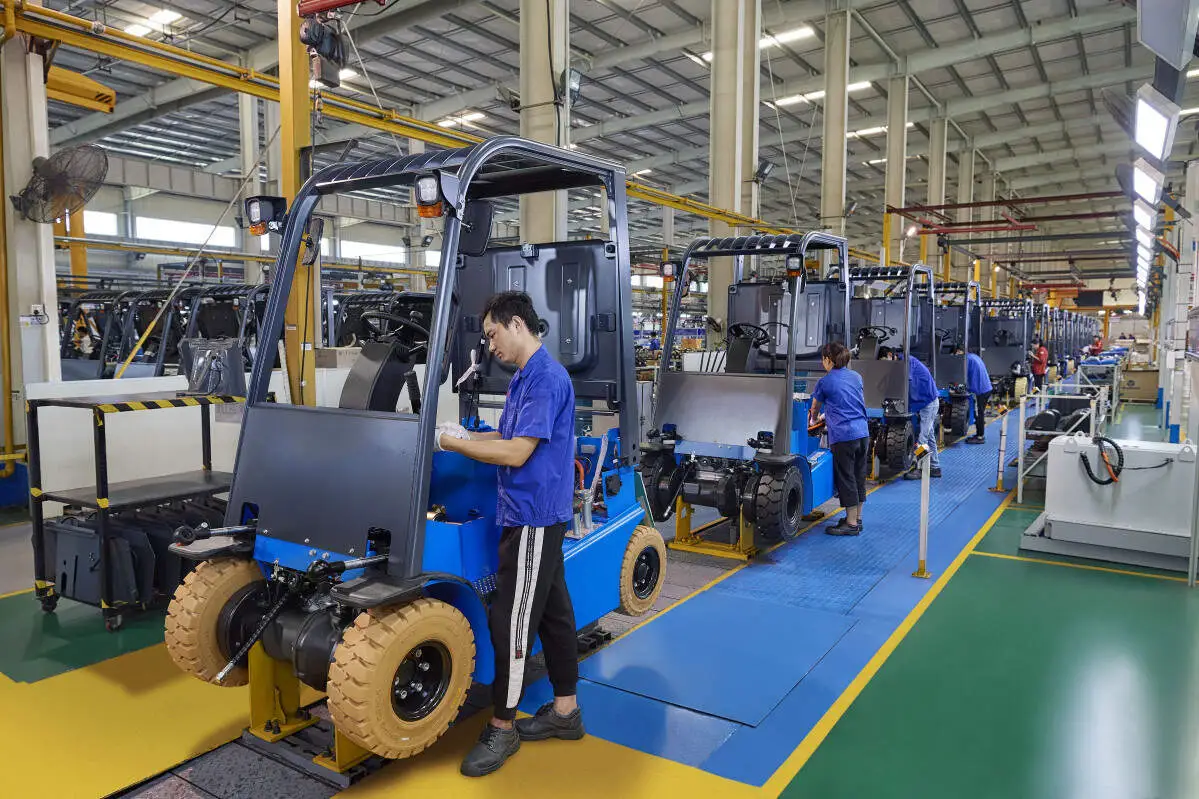
Regular electric forklifts are indispensable workhorses in warehouses, distribution centers, and manufacturing facilities, streamlining material handling tasks with efficiency and precision. To fully understand their operation, maintenance, and performance, it’s critical to explore each of their core components, as every part plays a vital role in ensuring safe and reliable functionality.
The power system serves as the heart of a regular electric forklift, consisting of a rechargeable battery and an electric motor. The battery stores electrical energy, providing consistent power for all forklift operations—from lifting heavy loads to maneuvering across various surfaces. Designed to deliver long operational hours between charges, it requires regular charge level monitoring and proper ventilation to extend its lifespan. The electric motor converts stored electrical energy into mechanical power, driving both the forklift’s movement and lifting mechanisms. Operating quietly and producing zero emissions, it’s ideal for indoor use.
The lifting mechanism is responsible for raising and lowering cargo, comprising three key sub-components: the mast, carriage, and forks. The mast is a vertical steel beam assembly, using hydraulic cylinders to lift the carriage and forks to varying heights. Its interlocking rails ensure stable movement even under heavy loads, preventing sway or instability. The carriage, mounted on the mast’s rails, holds the forks and connects to the hydraulic system, allowing side-shifting adjustments to align forks precisely with pallets for efficient loading and unloading. Made of high-strength steel, the forks are the primary contact point with cargo, designed to bear heavy weights without bending or breaking, with length and capacity matched to the forklift’s overall load rating.
The steering system enables agile maneuverability, essential for navigating tight warehouse spaces. It includes a steering column, hydraulic steering pump, and steering linkage. The steering column connects the operator’s wheel to the hydraulic pump, which generates pressure to move the linkage. This hydraulic system allows smooth, low-effort steering even when carrying full loads, with some modern models featuring power steering to reduce operator fatigue during long shifts. The linkage translates hydraulic pressure into front wheel movement, letting the forklift turn sharply and navigate narrow aisles with ease.
Safety is paramount, and the brake system plays a critical role in accident prevention. Regular electric forklifts typically use hydraulic brakes, consisting of brake pads, hydraulic lines, and a brake pedal. When the operator presses the pedal, hydraulic fluid flows through lines to activate brake pads that clamp onto wheel discs to slow or stop the forklift. Most models also have parking brakes that engage automatically when turned off, preventing unintended movement. Regular inspection of brake pads and hydraulic lines ensures responsive braking, especially when handling heavy loads on inclined surfaces.
The control system acts as the operator-forklift interface, including a control panel, joystick, and indicator lights. The control panel displays critical information like battery charge level, operational warnings, and load capacity indicators, keeping operators informed of the forklift’s status. The joystick enables precise control of the lifting mechanism, allowing operators to adjust fork height, tilt the carriage, and side-shift with accuracy. Indicator lights alert to potential issues such as low battery or hydraulic pressure, ensuring timely maintenance and preventing equipment failure.
Understanding each core part not only helps operators use the equipment more effectively but also aids in proactive maintenance, extending the forklift’s lifespan and reducing downtime. By familiarizing themselves with these components, businesses can ensure safe, efficient material handling operations that support overall productivity.