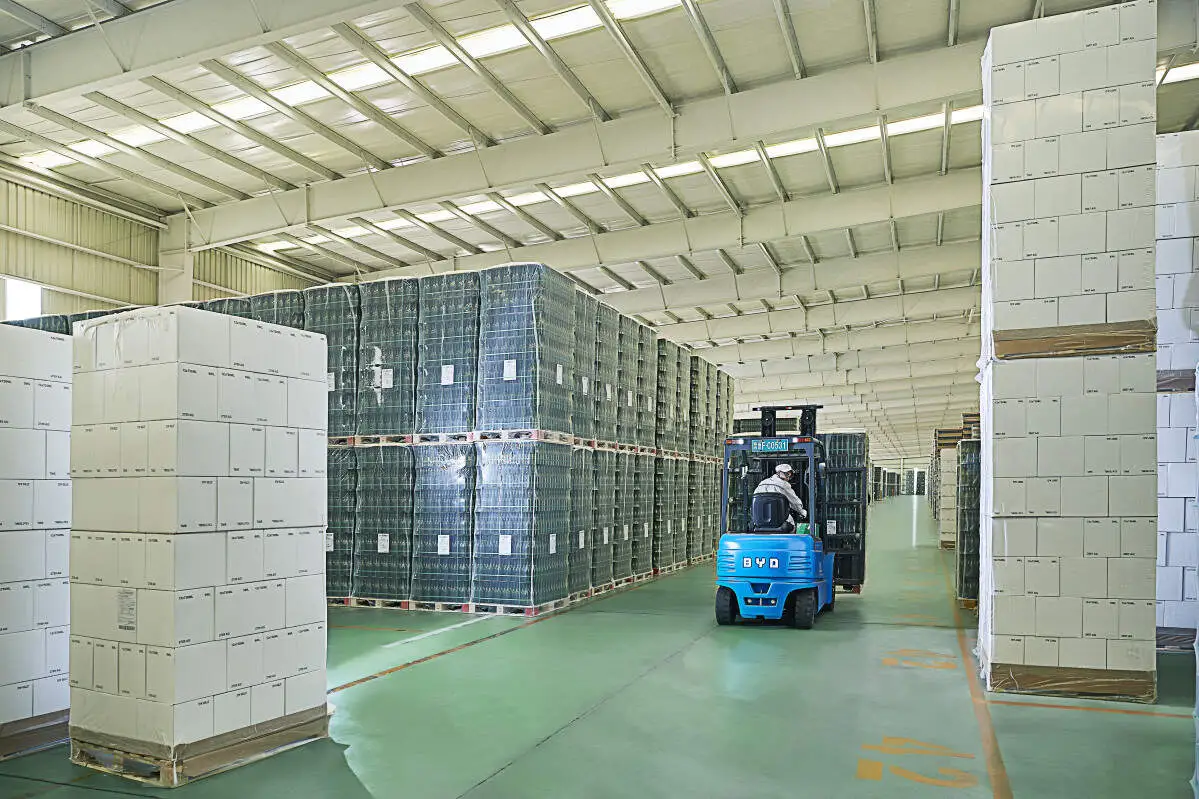
In modern warehouse operations, efficient material handling is the core factor to guarantee overall operation efficiency, and many new warehouse managers often face confusion when choosing between pallet jacks and forklifts for daily use.
Pallet jacks, including manual and electric types, are mainly designed for horizontal pallet transfer work. Their maximum lifting height is usually within 30cm for most models, which only supports lifting pallets away from the ground to complete short-distance movement. The operation threshold of pallet jacks is very low, operators can get started after simple guidance, and they require much narrower access width than standard forklifts, which is very suitable for dense small-storage areas, e-commerce temporary sorting zones and other scenarios that need frequent short-distance transfer of small batches of goods.
As for forklifts, especially electric warehouse forklifts, they have much stronger functional expansion capabilities. Their lifting height can reach several meters, which can not only complete horizontal material transfer, but also support high-level shelf goods access, cargo stacking, vehicle loading and unloading work, covering a wider range of operation scenarios. The load capacity of forklifts covers from 1 ton to several tons, which can meet the demand of large batch heavy goods handling. Operators need to receive certain standardized safety training before using forklifts to guarantee operation safety.
When selecting the right equipment, warehouse operators can make choices according to their actual operation needs. If you run a small and medium-sized warehouse and want to get professional customized material handling equipment solutions, Jianshu New Energy, which specializes in BYD electric forklifts, can provide you with targeted selection suggestions. You can send your related demands to 17399989919@163.com for further communication.