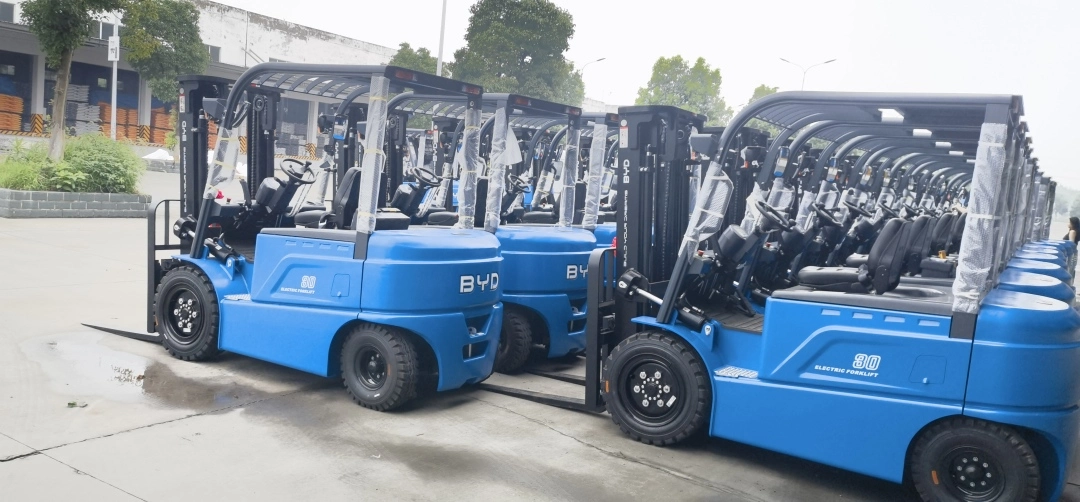
In California’s bustling warehouse and logistics sector, choosing the right forklift class directly impacts operational efficiency, safety, and compliance with state regulations. Class 4 and Class 5 forklifts are two commonly used electric variants, each tailored to specific warehouse environments and tasks. Understanding their key distinctions is critical for warehouse managers aiming to optimize material handling workflows while adhering to California’s strict emission and safety standards.
Tire type and terrain suitability represent one of the most fundamental differences between the two classes. Class 4 electric forklifts come fitted with cushion tires—solid rubber tires designed for smooth, indoor surfaces like polished concrete warehouse floors. These tires offer exceptional maneuverability in tight spaces, making them ideal for navigating narrow aisles and executing frequent load movements within enclosed warehouse facilities. On the other hand, Class 5 electric forklifts feature pneumatic tires, filled with air and constructed to handle uneven outdoor or semi-outdoor terrains, such as cracked loading dock pavement or gravel storage yards. For California warehouses that operate across both indoor storage and outdoor loading zones, Class 5 models provide the flexibility to transition between environments without switching equipment.
Load capacity and performance also set the two classes apart. While both are capable of handling heavy loads, their capacity ranges are optimized for different tasks. Class 4 electric forklifts typically offer load capacities between 3,000 and 18,000 pounds, making them well-suited for mid-range lifting tasks in standard warehouse settings, such as moving palletized inventory between storage racks and loading bays. Class 5 electric forklifts, however, are engineered for heavier-duty applications, with capacities often ranging from 5,000 to 36,000 pounds. This makes them the preferred choice for lifting bulky pallets, heavy machinery components, or large inventory batches, especially in warehouses that specialize in oversized goods. Additionally, Class 5 models have higher ground clearance, allowing them to navigate ramps and uneven surfaces without compromising stability or load safety.
Maintenance and operational cost considerations further distinguish these forklift classes. Cushion tires on Class 4 forklifts have fewer moving parts and are less prone to punctures, resulting in lower long-term maintenance costs and less frequent tire replacements. Class 5 electric forklifts, while durable, require regular checks of tire pressure and tread wear to ensure safe operation on rough terrain. In terms of operational costs, both classes benefit from zero emissions, aligning perfectly with California’s push for sustainable material handling practices. That said, Class 4 models may have slightly lower energy consumption in indoor settings due to their lighter weight and optimized maneuverability, leading to minor cost savings over time.
Finally, compliance with California’s specific regulations plays a role in the decision-making process. Both Class 4 and Class 5 electric forklifts meet the state’s strict zero-emission standards, eliminating concerns about exhaust fumes in enclosed warehouse spaces. However, for warehouses operating in areas with noise restrictions, Class 4 forklifts often produce lower noise levels, making them more suitable for 24/7 indoor operations that minimize disruption to nearby offices or residential areas. Class 5 models, while quieter than diesel-powered alternatives, may generate slightly more noise due to their robust build, requiring additional planning for outdoor or semi-outdoor use near noise-sensitive zones.
Ultimately, the choice between Class 4 and Class 5 electric forklifts depends on a California warehouse’s unique operational needs, terrain requirements, load capacities, and compliance goals. By evaluating these key distinctions, warehouse managers can select the right equipment to enhance productivity, ensure workplace safety, and stay fully aligned with state regulations.