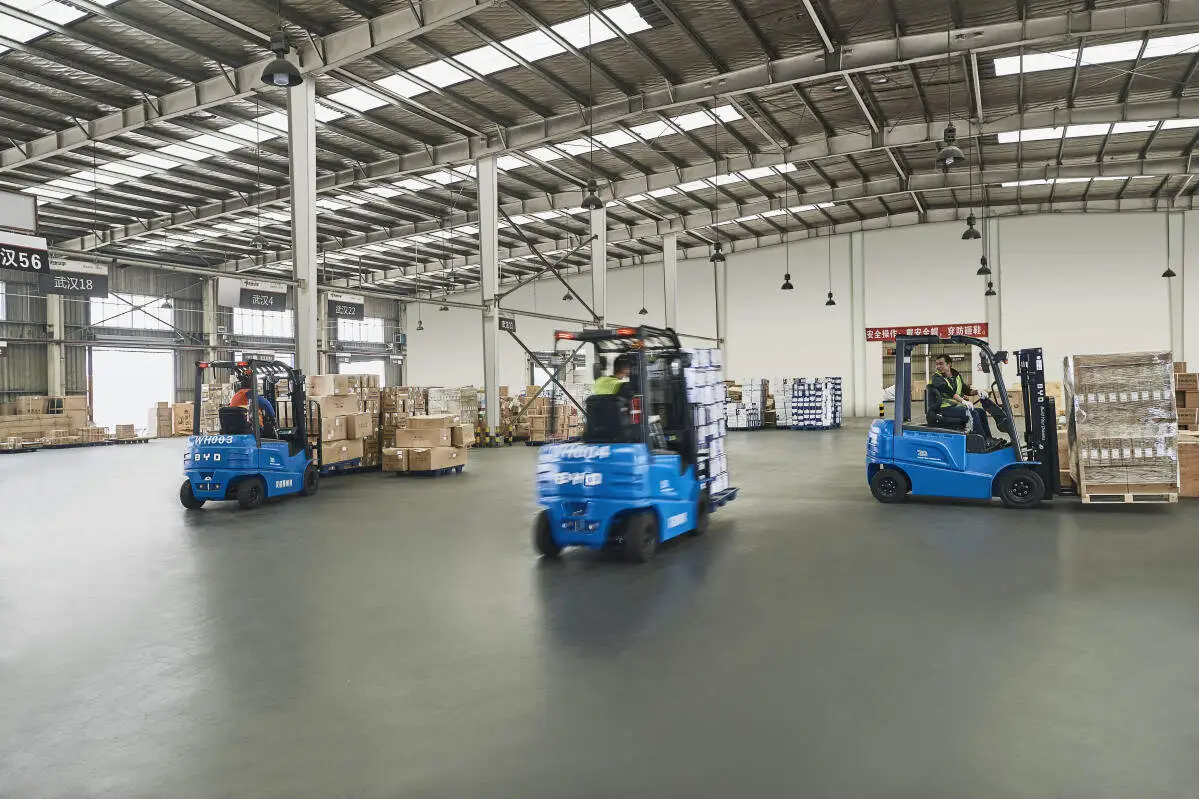
In the dynamic landscape of material handling, selecting the appropriate equipment is pivotal to maximizing efficiency and safety in warehouse and industrial environments. Forklifts and reach trucks are two widely used solutions, but their distinct operational traits make each better suited to specific tasks. Understanding these differences enables operations teams to align equipment choice with their facility’s unique needs.
One of the most noticeable distinctions lies in maneuverability and turning radius. Standard forklifts are designed with a larger turning radius, making them ideal for open spaces like loading docks, outdoor yards, and wide warehouse aisles. Their robust frame and fixed front forks allow for stable movement when transporting heavy loads across expansive areas. In contrast, reach trucks feature a compact design and a smaller turning radius, paired with extendable outer forks that can reach into narrow aisles without needing to reposition the entire vehicle. This makes them highly agile in dense storage environments where space is at a premium.
Load capacity and lift height further separate the two units. Forklifts typically boast higher load capacities, ranging from several thousand to tens of thousands of pounds, making them the go-to choice for lifting and transporting heavy pallets, machinery, or bulk materials. Their lift height is generally sufficient for mid-level shelving systems. Reach trucks, while having lower maximum load capacities compared to heavy-duty forklifts, excel in vertical reach. Many models can lift loads to heights of 30 feet or more, making them indispensable for high-rise rack storage systems commonly found in modern warehouses focused on maximizing vertical space utilization.
Space requirements also differ significantly. Forklifts need ample clearance to maneuver, including room for turning and positioning forks under loads. This means they are less practical in facilities with narrow aisles or tightly packed storage racks. Reach trucks, however, are engineered to operate in aisles as narrow as 6 to 8 feet, thanks to their telescopic forks and ability to reach forward without moving the entire body. This space-saving design allows warehouses to increase storage density without sacrificing accessibility to goods.
Operational complexity and training needs are another key consideration. Forklifts have a relatively straightforward operation, with controls focused on steering, lifting, and lowering. Basic training programs can equip operators with the skills needed to use them safely in most standard settings. Reach trucks, on the other hand, require more specialized training due to their telescopic fork mechanisms and the need to navigate tight spaces at height. Operators must learn to manage the extended reach of the forks while maintaining stability, especially when handling loads at maximum lift heights.
When it comes to ideal application scenarios, forklifts shine in general material handling tasks such as loading and unloading trucks, transporting heavy items across large areas, and outdoor operations where terrain may be uneven. Reach trucks, by contrast, are best suited for indoor warehouse environments with high-density storage systems, narrow aisles, and frequent access to upper-level shelving.
By evaluating these critical operational traits, businesses can make informed decisions about which equipment to deploy for specific tasks, reducing operational costs, enhancing safety, and boosting overall workflow efficiency. Recognizing the unique strengths of each unit ensures that material handling operations are tailored to the exact demands of the facility.