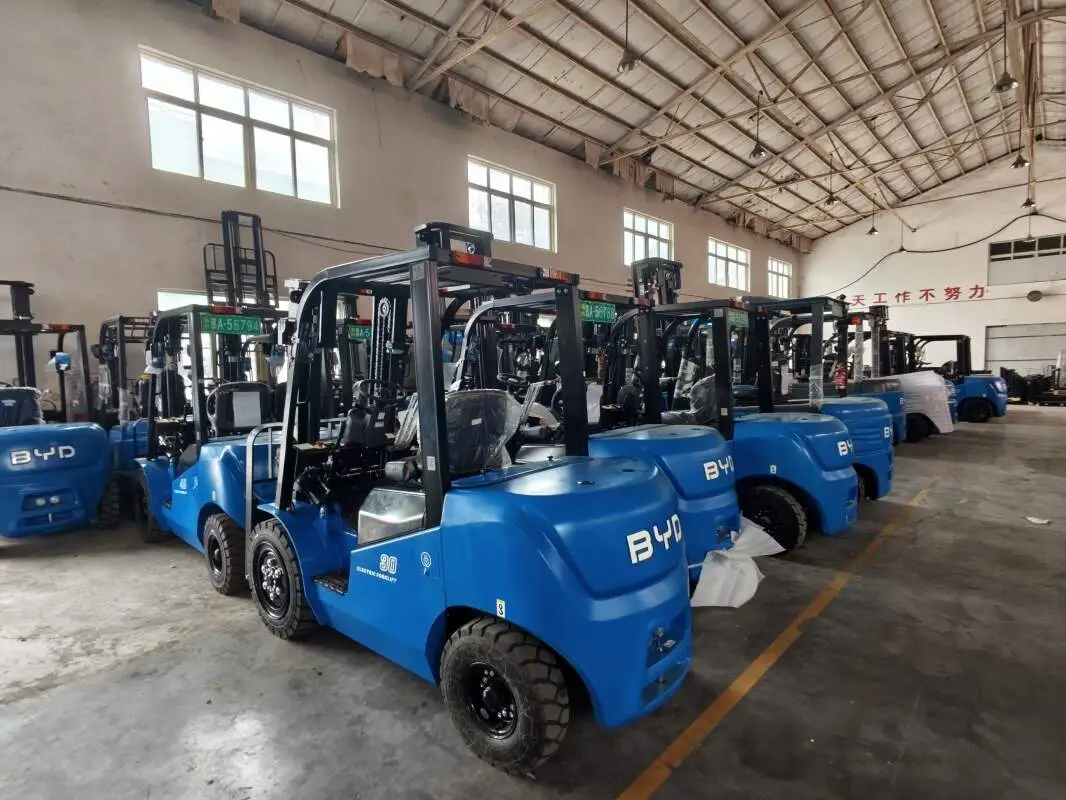
Standard industrial forklifts are essential workhorses in warehouses, distribution centers, and manufacturing facilities, where their travel speed directly impacts operational efficiency and workflow smoothness. While maximizing speed can boost productivity, it must always be balanced with safety, as several key factors naturally influence how fast a forklift can operate.
One of the most significant factors affecting forklift travel speed is the weight of the load being carried. Forklifts are engineered to handle specific weight capacities, and approaching these limits can reduce their maximum travel speed. Heavier loads put increased strain on the forklift’s motor, transmission system, and suspension, prompting built-in safety mechanisms to reduce speed automatically. This not only protects components from premature wear but also minimizes the risk of tip-overs, a leading cause of workplace forklift accidents. Even within rated capacities, a fully loaded forklift will typically travel slower than an unloaded one to maintain stability during turns and stops.
Terrain and surface conditions also play a pivotal role in determining forklift travel speed. On smooth, flat, dry warehouse floors, forklifts can operate at their rated maximum speeds with ease. However, uneven surfaces like cracked concrete, gravel, or outdoor dirt paths force operators to reduce speed to avoid jostling cargo and maintain control. Wet, oily, or icy surfaces further limit speed due to reduced traction, increasing skidding risks. In outdoor settings, steep inclines or declines require slower speeds to prevent the forklift from losing momentum or accelerating uncontrollably downhill.
The condition of the forklift’s power source is another critical factor. For electric forklifts, battery charge level directly impacts performance—when voltage drops below a certain threshold, the motor’s output power decreases, leading to slower travel speeds. Regular charging and battery maintenance, such as cleaning terminals and ensuring proper water levels in flooded batteries, help preserve consistent speed over shifts. For fuel-powered forklifts, engine health and fuel quality can influence speed; dirty filters or worn components may reduce power output and limit maximum speed.
Routine maintenance and component wear are equally important in sustaining optimal travel speed. Worn or underinflated tires increase rolling resistance, making movement less efficient and reducing top speed. Damaged or poorly lubricated transmission components can cause sluggish acceleration and lower overall speed. Faulty brake systems may also force operators to drive slower to compensate for reduced stopping power. Adhering to a regular maintenance schedule with tire checks, lubrication, and component inspections ensures the forklift operates at intended speeds while minimizing breakdowns.
Finally, operational settings and built-in safety features can regulate travel speed. Many modern forklifts offer adjustable speed modes, allowing lower speeds for crowded aisles and higher speeds for open outdoor areas. Proximity sensors and collision avoidance systems may automatically reduce speed when approaching obstacles, pedestrians, or other equipment. These features prioritize safety without unnecessarily compromising productivity, helping operators navigate diverse environments safely and efficiently.
In summary, understanding the factors affecting standard industrial forklift travel speed is key to optimizing performance while upholding safety. By considering load weight, terrain, power condition, maintenance, and safety settings, businesses can ensure forklifts operate at appropriate speeds, balancing productivity with worker well-being and cargo protection.