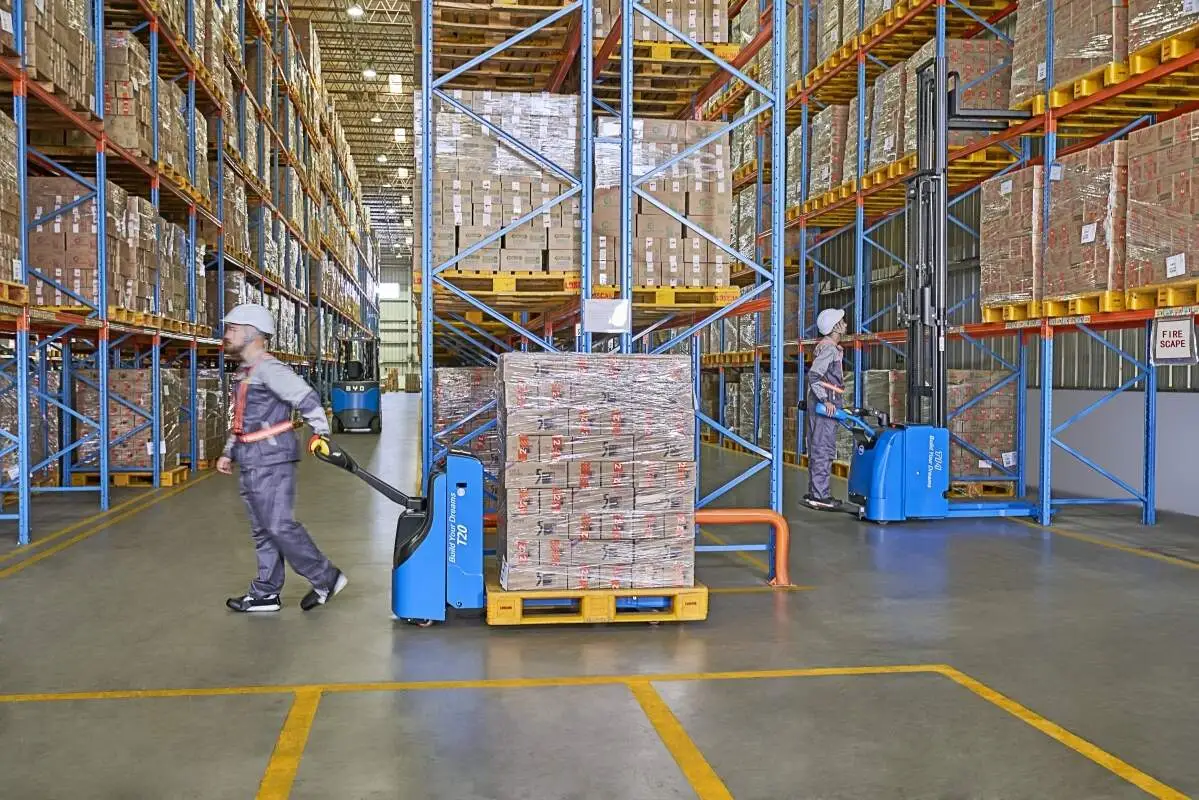
Warehouse space utilization is a critical factor in optimizing operational efficiency and storage capacity. When choosing material handling equipment, understanding the floor space requirements of different tools can make a significant difference in warehouse layout design. Two commonly used options are reach trucks and standard forklifts, each with distinct space needs tailored to specific storage scenarios.
Reach trucks are engineered for narrow-aisle environments, making them ideal for warehouses prioritizing vertical storage maximization. Their compact structure features a smaller turning radius, typically ranging from 8 to 10 feet, allowing them to navigate aisles as narrow as 6 to 8 feet. Unlike standard forklifts, reach trucks operate with an extendable mast that reaches forward to access pallets, eliminating the need for extra space for the entire vehicle to maneuver around loads. This design reduces their overall footprint, enabling warehouses to fit more storage racks within the same square footage. Additionally, their ability to stack pallets at higher heights further enhances storage density without expanding the floor space required for daily operations.
Standard forklifts, by contrast, demand more extensive floor space due to their larger size and operational mechanics. With a turning radius of 10 to 14 feet, they need wider aisles—usually between 10 and 12 feet—to safely turn and maneuver. This is because the forklift’s mast remains fixed, requiring the entire vehicle to reposition itself for loading or unloading tasks. Their larger footprint also means dedicated open areas are necessary for staging loads, parking, and moving between different warehouse zones. While standard forklifts excel at handling heavier loads and operating in outdoor or spacious indoor environments, their higher space requirements can limit storage density in compact warehouse settings.
The choice between a reach truck and a standard forklift depends heavily on the warehouse’s available floor space and core storage goals. For facilities with limited square footage and a focus on high-density pallet storage, reach trucks are the optimal choice, as they allow businesses to utilize vertical space efficiently without sacrificing navigability. In contrast, warehouses with ample open space, large or irregularly shaped loads, or a need for outdoor operation will benefit from the versatility of standard forklifts, despite their higher space demands. It’s also important to consider future expansion plans; selecting equipment that aligns with long-term space needs can prevent costly layout reconfigurations down the line.
Understanding the floor space differences between reach trucks and standard forklifts is essential for making informed decisions about warehouse equipment. By evaluating factors like aisle width, turning radius, and storage density, businesses can choose the right tool to optimize their space utilization, improve operational efficiency, and support their storage needs effectively.