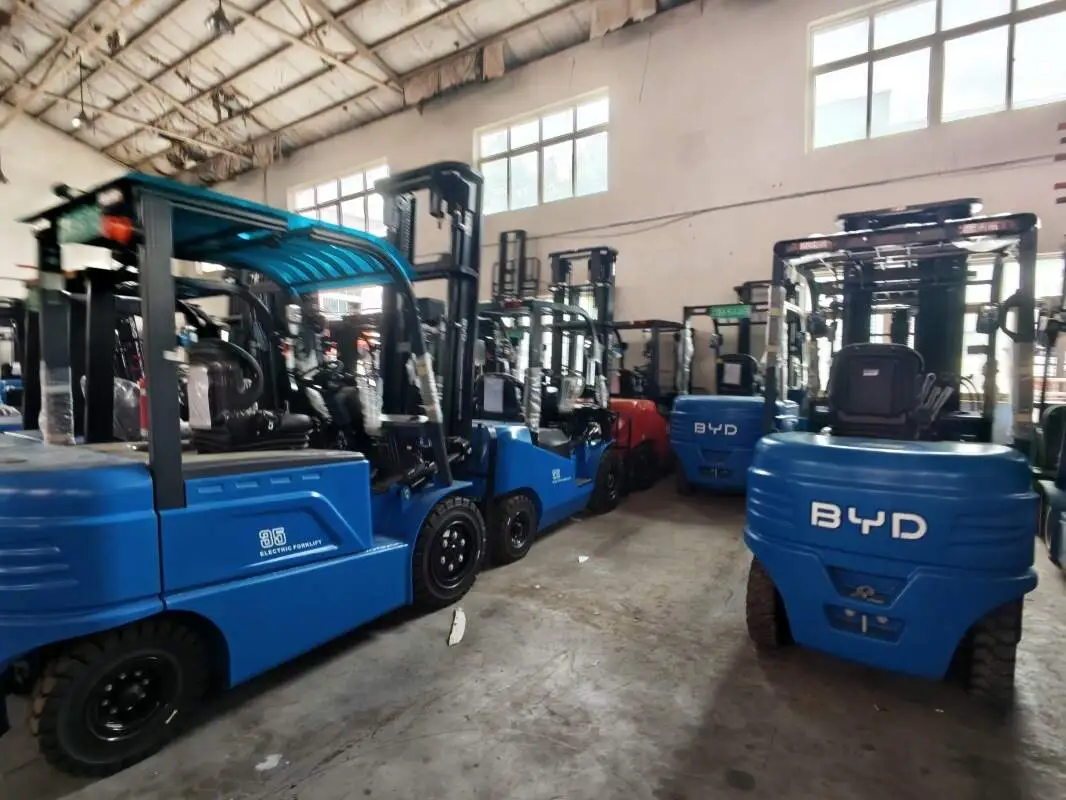
forklift load stability is a critical cornerstone of safe and efficient material handling operations, directly impacting workplace safety, productivity, and the prevention of costly equipment damage or cargo loss. Among the key factors influencing this stability, standard fork length stands out as an often overlooked yet essential component. Understanding the relationship between fork length and load stability helps operators and fleet managers make informed decisions to optimize both performance and safety.
First, it’s important to clarify what constitutes a standard fork length. Standard fork lengths are typically designed to align with the rated load capacity of a forklift, ensuring that the forks can safely support the intended weight without compromising balance. These lengths are determined based on industry standards that take into account factors like the forklift’s wheelbase, load center, and overall weight distribution. Deviating from this standard can create unforeseen stability risks, even when operating within the forklift’s stated load capacity.
The core relationship between standard fork length and load stability lies in how the length affects the load center and the forklift’s overall balance. When forks are shorter than the standard recommended length for a given load, the load’s center of gravity can shift forward beyond the forklift’s designed load center. This forward shift increases the risk of the forklift tipping forward, especially when lifting heavy loads or operating on uneven surfaces. Conversely, using forks longer than the standard length can extend the load center further out, which also disrupts the forklift’s balance. While longer forks might seem useful for handling larger cargo, they can place excessive stress on the forklift’s front axle and reduce maneuverability, making it harder to navigate tight spaces safely.
Matching the standard fork length to the load type and size is another key consideration. For example, handling long, bulky items may require slightly longer forks, but these should still be within the recommended range to maintain stability. Operators must also ensure that the load is evenly distributed across the forks, as an uneven load combined with non-standard fork length can exponentially increase stability risks. Regular inspections of fork condition, including checking for bending or wear, are equally important, as damaged forks can alter the effective length and compromise load support.
In addition to selecting the right standard fork length, proper training plays a vital role in maintaining load stability. Operators should be trained to recognize how fork length impacts balance, how to calculate load centers correctly, and when to adjust their operation based on the fork and load combination. Fleet managers can further enhance safety by establishing clear guidelines for fork selection based on the forklift’s rated capacity and the types of loads commonly handled in the workplace.
Overall, standard fork length is far more than a technical specification—it’s a critical factor in ensuring forklift load stability. By adhering to recommended standard lengths, matching forks to appropriate loads, and prioritizing operator training, businesses can minimize safety risks, reduce equipment downtime, and improve the overall efficiency of their material handling operations. Understanding this relationship empowers teams to make smarter choices that protect both personnel and valuable assets.