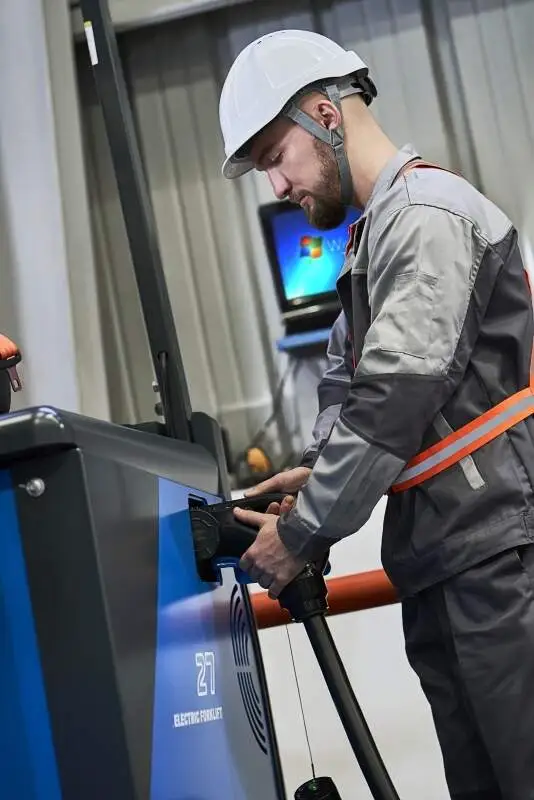
In industrial and warehouse operations, electric forklifts are workhorses that rely on reliable battery charging systems to maintain uptime. A forklift battery charger is more than just a power source—it’s a critical component that directly impacts battery lifespan, operational efficiency, and safety. Understanding the right power requirements and following a proper setup process is essential to ensure your forklift fleet runs smoothly.
First, let’s delve into power requirements. The primary consideration is voltage compatibility: forklift batteries come in various voltage ratings, commonly 24V, 48V, or 72V. Your charger must match this voltage exactly to avoid damaging the battery or charger. Next, charging current is key. As a general rule, the charger’s current output should be approximately 10% of the battery’s amp-hour (Ah) capacity. For example, a 500Ah battery requires a charger with a 50A current rating to support efficient, safe charging.
Beyond voltage and current, the electrical circuit supplying power to the charger must meet specific standards. It should be a dedicated circuit with adequate amperage to prevent overloading, which can cause tripped breakers or electrical hazards. Proper grounding is also non-negotiable to protect against electrical shocks and ensure stable power delivery. Environmental conditions play a role too: extreme temperatures, whether hot or cold, can affect charging efficiency. In very cold environments, you may need a charger with temperature compensation to adjust charging rates, while in hot areas, ensure proper ventilation to prevent overheating.
Now, let’s walk through a step-by-step setup guide for your forklift battery charger. Start with safety preparations: always turn off the forklift and disconnect the battery before beginning any setup work. Wear appropriate personal protective equipment, such as insulated gloves and safety glasses, to protect against electrical risks.
Next, inspect both the charger and battery. Check for any visible damage to cables, connectors, or the charger housing. Clean the battery terminals with a wire brush to remove corrosion, as dirty terminals can impede power transfer and lead to inefficient charging.
When connecting the charger, align the positive (+) and negative (-) terminals correctly—mismatched connections can cause short circuits or battery damage. Once connected, adjust the charger’s settings to match your battery’s specifications. Most modern chargers have user-friendly controls to set voltage and current levels; refer to the battery’s manufacturer guidelines for exact parameters.
After setting the parameters, plug the charger into the dedicated power outlet and start the charging cycle. Monitor the charger’s indicators to ensure it’s operating correctly—most chargers have lights or displays that show charging progress. Avoid leaving the battery on charge indefinitely, as overcharging can shorten its lifespan. Once charging is complete, turn off the charger, unplug it, and disconnect the terminals in reverse order of connection.
To keep your forklift battery charger in optimal condition, follow regular maintenance practices. Clean the charger’s exterior and vents regularly to prevent dust buildup, which can hinder cooling. Inspect cables and connectors for wear or fraying, replacing any damaged parts promptly. Store the charger in a dry, well-ventilated area away from moisture and extreme temperatures. Periodically verify that the charger’s output matches the specified parameters using a multimeter to ensure it’s delivering the correct voltage and current.
By understanding the power requirements and following a structured setup and maintenance routine, you can maximize the lifespan of your forklift batteries, reduce operational downtime, and ensure a safe working environment. Taking the time to get these basics right will pay off in long-term efficiency and cost savings for your operations.