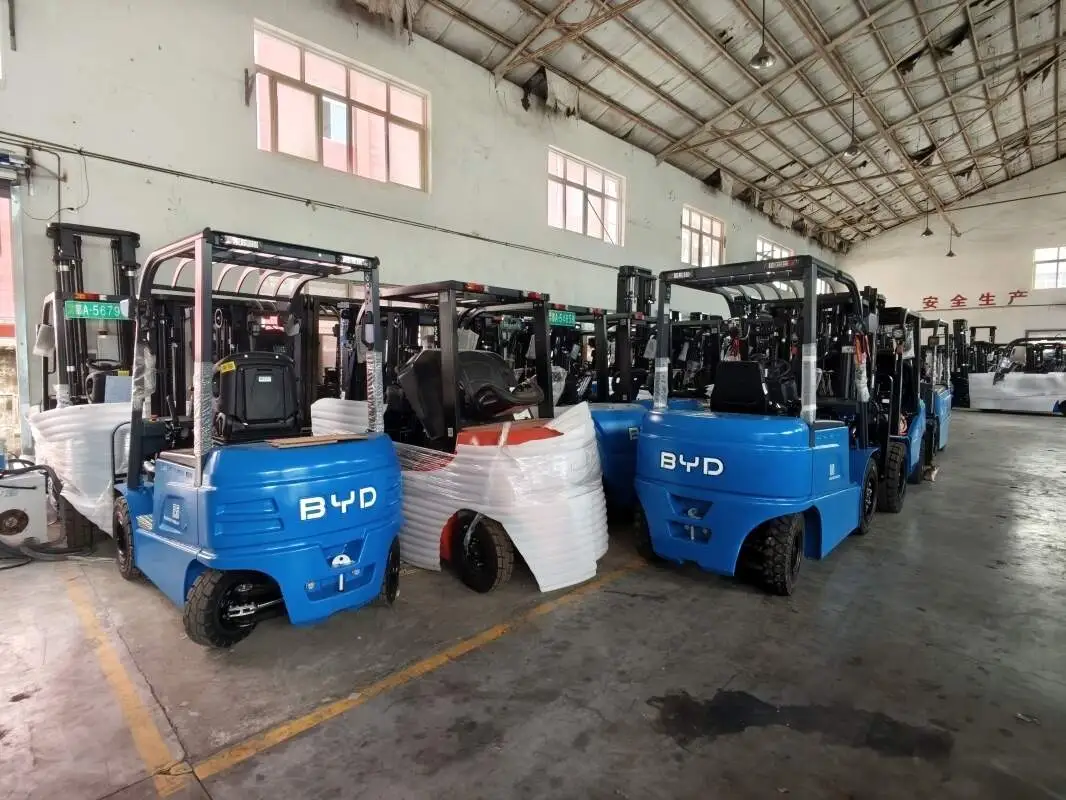
Selecting the right forklift engine size is a critical decision that directly impacts operational efficiency, cost-effectiveness, and safety across industrial and logistics settings. A mismatched engine—either too large or too small—can lead to unnecessary fuel or energy waste, reduced equipment lifespan, or inability to meet daily task demands. To make an informed choice, operators must prioritize site-specific operational requirements as the core guiding factors.
Load capacity stands as the primary consideration when sizing a forklift engine. Facilities handling heavy pallets or bulk materials on a regular basis require engines with sufficient power to lift and transport maximum rated loads without straining components. Over-sizing an engine for light-load tasks, however, increases energy consumption and operational costs over time. Conversely, an under-sized engine will struggle with heavy loads, leading to slower cycle times and potential mechanical failure from overexertion. It is essential to calculate the average and peak load weights in the site’s daily operations to match engine power accordingly.
Terrain and working environment also play a pivotal role in engine size selection. Indoor warehouses with smooth, flat floors and narrow aisles benefit from compact, moderately powered engines that offer maneuverability without excess energy use. Outdoor sites, such as construction yards or lumber yards, often feature uneven ground, steep ramps, or loose surfaces. These environments demand larger, more robust engines with higher torque to navigate challenging terrain safely and maintain consistent performance. Additionally, outdoor operations may require engines with enhanced cooling systems to withstand prolonged exposure to varying weather conditions.
Shift duration and operational intensity are further key factors. Facilities running extended multi-shift operations need engines designed for continuous use, with sufficient power reserves to avoid performance degradation over long hours. For electric forklifts, this translates to matching engine power with battery capacity to ensure uninterrupted operation between charging cycles. Sites with intermittent, low-intensity tasks can opt for smaller engines that balance power and energy efficiency, reducing overall operational costs while meeting basic task needs.
Finally, space constraints must be evaluated. Narrow warehouse aisles or confined loading docks require forklifts with compact engine configurations that do not compromise maneuverability. In such settings, a smaller, high-efficiency engine may be preferable to a larger unit that could hinder navigation. However, even in tight spaces, the engine must still deliver enough power to handle the site’s typical load sizes without sacrificing performance.
By systematically assessing load capacity, terrain, shift duration, and space constraints, operators can select a forklift engine size that aligns perfectly with their site’s unique operational requirements. This balanced approach ensures optimal performance, reduces unnecessary costs, and extends the lifespan of the equipment, supporting smooth and efficient daily operations.