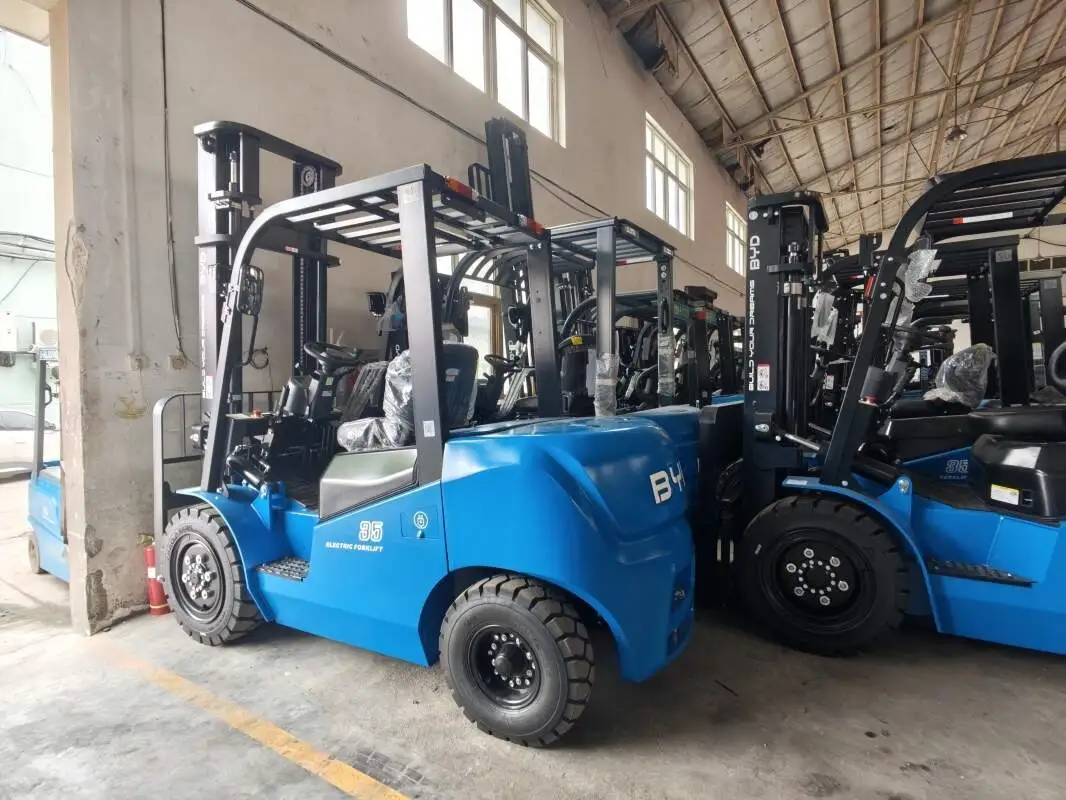
forklift forks are critical load-bearing components that directly impact the safety and efficiency of material handling operations. The thickness of forklift forks is a key parameter determining their ability to support rated loads without structural failure, making adherence to industry standards and regular wear inspections essential for workplace safety.
Industry standards for forklift fork thickness are established to ensure consistent performance across equipment types. Most global safety bodies specify that new forks must meet a minimum thickness based on the forklift’s rated capacity. Lighter-duty forklifts use thinner forks suited for their load limits, while heavy-duty models require thicker, more robust forks to withstand greater stress. A widely accepted benchmark states that when fork thickness wears down to 90% of its original manufacturing thickness, it is no longer safe for use and must be replaced immediately. This threshold prevents catastrophic failure under load, which could lead to accidents, product damage, or worker injury.
Regular wear inspections are key to identifying issues early. Begin with a pre-shift visual check: look for cracks, bending, or uneven wear along the fork’s surface, particularly near the heel where stress is concentrated. These visual cues can signal structural weaknesses even before thickness measurements fall below safety limits.
Next, conduct precise thickness measurements using a caliper or micrometer. Measure at three critical points: the heel (where the fork attaches to the carriage), the mid-section, and the tip. Record these values and compare them to the fork’s original thickness, typically found in the forklift’s operation manual or stamped on the fork itself. Wear is often uneven—fork tips may degrade faster due to frequent pallet contact, so focusing on high-stress areas is crucial.
Operators should also be trained to recognize abnormal wear patterns. For example, one-sided uneven wear may indicate improper load distribution or fork carriage misalignment, which accelerates wear over time. Addressing these underlying issues promptly extends fork lifespan and reduces failure risks.
When forks reach the wear limit, replacement is the only safe solution. Repairing worn forks via welding or grinding is not recommended, as these methods compromise metal integrity and lead to sudden failure during operation. Always choose replacement forks that meet the same thickness standards as original components to maintain the forklift’s load-bearing capacity.
By understanding forklift fork thickness standards and implementing regular inspection practices, businesses enhance workplace safety, reduce equipment downtime, and ensure compliance with industry regulations. Prioritizing fork maintenance is a small but critical step toward creating a secure and efficient material handling environment.