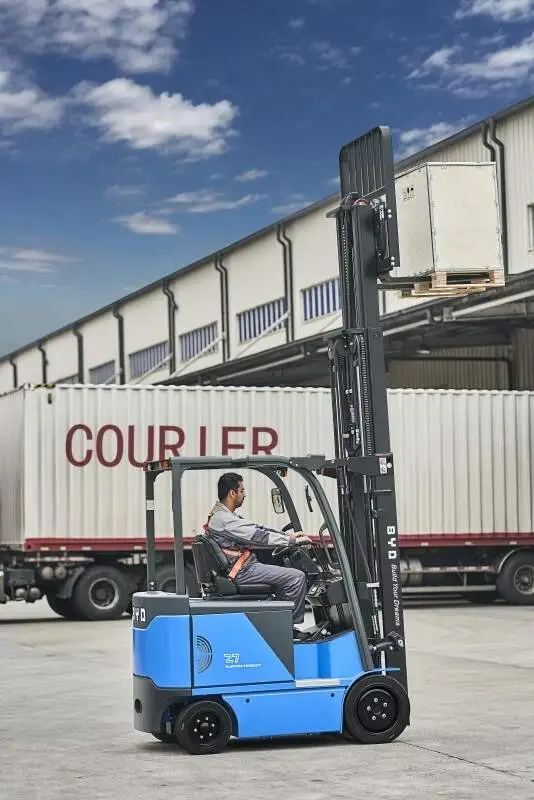
Telehandler forklifts are versatile workhorses across industries like construction, warehousing, and agriculture, offering the unique ability to lift and reach loads in spaces where traditional forklifts struggle. If you’re exploring telehandler forklifts for sale, taking the time to evaluate critical factors will help you select a unit that aligns with your operational needs and delivers long-term value.
Load capacity and maximum lift height are the foundational starting points for your decision. For warehouse operations focused on pallet storage in high racking systems, you may need a telehandler with a lift height ranging from 20 to 40 feet. In construction settings, handling heavy materials like steel beams or concrete blocks demands a load capacity of 5,000 to 10,000 pounds. Choosing a unit with more capacity than necessary inflates upfront costs, while an underpowered model risks safety hazards and operational bottlenecks. Always map your most frequent and demanding tasks to guide this choice.
Terrain compatibility is another critical factor. Indoor warehouses with smooth, paved floors benefit from telehandlers with solid rubber tires and a compact footprint for maneuverability. Outdoor construction sites or agricultural fields with uneven, muddy, or gravelly terrain require units with heavy-duty pneumatic tires and four-wheel drive capabilities. Some models also feature adjustable suspension systems to enhance stability on rough ground, reducing the risk of tipping when carrying loads over uneven surfaces.
Beyond the purchase price, consider long-term maintenance and operational costs. Regular maintenance, including oil changes, filter replacements, and hydraulic system inspections, is essential to keep the unit running reliably. For used telehandlers, request a detailed service history to assess past upkeep. Electric telehandlers may have higher upfront costs but lower operational expenses for indoor use, while diesel models are better suited for outdoor tasks where charging infrastructure is limited. Factor in the availability of replacement parts and local service support to avoid prolonged downtime if repairs are needed.
Your budget should account for total cost of ownership, not just the initial sticker price. A cheaper used telehandler might seem like a bargain, but frequent repairs or high fuel consumption can drive up long-term costs. Conversely, a new unit with advanced features may have a higher upfront cost but lower maintenance needs and improved efficiency. If budget is tight, certified pre-owned telehandlers with warranties offer a balance between cost savings and peace of mind.
Finally, assess additional features that boost productivity and safety. Many telehandlers can be fitted with attachments like pallet forks, buckets, or work platforms, expanding their functionality for diverse tasks. Safety features such as load moment indicators, backup cameras, and automatic stability control are critical to reducing workplace accidents. While these features add to the cost, they prevent costly injuries and equipment damage, making them a worthwhile investment for most operations.
In conclusion, selecting the right telehandler forklift requires careful evaluation of your specific operational needs, terrain conditions, budget, and long-term costs. By prioritizing these key considerations, you can make an informed purchase that supports your business’s efficiency and safety goals for years to come.