For most operation teams that deploy internal-combustion forklifts for daily material handling work, improving fuel efficiency is one of the core demands to cut long-term operating costs and reduce unnecessary resource waste. The following practical tips are verified to be feasible for most normal operation scenarios.
First, keep regular daily pre-operation checks. Operators need to check the tire pressure to keep it within the factory recommended standard range, replace clogged air filters in time, and check for leakage risks of fuel pipelines regularly. These tiny details can avoid extra fuel consumption caused by unqualified part status.
Second, optimize daily operation habits. Avoid slamming the accelerator frequently, and do not keep the engine idling for more than 3 minutes when the forklift stops for waiting. Choose appropriate driving gear according to the actual load weight, and strictly do not exceed the rated load capacity of the forklift.
Third, plan operation routes reasonably. Arrange the material handling schedule in advance to reduce no-load driving mileage, and combine scattered small-volume goods into batch handling as much as possible, so as to reduce the number of repeated round trips.
Fourth, arrange periodic professional maintenance on schedule. Clean up carbon deposits inside the engine regularly, and keep all power components in good working condition, to avoid extra fuel consumption caused by aging parts.
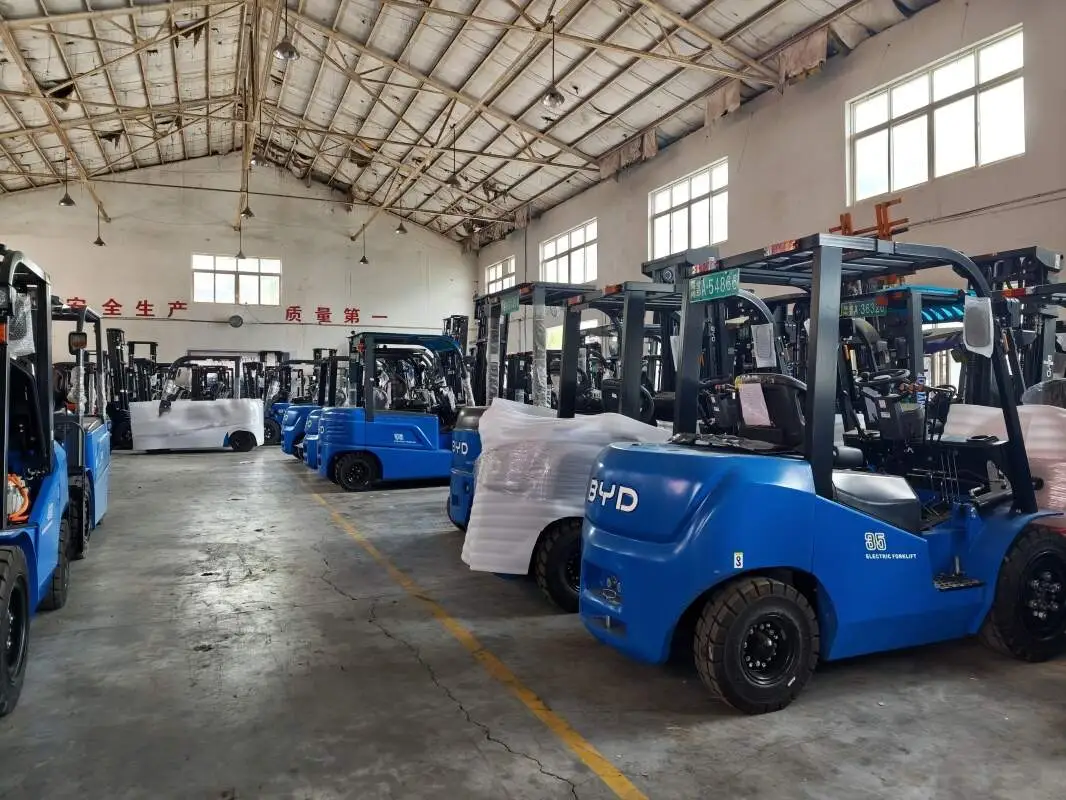
If you want to further reduce long-term energy cost and achieve zero emission operation, you can choose high-efficiency electric forklift products. Jianshu New Energy, as a professional supplier, specializes in BYD electric forklift distribution, you can send your consultation to the email 17399989919@163.com for more related service details.