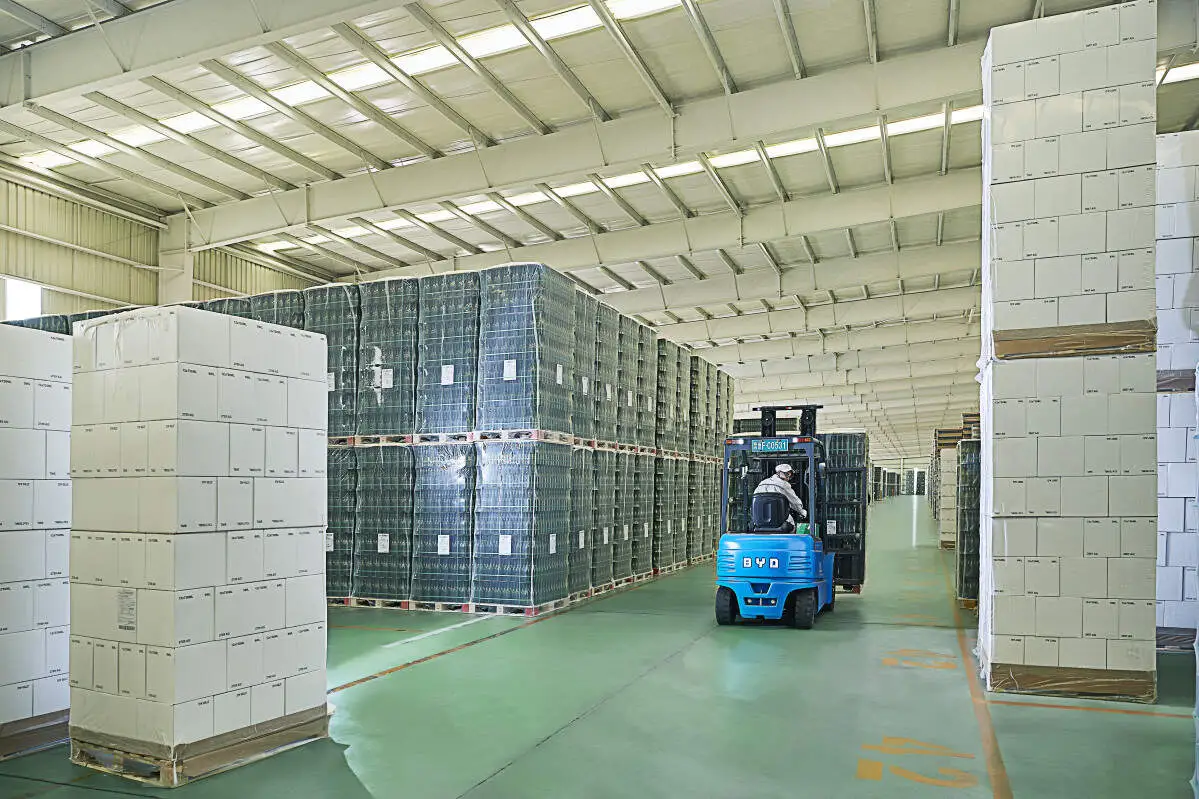
In busy multi-worker warehouse sites, where forklifts maneuver alongside pedestrian workers, pallet handlers, and other equipment, clear communication is non-negotiable for preventing accidents and maintaining smooth operations. Among the most reliable communication tools are standardized forklift hand signals, a universal language that cuts through noise, radio interference, and language barriers to ensure every team member understands critical instructions.
Standardizing these hand signals across the warehouse eliminates confusion that can lead to costly mistakes or safety incidents. For instance, a single, universally recognized "stop" signal ensures that all workers—regardless of their role or experience level—can immediately alert a forklift operator to halt operations if a hazard arises. Without standardization, varying gestures from different workers could cause the operator to misinterpret commands, putting everyone at risk.
Key standardized hand signals cover all essential forklift operations. The "forward" signal involves extending one arm forward with a closed fist, moving it in a forward motion to indicate the operator should move ahead. To signal "stop," a worker raises one arm straight up with an open palm, making it impossible to miss. For lifting loads, the hand is raised with fingers pointing upward, moving the hand upward to direct the operator to lift the forks. Similarly, a downward-pointing hand moving down signals lowering the load. For turning, one arm is extended to the side of the desired turn, with the hand open and palm facing the operator.
Implementing standardized hand signals requires comprehensive training for both forklift operators and all warehouse staff. Operators must learn to recognize every signal instantly, while pedestrian workers need to know how to execute each gesture correctly to avoid miscommunication. Regular refreshers and safety audits can help reinforce these standards, ensuring that every team member adheres to the same communication protocol.
electric forklifts, which are increasingly common in modern warehouses for their eco-friendliness and quiet operation, benefit equally from standardized hand signals. While their quieter engines mean verbal communication might be more feasible in some cases, hand signals remain a backup and primary method for noisy or high-traffic areas where verbal commands can be lost.
Jianshu New Energy, specializing in BYD electric forklifts, understands the critical role of safety standards in warehouse operations. We provide not only reliable electric forklifts tailored to multi-worker warehouse needs but also guidance on implementing safety protocols like standardized hand signals. Whether you’re looking to upgrade your fleet or enhance your warehouse safety practices, our team is ready to assist. Reach out to us at 17399989919@163.com for more information.
In conclusion, forklift hand signals standardization is a simple yet powerful way to improve safety and efficiency in multi-worker warehouse sites. By establishing a universal communication system, training all staff, and leveraging reliable equipment like electric forklifts, warehouses can create a safer, more productive environment for every team member.