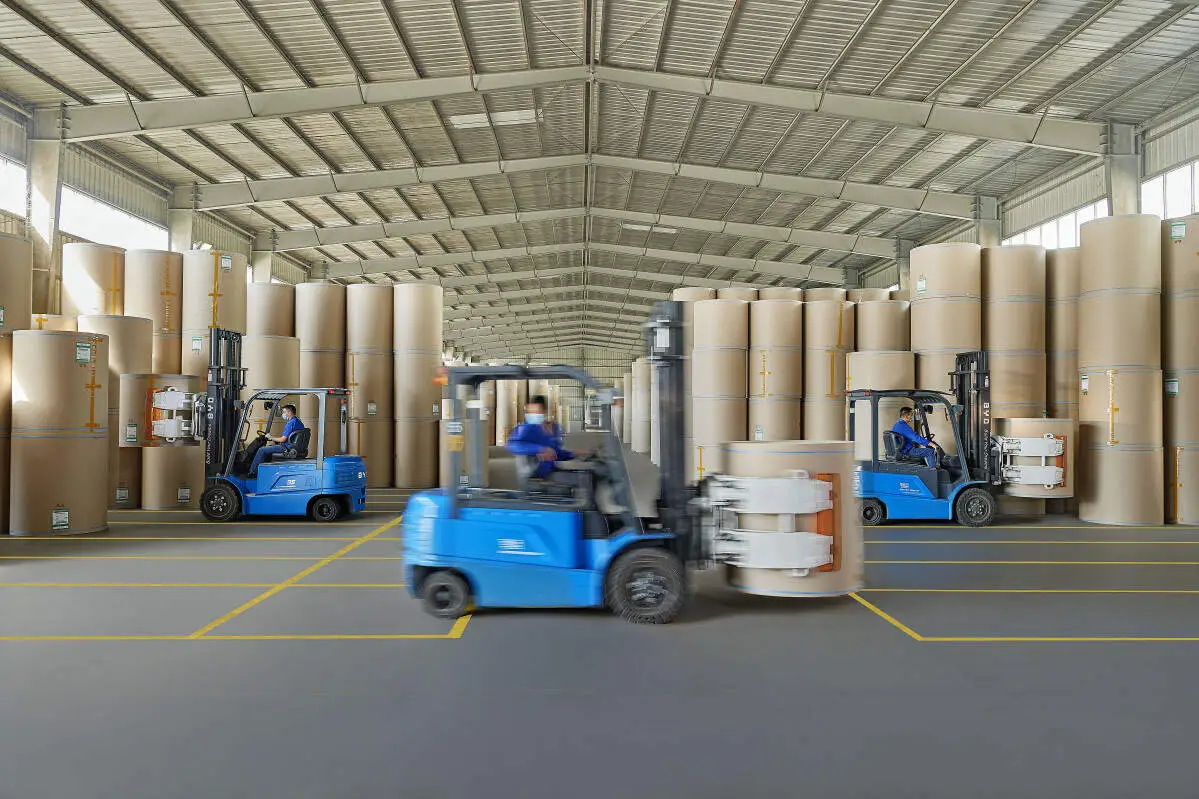
Warehouse space layout planning is a critical component of optimizing operational efficiency, reducing waste, and ensuring safe material handling. Among the various factors that influence this process, understanding forklift minimum length references stands out as a foundational element. Overlooking this dimension can lead to cramped workspaces, increased collision risks, and diminished operational throughput.
Different types of forklifts have distinct minimum length specifications that must be accounted for during layout design. For counterbalance forklifts, the minimum length typically ranges from 8 to 12 feet, measured from the front of the forks to the rear of the chassis. This measurement is crucial because these forklifts rely on rear weight to balance loads, requiring additional space for maneuvering. Reach trucks, designed for narrow aisle operations, have a more compact minimum length, usually between 6 and 9 feet. Their extended forks allow for reaching into deep storage racks, making their overall length a key consideration when planning aisle widths and rack placement.
When integrating forklift minimum length into warehouse layout planning, several key aspects must be addressed. First, aisle widths need to be calibrated to accommodate the forklift’s length during turns and straight-line travel. As a general rule, aisles should be at least 1.5 times the forklift’s minimum length to ensure safe turning without obstructing adjacent storage areas. Additionally, turning radius is closely tied to minimum length; a longer forklift will require a wider turning arc, which must be factored into open areas near loading docks and storage zones.
Another critical consideration is the alignment between forklift length and storage rack dimensions. Racks should be positioned to leave sufficient space between their front faces and adjacent aisles, allowing forklifts to approach, load, and unload without scraping or damaging the structure. This space should be at least equal to half the forklift’s minimum length to provide ample room for fork adjustment and load positioning. Moreover, when designing staging areas near shipping and receiving docks, the minimum length of the forklift dictates how many units can be parked or maneuvered simultaneously without causing congestion.
It is also important to account for operational variables that may affect the effective minimum length of a forklift. For example, when carrying oversized loads, the overall length of the forklift and load combination increases, requiring wider aisles and more maneuvering space. Regular maintenance and inspection of forklifts can also ensure that their dimensions remain consistent, as worn components may alter the effective length over time. Warehouse managers should collaborate with material handling teams to gather real-world operational data, ensuring that layout plans reflect actual usage scenarios rather than just theoretical specifications.
In conclusion, forklift minimum length is an essential reference point for warehouse space layout planning. By understanding the specific length requirements of the forklifts in use, warehouse managers can design layouts that enhance safety, improve operational efficiency, and maximize storage capacity. Taking the time to integrate these dimensions into the planning process can prevent costly reconfigurations and ensure that the warehouse operates smoothly for years to come.