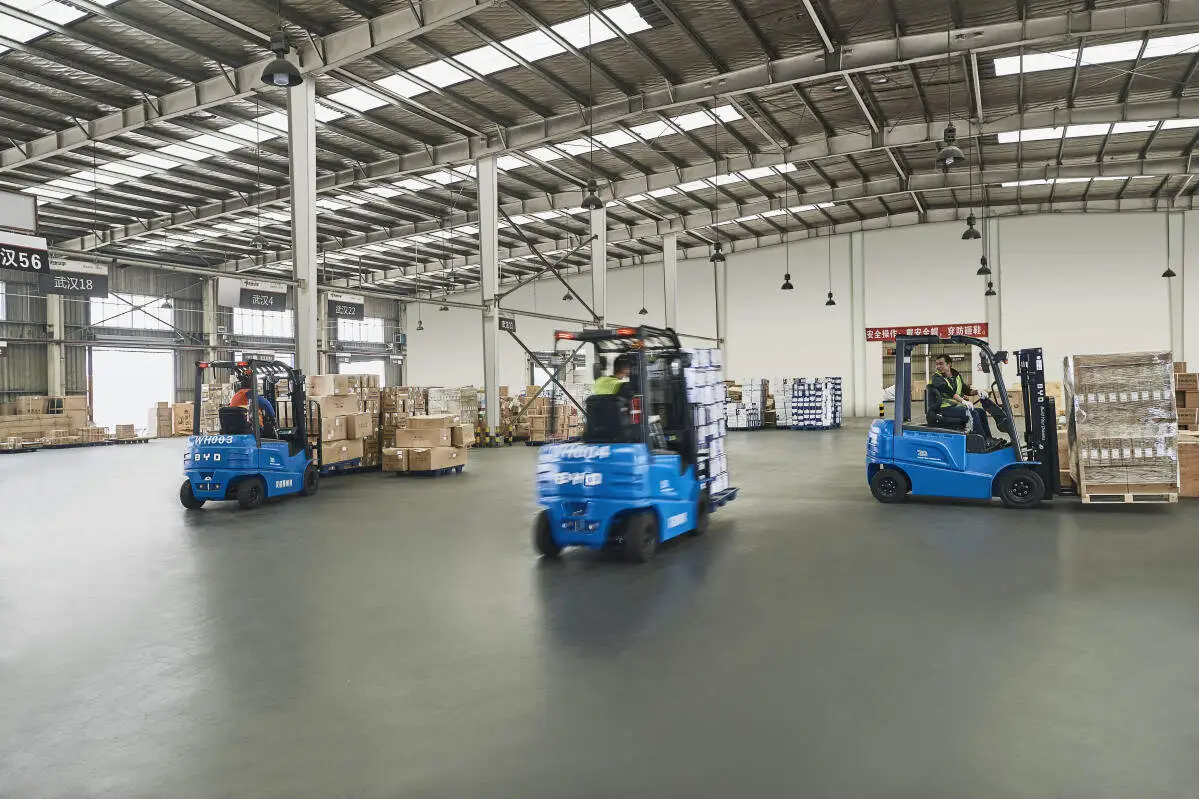
Proper forklift pallet handling is a core part of daily warehouse operation, which can effectively avoid unexpected damage to pallets, loaded goods and forklift equipment, cut down unnecessary extra operation cost, and support the stable and efficient running of the whole logistics link.
The first key practice is standard pre-operation inspection. Before starting any pallet handling task, operators need to check the surface condition of the target pallet first, confirm there is no loose nail, sharp protrusion or structural crack that may cause hidden trouble. Then check the fork part of the electric forklift, make sure two forks are at the same horizontal height, and the spacing of forks matches the width of pallet entry holes, to avoid forced insertion that will crack the pallet structure.
The second core point is standardized operation during the handling process. When inserting forks into pallet holes, keep the insertion depth no less than two thirds of the total pallet length, to prevent the pallet from tipping during moving. Never drag the pallet on the ground with forklift, or lift the pallet with only one fork. Keep the loaded goods evenly distributed on the pallet to avoid partial overload that leads to pallet deformation. Slow down in advance when turning, and keep safe distance from surrounding shelves and passing personnel.
The last part is standardized post-operation arrangement. After placing the pallet to the designated location, pull the forks out slowly and vertically, do not scrape the bottom of the pallet or the surface of the stacked goods. Regularly organize operation personnel to receive standardized skill training, optimize daily operation management rules to form long-term good operation habits.
This professional operation guide is shared by Jianshu New Energy, we specialize in BYD electric forklifts. If you need relevant electric forklift supporting service consultation, you can send email to 17399989919@163.com for further communication.