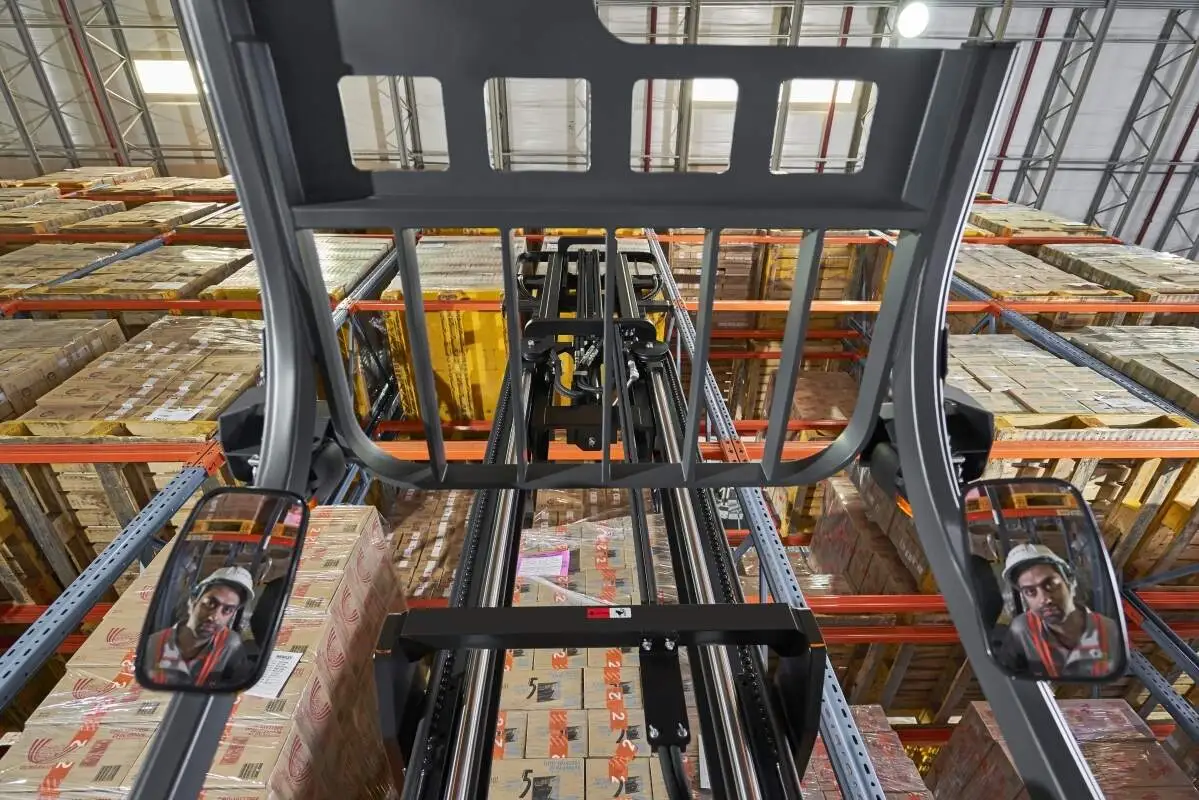
electric forklifts are indispensable workhorses in warehouses, distribution centers, and manufacturing facilities, streamlining material handling operations with efficiency and precision. Every component plays a critical role in ensuring safe, smooth, and reliable performance. Understanding these parts and their functions is key to proper operation and maintenance.
The chassis and frame form the foundational structure of an electric forklift, supporting all other components and absorbing the weight of loaded materials. Integrated into the chassis are drive wheels and steer wheels, which enable maneuverability in tight spaces. Shock-absorbing systems within the chassis minimize vibrations during movement, enhancing stability and reducing wear on other parts over time. This base component ensures the forklift can bear heavy loads without compromising structural integrity.
The fork carriage and forks are the primary load-handling components. Forks are designed to slide under pallets or heavy items, providing a secure hold during lifting and transport. The fork carriage connects the forks to the mast assembly, allowing operators to adjust the distance between forks to accommodate different load sizes. Made from high-strength steel, these components are built to withstand repeated heavy use and resist bending or warping.
The mast assembly is responsible for vertical load movement, consisting of inner and outer mast sections. Hydraulic cylinders power the mast’s extension and retraction, enabling precise lifting and lowering of loads to various heights. The mast’s design also incorporates visibility features, such as narrow profiles, to help operators maintain clear sightlines of their surroundings while handling elevated loads. This component is critical for efficient stacking and retrieval operations in high-rack storage areas.
The power system is the heart of an electric forklift, comprising a rechargeable battery pack, electric motor, and charging system. The battery provides clean, zero-emission power, making electric forklifts ideal for indoor use where air quality is a concern. The electric motor converts battery power into mechanical energy to drive the forklift and operate hydraulic systems. Regular charging and maintenance of the power system ensure consistent performance and extend the forklift’s operational lifespan.
The control system encompasses operator interfaces such as steering wheels, control levers, and instrument panels. Control levers manage mast movement, fork tilt, and speed adjustments, allowing operators to perform precise maneuvers. The instrument panel displays critical information like battery charge level, operational status, and fault alerts, helping operators monitor the forklift’s condition in real time. Brake systems, including foot brakes and parking brakes, are also part of the control system, ensuring safe stopping and stationary load holding.
Safety components are integral to protecting operators and bystanders. These include seat belts, overhead guard structures, warning lights, and rearview mirrors. Seat belts prevent operator ejection during sudden stops or collisions, while overhead guards shield against falling objects. Warning lights and audible alarms alert others to the forklift’s presence, reducing the risk of accidents in busy work environments.
Each component of an electric forklift works in harmony to deliver efficient and safe material handling. Regular inspection and maintenance of these parts ensure optimal performance, reduce downtime, and extend the forklift’s service life.