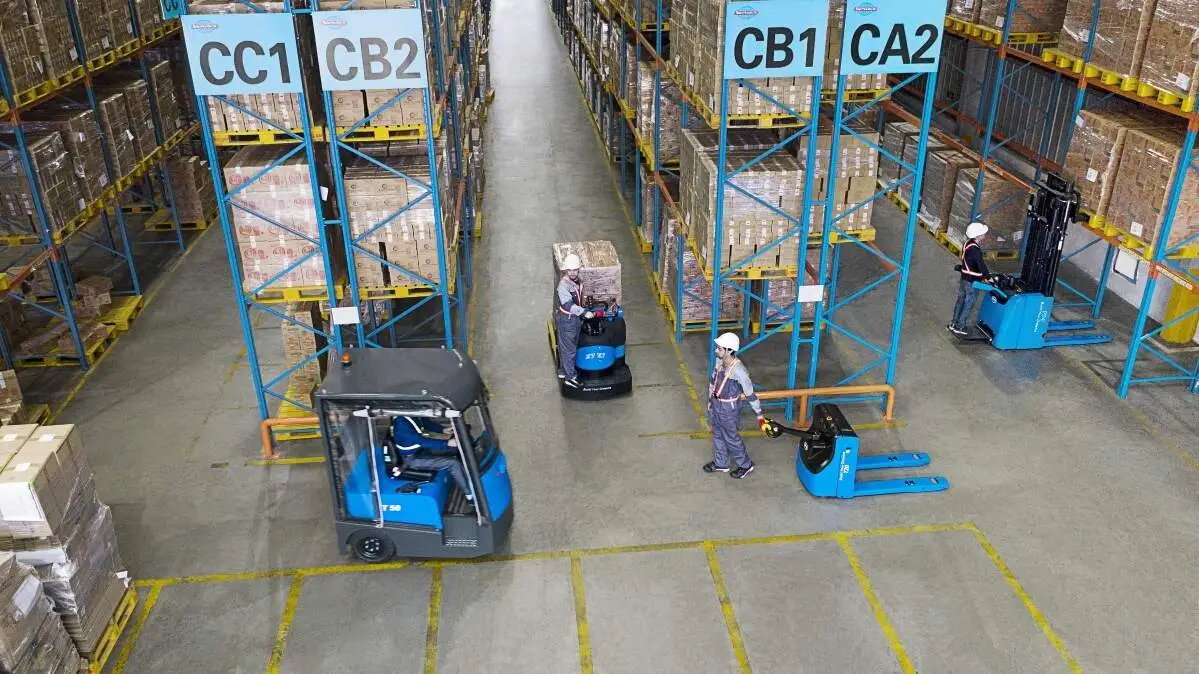
In busy warehouse operations, forklifts play a critical role in moving materials efficiently, but their blind spots pose significant safety risks. forklift side mirrors are essential components that help mitigate these risks by expanding the operator’s field of view, allowing them to detect pedestrians, other equipment, and obstacles in real time. Choosing the right side mirrors is not a one-size-fits-all task; it requires careful consideration of warehouse layout, forklift usage patterns, and safety requirements.
First, prioritize field of view. Warehouses vary widely in layout—some have narrow aisles with tight turns, while others feature open spaces with high-volume traffic. For narrow-aisle operations, convex mirrors are ideal as they provide a wider angle of view, helping operators navigate tight spaces without missing adjacent obstacles. In open warehouse areas, flat mirrors offer a more accurate representation of distances, which is valuable when moving large loads or operating near other forklifts.
Second, evaluate material durability. Warehouse environments are harsh, with frequent potential for impacts from racks, pallets, or other equipment. Mirrors made from shatter-resistant acrylic are a practical choice, as they are less likely to break upon collision, reducing maintenance costs and downtime. For outdoor warehouse sections or areas with heavy debris, mirrors with scratch-resistant coatings can maintain clarity over longer periods, ensuring consistent visibility.
Third, check installation compatibility. Different forklift models have varying mounting points and structural designs. Some mirrors are designed for bolt-on installation, offering a secure fit for heavy-duty usage, while others use adhesive mounts for easier, non-invasive setup. It’s important to select mirrors that align with your forklift’s specific dimensions and mounting locations to ensure stability during operation.
Fourth, consider adjustability. Operators have different heights and seating preferences, so mirrors that offer easy, tool-free adjustment are beneficial. Mirrors with swivel or tilt mechanisms allow operators to quickly fine-tune their view without interrupting workflow, ensuring optimal visibility throughout their shift. This flexibility also helps accommodate temporary adjustments when handling unusual loads or navigating unique warehouse sections.
Finally, assess maintenance requirements. Mirrors that are easy to clean and replace can save time and resources. Look for designs with smooth, non-porous surfaces that can be wiped down quickly to remove dust, dirt, or smudges. Mirrors with modular components also simplify replacement if a part becomes damaged, reducing the need for full mirror assembly replacement.
By taking these factors into account, warehouse managers can select forklift side mirrors that enhance operational safety, reduce the risk of collisions, and improve overall material handling efficiency. Remember, investing in high-quality, appropriately matched mirrors is a small but impactful step toward creating a safer and more productive warehouse environment.