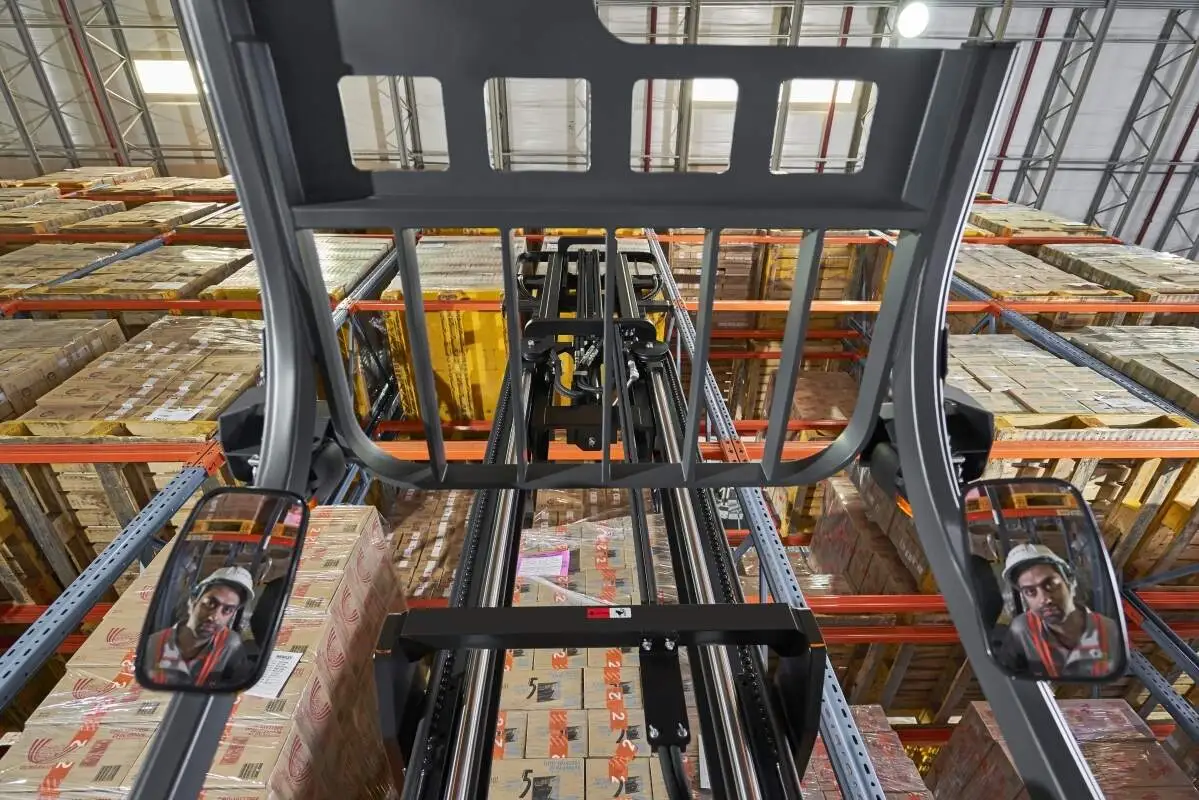
The forklift back tilt system is a critical component that directly impacts operational safety and efficiency in material handling scenarios. Understanding its core functions and proper adjustment methods is essential for forklift operators and maintenance personnel to minimize risks and optimize performance.
Core Functions of the Forklift Back Tilt System
First, the system plays a key role in enhancing load stability. When transporting heavy or bulky loads, tilting the carriage backward shifts the load’s center of gravity toward the forklift’s rear axle, reducing the risk of the forklift tipping forward. This is particularly vital when handling stacked goods or navigating uneven surfaces, as it maintains a balanced weight distribution that supports safe maneuvering.
Second, it prevents load slipping. During transit, sudden stops, starts, or bumps can cause unsecured loads to shift. A properly adjusted back tilt angle creates a slight incline that holds goods in place on the forks, reducing the chance of items falling off. This protects both the cargo from damage and nearby workers or equipment from potential collisions.
Third, the back tilt system improves operator visibility. When carrying tall loads that block the forward view, tilting the forks backward can lower the top edge of the load, allowing the operator to see the path ahead clearly. This visibility enhancement is crucial for navigating narrow aisles or busy warehouse floors, reducing the likelihood of accidents.
Professional Adjustment Methods
Before making any adjustments, complete preparatory steps to ensure safety. Park the forklift on a flat, level surface, turn off the engine, engage the parking brake, and chock the wheels to prevent unintended movement. Check the hydraulic fluid level to ensure it meets standard specifications, as insufficient fluid can hinder tilt system performance.
Next, inspect the hydraulic system for leaks or damage. Examine all hydraulic hoses, fittings, and seals for signs of wear or fluid leakage. If any issues are detected, repair or replace the affected components before proceeding with adjustments, as compromised hydraulics can lead to unpredictable system behavior.
To adjust the back tilt angle, locate the tilt control valve’s adjustment screw, typically situated near the hydraulic cylinder. Using a suitable wrench, turn the screw in small increments—either clockwise or counterclockwise—to increase or decrease the maximum back tilt angle. Most standard applications recommend an angle range between 10 to 15 degrees; avoid over-adjusting, as excessive tilt can strain the hydraulic system or disrupt load balance.
After adjusting, conduct post-adjustment tests. Start the forklift and test the tilt system through a full range of motion to ensure smooth, consistent operation without delays or jerks. Then, load the forklift with a standard weight and verify that the back tilt angle maintains load stability during maneuvering. If the system does not perform as expected, repeat the adjustment process with smaller increments until optimal performance is achieved.
Always remember that adjustments should only be performed by trained, certified personnel familiar with forklift hydraulic systems. Regular maintenance and periodic checks of the back tilt system can prevent issues and extend the equipment’s lifespan, ensuring safe and efficient material handling operations.