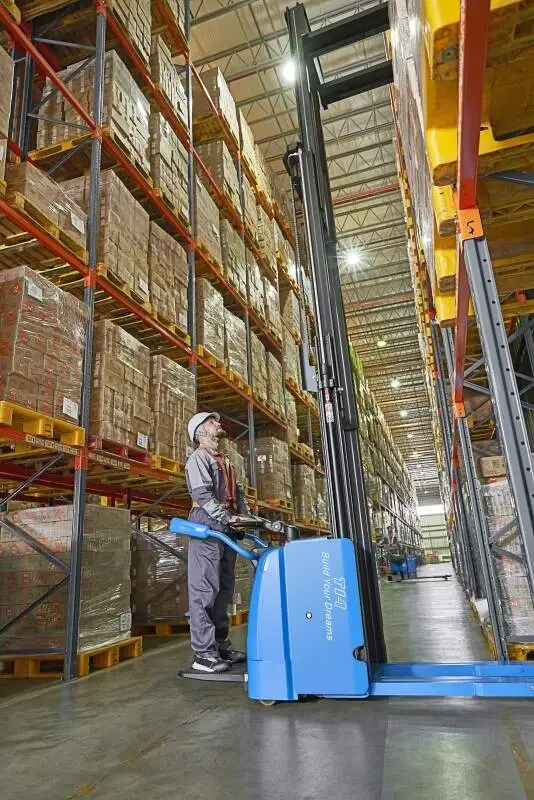
In busy warehouse and distribution center environments, forklift operations play a critical role in streamlining material handling processes. However, challenges like inaccurate pallet alignment, accidental collisions with shelves, and reduced operational efficiency often hinder daily workflows. Forklift laser line guide systems have emerged as a reliable solution to address these issues, offering targeted support to forklift operators.
Core Functions of Forklift Laser Line Guide Systems
1. Precise Pallet Alignment
One of the primary functions of these systems is to project a clear laser line onto the warehouse floor or pallet openings, guiding operators to align forklift tines accurately with pallet slots. This eliminates the need for repeated adjustments, reducing the time spent on each pallet pick-up or drop-off. By minimizing misalignment, it also lowers the risk of damage to both pallets and goods, cutting down on unnecessary repair and replacement costs.
2. Enhanced Load Positioning Accuracy
When placing loads onto storage shelves, laser line guides help operators position goods with greater precision. The projected line serves as a visual marker to ensure loads are centered on shelf beams, preventing uneven weight distribution that could lead to shelf instability or load falls. This level of accuracy is especially beneficial in high-density storage areas where space is limited and precision is non-negotiable.
3. Workplace Safety Improvement
Laser line guides also contribute to a safer work environment. The bright, visible laser line alerts nearby pedestrians and other equipment operators to the forklift’s intended path, reducing the likelihood of accidental collisions. In low-light or busy sections of the warehouse, this visual cue acts as an additional safety warning, helping to mitigate risks associated with blind spots and distracted movement.
4. Operational Efficiency Boost
By reducing the time spent on alignment adjustments and minimizing errors, laser line guide systems help increase overall operational throughput. Operators can complete more tasks in less time, allowing warehouses to handle higher volumes of material without compromising on accuracy or safety. This efficiency gain translates into better resource utilization and improved productivity for daily operations.
Practical Installation Tips for Forklift Laser Line Guide Systems
1. Conduct a Pre-Installation Site Assessment
Before installing the system, evaluate the warehouse environment to identify potential factors that could affect laser performance. Consider aspects like floor surface condition (smoothness, reflectivity), ambient light levels, and typical forklift operating paths. This assessment helps determine the optimal type of laser system and installation location to ensure clear, consistent projection.
2. Choose the Right Mounting Position
Select a mounting position that allows the laser line to be clearly visible to the operator while avoiding obstruction from forklift components or loads. Common mounting spots include the upper frame near the cab or the top of the forklift tines. Ensure the mount is secure to prevent shifting during operation, which could distort the laser line’s alignment.
3. Calibrate and Test the System
After installation, calibrate the laser line to align with the forklift’s tines and intended operating path. Conduct tests in different areas of the warehouse, including low-light zones and narrow aisles, to verify that the laser line remains clear and accurate. Adjust the system as needed to account for any variations in the environment.
4. Implement Regular Maintenance
To maintain optimal performance, establish a regular maintenance routine. Clean the laser lens regularly to remove dust and debris that could block the projection. Inspect wiring connections to ensure they are secure and free from damage. Check the laser alignment periodically to correct any shifts that may occur due to forklift vibration or movement.
5. Provide Operator Training
Ensure all forklift operators receive proper training on how to use the laser line guide system. Train them to interpret the laser line correctly, understand its role in alignment and safety, and troubleshoot basic issues. This training helps maximize the system’s benefits and ensures consistent, safe usage across all operations.
In conclusion, forklift laser line guide systems offer valuable functions that enhance accuracy, safety, and efficiency in material handling operations. By following proper installation tips and maintenance practices, warehouses can fully leverage these systems to optimize their forklift workflows and create a more productive, safer work environment.