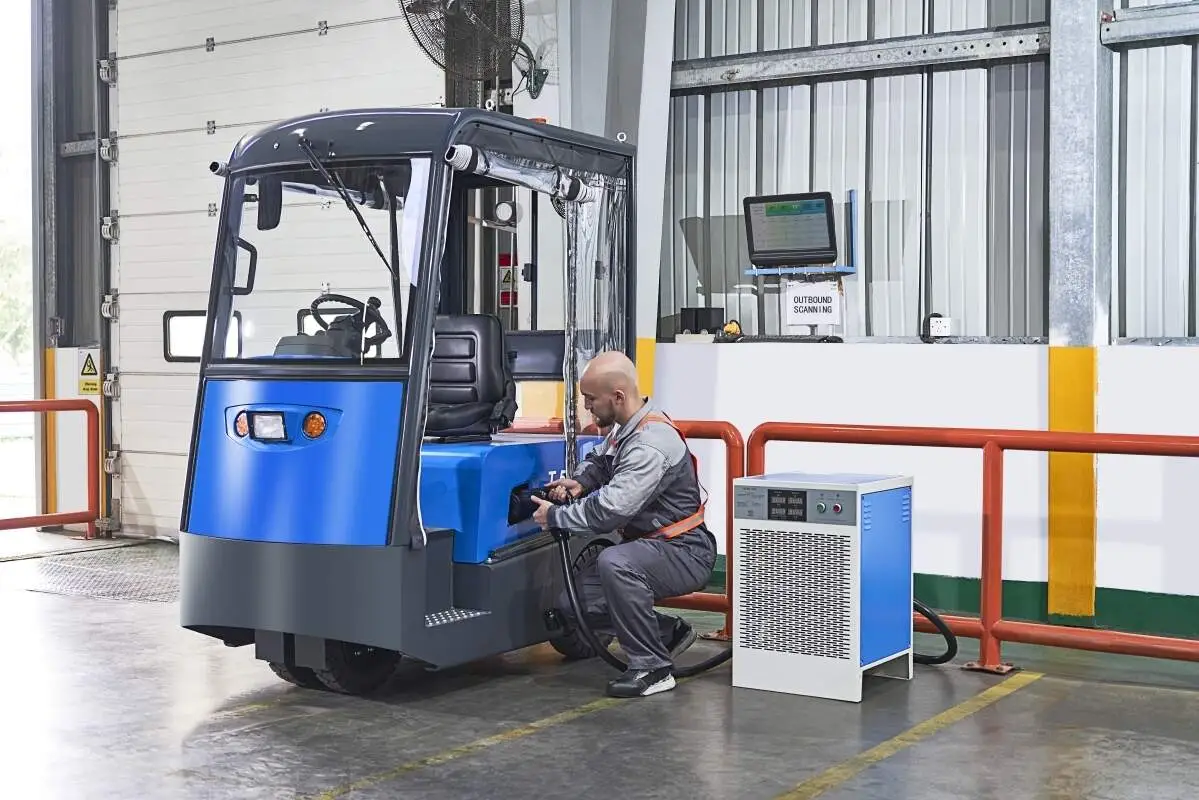
Counterbalance forklifts are widely used industrial equipment designed to lift, move, and stack heavy loads in warehouses, distribution centers, and manufacturing facilities. Unlike specialized forklifts that rely on outriggers or additional support structures, these vehicles feature a heavy metal weight mounted at the rear, which offsets the weight of loads lifted by the front forks—this is the core defining characteristic that gives them their name.
At the heart of a counterbalance forklift’s functionality lies the principle of lever balance. Operating much like a seesaw, the forklift’s rear weight acts as a counterforce to prevent the vehicle from tipping forward when carrying heavy loads. The load center, typically measured as the distance from the face of the forks to the center of gravity of the load, plays a crucial role here. If the load is placed too far forward or exceeds the forklift’s rated capacity, the center of gravity shifts beyond the front wheel axle, creating a tipping risk. Operators must adhere to load capacity guidelines to maintain this delicate balance.
The operating system of a counterbalance forklift integrates multiple components that work in tandem. Most models are equipped with a steering system that allows tight maneuverability, essential for navigating narrow aisles in warehouses. Hydraulic systems power the fork lifting and tilting mechanisms: lifting cylinders raise or lower the forks to adjust load height, while tilting cylinders angle the mast backward to keep loads stable during transport and forward to facilitate loading and unloading.
Power sources vary across counterbalance forklift models, with two primary categories dominating the market. Electric counterbalance forklifts run on rechargeable batteries, producing zero emissions and operating quietly, making them ideal for indoor use. Internal combustion models, fueled by gasoline, diesel, or propane, offer higher power output and longer runtime, suitable for outdoor heavy-duty tasks. Regardless of the power source, the engine or motor drives the wheels and hydraulic pump, ensuring consistent performance during operation.
Safety is an integral part of understanding counterbalance forklift operation. Beyond maintaining load balance, operators must follow protocols such as reducing speed in wet or uneven areas, keeping a clear view of the path ahead, and avoiding sudden turns or stops. Regular maintenance checks, including inspecting brake systems, hydraulic fluid levels, and tire condition, also contribute to safe and reliable operation, preventing mechanical failures that could lead to accidents.