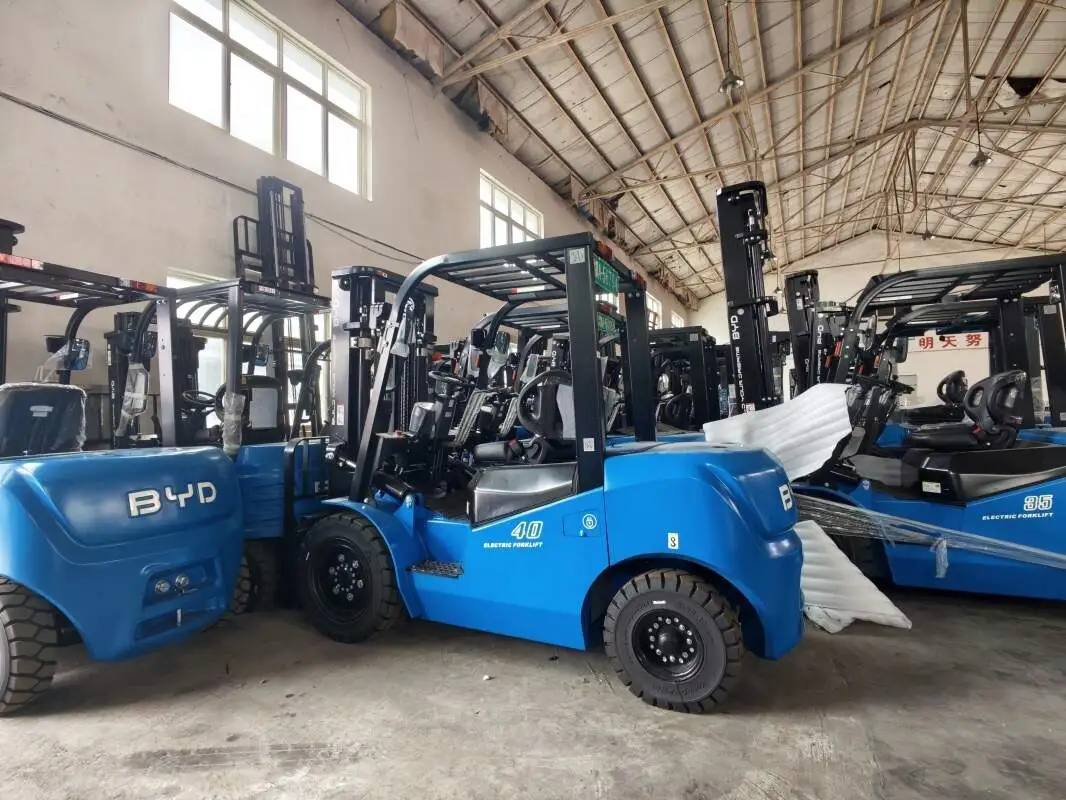
The maximum lifting height of an industrial forklift is a critical specification that directly impacts material handling efficiency across warehouses, construction sites, and manufacturing facilities. Understanding the key factors defining this parameter helps businesses select suitable equipment and ensure safe, productive lifting operations.
One of the primary determinants is the forklift’s mast design. Masts come in configurations like two-stage, three-stage, or telescopic models, with three-stage variants typically offering greater maximum lifting heights due to extended vertical reach. High-strength steel construction ensures structural integrity during tall extensions, while mast tilt angles affect effective height—backward tilt may reduce reach to maintain load stability, and forward tilt limits height to prevent load slippage.
Load capacity and load center position are equally influential. Each forklift has a rated load capacity specified at a standard 24-inch load center. Handling loads heavier than this rating compromises stability, forcing a reduction in maximum lifting height to avoid tipping. A load center shifted further from the forks also decreases effective height, as the offset weight creates excess chassis torque, requiring height limits to preserve balance.
Hydraulic system performance is another key factor. Hydraulic pumps generate the pressure needed to lift the mast, while cylinders determine vertical stroke length. Well-maintained systems with adequate pressure ensure full mast extension, but contaminated or overheated hydraulic oil reduces pressure, limiting height. Leaks or worn components can also hinder performance, making regular maintenance essential to preserve lifting capabilities.
Operational environments affect practical maximum height too. Uneven or sloped ground reduces stability, requiring operators to lower lifting heights to avoid tipping. Low indoor ceiling heights impose physical limits, even if the forklift can reach higher. Extreme temperatures impact hydraulic fluid viscosity and mast material flexibility, further influencing lifting performance.
Finally, the forklift’s overall configuration, including wheelbase and counterweight design, plays a role. A longer wheelbase boosts stability, allowing higher lifts with heavy loads. Appropriately sized counterweights balance load weight; undersized counterweights force lower maximum heights to maintain equilibrium.
In summary, industrial forklifts’ maximum lifting height stems from a combination of design, load characteristics, system performance, environment, and equipment configuration. Evaluating these elements helps businesses choose forklifts aligned with their material handling needs, ensuring efficient and safe daily operations.