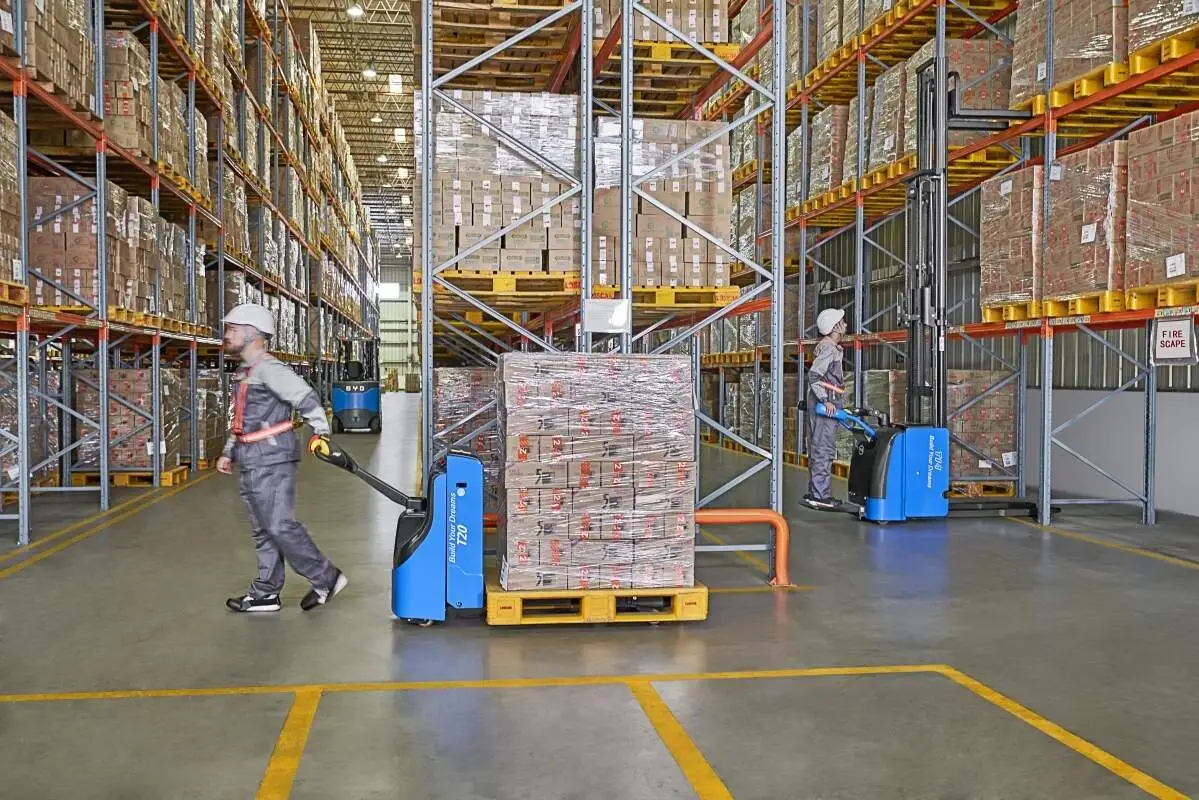
In busy warehouse environments, forklifts are common material handling equipment used to move stacked goods, pallets and supplies across narrow storage aisles, loading zones and order picking areas each workday. As a standard component mounted on both sides of the forklift cab, side mirrors serve multiple practical roles that support smooth daily operations, rather than acting as an insignificant fitting.
First, side mirrors effectively expand an operator’s field of view to reduce blind spots around the vehicle. When a driver sits in the fixed cab position, their direct line of sight cannot cover the forklift’s rear corners, edges of raised loads, or the space immediately beside the vehicle wheels. Properly adjusted side mirrors let operators observe approaching pedestrians, scattered obstacles, stacked inventory edges and other moving equipment in adjacent aisles without repeated torso turns, reducing reaction lag during travel.
Second, well-positioned side mirrors help cut unnecessary maneuvering adjustments and lower collision risks during routine tasks. When reversing, turning at aisle intersections, or aligning forks with pallet openings at height, operators can reference side mirror views to judge distance between the vehicle, surrounding racks and goods, instead of repeatedly stopping to dismount and check positions. This shortens time spent on single material transfer tasks, and lowers chances of accidental impacts that may damage inventory, racking or facility structures. It also supports consistent adherence to basic on-site safety operation rules, as reliable surrounding visibility is a basic requirement for stable warehouse workflow.