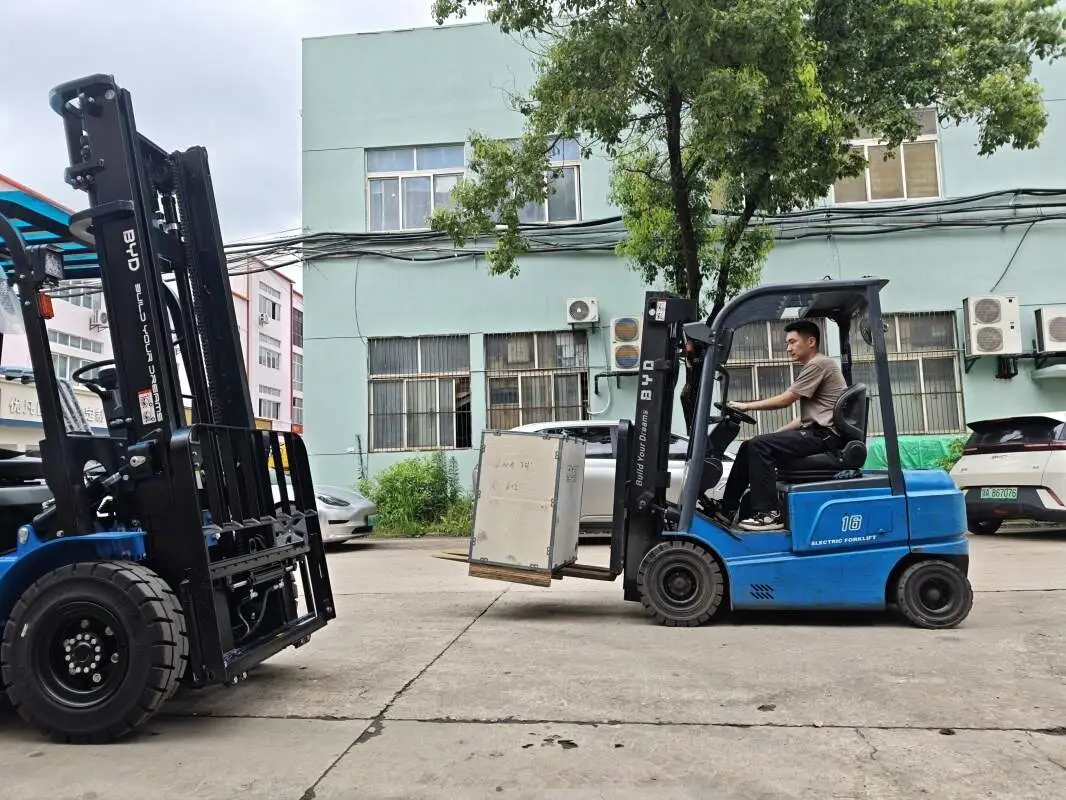
electric forklifts are indispensable tools in warehouses, distribution centers, and manufacturing facilities, streamlining material handling tasks with efficient, eco-friendly operation. Central to their control system are three key pedals, each serving a distinct purpose that directly impacts safety, precision, and productivity. Understanding how each pedal functions is critical for forklift operators to perform tasks effectively while minimizing risks to personnel and cargo.
The first pedal, the acceleration pedal, governs the forklift’s forward and reverse movement speed. When pressed gently, it sends an electrical signal to the forklift’s motor, gradually increasing power to propel the vehicle in the selected direction. A smooth, steady press ensures gradual acceleration, preventing sudden jolts that could shift or damage loaded cargo. Releasing the pedal reduces power, allowing the forklift to decelerate naturally. This pedal is primarily used for covering longer distances between workstations, where consistent, controlled speed is essential for efficiency.
Next is the brake pedal, a critical safety component designed to slow down or stop the forklift. Electric forklifts typically feature a combined braking system: light pressure activates regenerative braking, which converts kinetic energy into electrical energy to recharge the battery, optimizing energy efficiency. Applying more pressure engages the mechanical brake system, providing immediate stopping power vital in emergency situations or when navigating downhill slopes. Operators must use the brake pedal judiciously, especially when carrying heavy loads, to avoid sudden stops that could cause cargo to tip or fall.
The third pedal is the inching (or creep) pedal, a specialized control for precise, low-speed operations. When activated, this pedal overrides the acceleration pedal’s normal function, limiting the forklift’s maximum speed while maintaining full steering responsiveness. This allows operators to maneuver with exceptional accuracy, such as positioning forks under pallets, loading or unloading trucks, or navigating narrow aisles. By using the inching pedal, operators can make fine adjustments to the forklift’s position without risking sudden movements, reducing the likelihood of cargo damage or collisions with infrastructure.
Together, these three pedals form a cohesive control system adapting to diverse material handling demands. Mastery of each pedal’s function, paired with proper training, enables operators to navigate different workplace scenarios safely and efficiently. Whether moving cargo across a large warehouse or performing delicate loading operations, the three pedals work in tandem to support smooth, controlled forklift operation, underscoring their importance in daily material handling workflows.