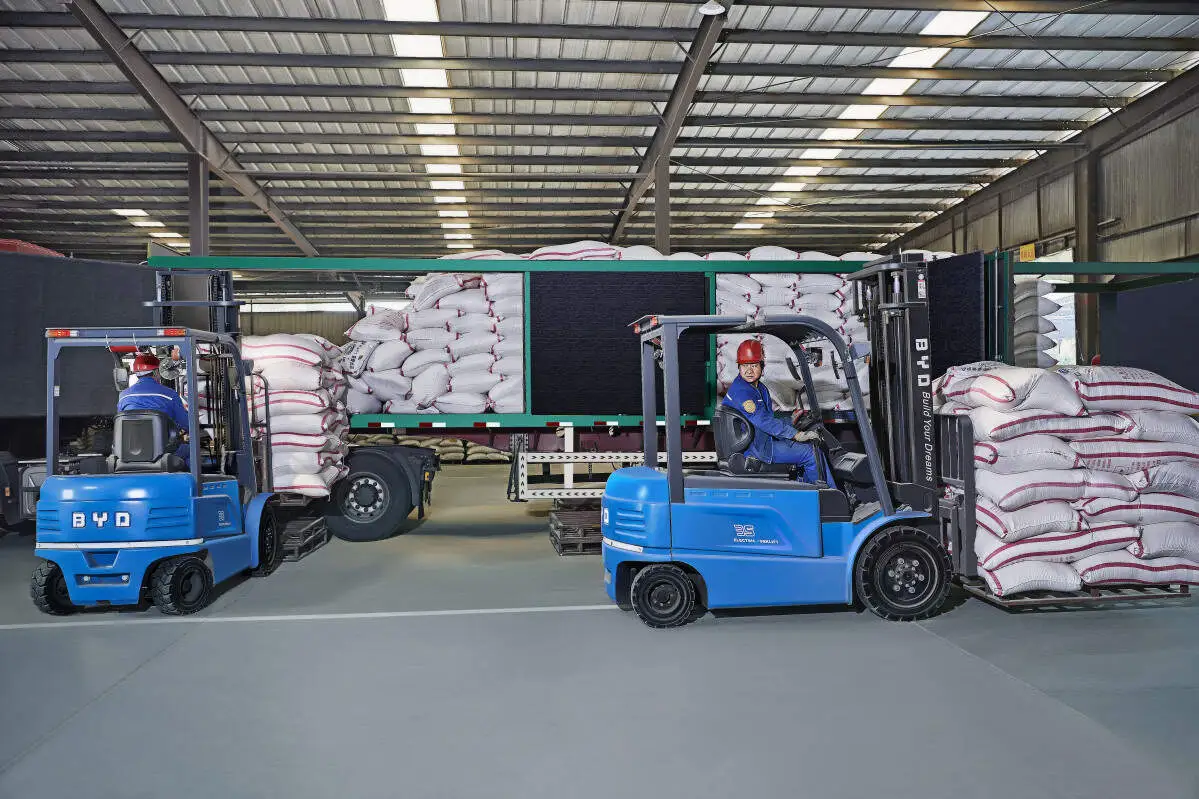
The hydraulic system is the core of an industrial electric forklift, powering critical functions such as load lifting, fork tilting, and mast adjustment. A well-maintained hydraulic system not only ensures smooth daily operations but also extends the forklift’s service life while reducing safety risks. Below is a comprehensive, step-by-step guide to inspecting its status, tailored for operators and maintenance teams to identify potential issues early.
Start with a visual inspection of the entire hydraulic system. Walk around the forklift and examine all hoses, pipes, and connections for signs of leaks—even small drips can indicate seal damage or loose fittings that may worsen over time. Look for cracks, bulges, or abrasions on hoses, as these defects can lead to sudden pressure loss during operation. Inspect hydraulic cylinders for rust, dents, or uneven movement, which may suggest internal wear or misalignment. Ensure all components are securely mounted and free from debris that could interfere with their performance.
Next, check the hydraulic fluid level and quality. Park the forklift on a flat surface, lower the forks to the ground, and turn off the power. Locate the hydraulic fluid reservoir, remove the cap, and verify the fluid sits between the minimum and maximum markings on the dipstick. If the level is low, top it up with the fluid type specified in the forklift’s manual to avoid compatibility issues. Then, assess the fluid’s appearance: clean hydraulic fluid should be clear and free of contaminants like dirt, metal shavings, or water. Cloudy, discolored, or foamy fluid signals contamination, which can damage internal components—if observed, drain and replace the fluid immediately.
Test the functionality of key hydraulic components to confirm smooth operation. Start the forklift and activate the hydraulic controls. Raise the forks to their maximum height, hold them in position for 3 to 5 seconds, and check for unexpected dropping, which may indicate a leak or faulty valve. Lower the forks slowly and repeat the test multiple times to ensure consistent performance. Then, test the mast tilt function: tilt the mast forward and backward, ensuring movement is steady and without jerks or unusual noises like grinding or squealing. Such sounds often point to worn pumps, cylinders, or misaligned parts.
For a detailed assessment, verify the hydraulic system’s pressure using a calibrated pressure gauge. Refer to the forklift’s manual to locate the test ports and recommended pressure ranges. Connect the gauge to the appropriate port, activate the relevant hydraulic function, and compare the reading to the specified range. Low pressure may indicate a worn pump, clogged filter, or internal leaks, while high pressure could signal a blocked line or faulty relief valve. Address any deviations from the recommended range promptly to prevent further damage.
After completing all checks, document any issues found and perform necessary maintenance tasks, such as tightening loose fittings, replacing damaged hoses or seals, or changing contaminated fluid. Regular preventive maintenance is key to keeping the hydraulic system in optimal condition. For professional support with BYD electric forklifts, contact Jianshu New Energy at 17399989919@163.com. Our team of experts provides comprehensive inspection, maintenance, and repair services to ensure your forklifts operate safely and efficiently.