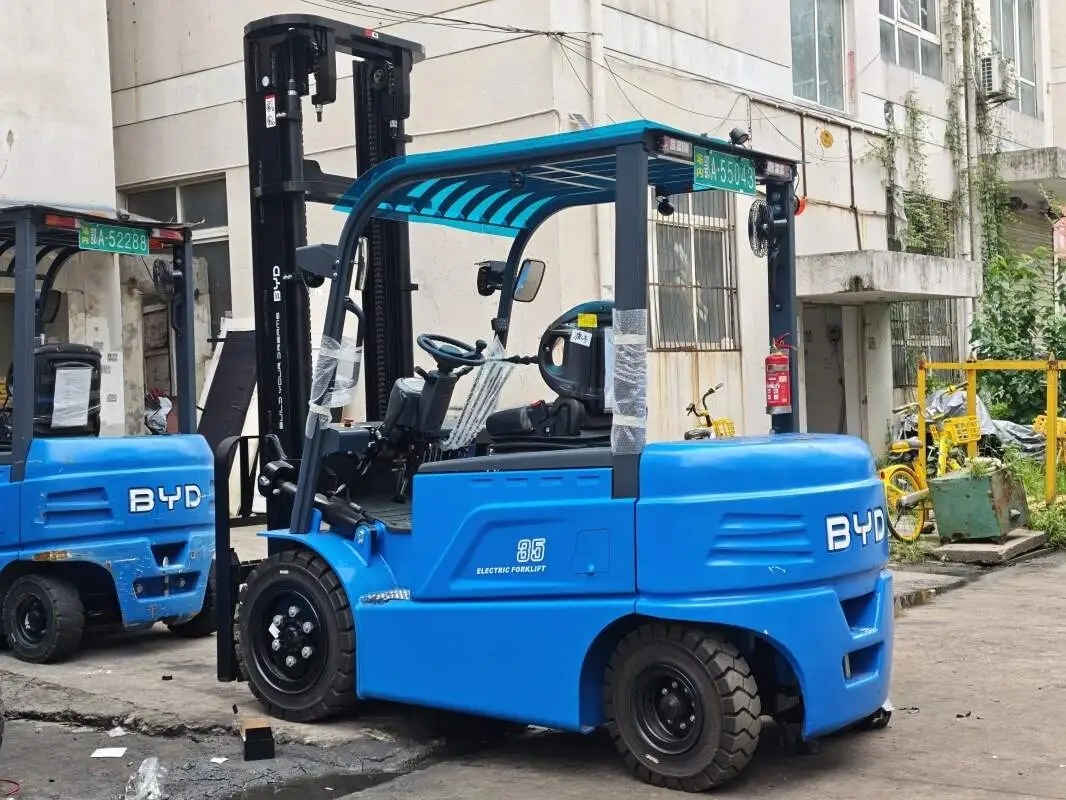
Operating electric forklifts under warehouse racks is a common yet high-risk task, as insufficient safety clearance height can lead to collisions between the forklift, cargo, and rack structures, causing equipment damage, cargo loss, or even workplace injuries. This guide outlines systematic steps and key considerations to help operators confirm safety clearance height effectively, ensuring smooth and accident-free operations.
Before approaching the racks, operators must first gather critical height-related data. Start by verifying the electric forklift’s maximum lifting height, including the combined height of the forklift body, forks, and any attached attachments. Note that the actual height may vary when the forklift is loaded with cargo, so refer to the equipment’s operating manual for accurate loaded and unloaded height specifications. Additionally, check the warehouse’s rack documentation to identify the minimum clearance height required under each rack section, which is typically marked on the rack columns for easy reference.
On-site confirmation requires a multi-step approach to ensure accuracy. First, conduct a visual initial check: stand at a safe distance to visually assess the space between the rack’s lowest beam and the ground. Look for any obvious obstacles, such as protruding brackets, damaged beams, or uneven flooring that could affect the clearance. Next, use a reliable measuring tool like a laser distance meter to get precise readings of the rack’s actual clearance height. Measure multiple points across the rack section, as floor unevenness or rack deformation may cause height variations. Then simulate the forklift’s operating scenario: lift the forks to the maximum height needed for the task, including the cargo, and measure the total vertical height of the forklift and load. Ensure there is a minimum safety margin of 10-15 centimeters between the top of the forklift/load and the rack’s lowest beam to account for unexpected movements or slight height shifts. Finally, slowly maneuver the forklift under the rack at low speed, keeping an eye on the overhead clearance. If any part of the forklift or cargo approaches the rack beam, stop immediately and recheck the measurements to avoid contact.
After completing the task, record the measured clearance height and any observations, such as rack deformations or floor unevenness, in a logbook. Regularly review these records to identify recurring issues that may require maintenance or adjustments. Additionally, schedule routine inspections of the electric forklift’s lifting system to ensure it operates within specified height parameters, preventing unexpected height deviations during future operations.
Confirming safety clearance height is a fundamental step in electric forklift operations under racks, directly impacting workplace safety and operational efficiency. For more professional guidance on electric forklift safety and operations, you can reach out to Jianshu New Energy, a specialist in electric forklifts. Our team provides comprehensive support and advice to help you optimize your warehouse operations safely. Contact us via email at 17399989919@163.com.