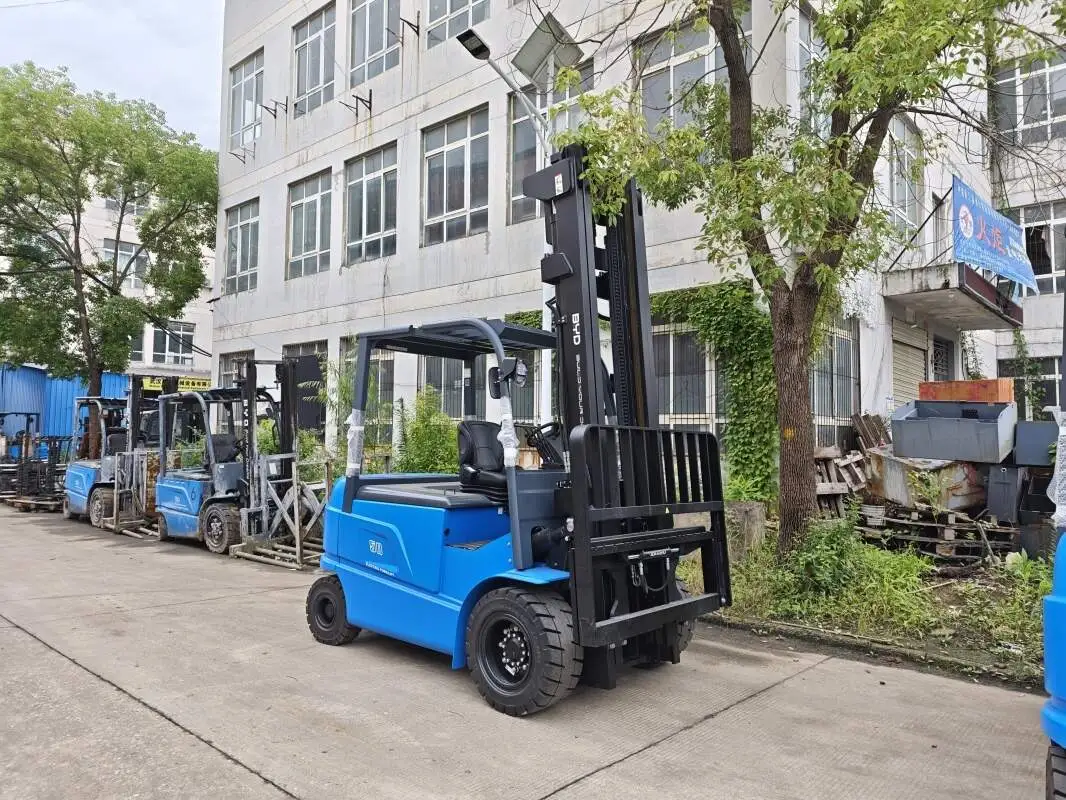
Industrial electric forklifts serve as core workhorses in warehouses, distribution hubs, and manufacturing plants, where their load-handling efficiency directly shapes daily operational productivity. Yet, many users fail to recognize that a forklift’s actual carrying capacity is not a static figure—it shifts dramatically based on several height-related variables. Grasping these factors is vital for upholding operational safety, preventing equipment wear, and unlocking the forklift’s full functional potential.
One of the most impactful factors is lifting height. When a forklift raises its load to greater heights, the combined center of gravity of the forklift and the load shifts upward. This elevated position compromises the vehicle’s stability, as it moves further from the base of support provided by the forklift’s wheels. Manufacturers provide detailed load capacity curves that specify reduced weight limits at increasing heights; for instance, a forklift rated for 3 tons at ground level may only safely carry 2 tons when lifting to a 3-meter height. Ignoring these guidelines can lead to tip-overs, equipment damage, or workplace accidents.
Mast tilt angle, when paired with lifting height, also plays a critical role. Forward tilting the mast, especially at elevated heights, shifts the load’s center of gravity toward the front of the forklift, further reducing stability and safe carrying capacity. While a slight forward tilt helps in securing loads during transport, excessive tilting at height can drastically cut down the maximum weight the forklift can handle. Conversely, backward tilting improves load stability, but even this must be controlled—overly aggressive backward tilting at high heights can strain the mast components and alter weight distribution.
Fork positioning height is another often-overlooked variable. When forks are inserted into a pallet at an uneven height or fail to fully engage the pallet, the load’s center of gravity becomes misaligned. Even if the final lifting height is consistent, this misalignment means the forklift can safely carry less weight than its rated capacity for that height. Proper fork positioning—ensuring forks are fully inserted, level, and centered under the load—is essential to maintaining the intended carrying capacity at any height.
Additionally, attachments that add height to the forklift, such as side shifters or clamp attachments, modify the vehicle’s overall center of gravity. These attachments raise the effective height of the load, leading to reduced carrying capacity compared to using the forklift without such additions. Operators must account for these changes by referencing modified load capacity charts provided by the manufacturer or equipment provider.
To ensure safe and efficient use of your industrial electric forklift, always adhere to the load capacity specifications for each height scenario. If you’re seeking reliable industrial electric forklifts or professional advice on optimizing their performance, Jianshu New Energy specializes in BYD electric forklifts. You can reach us via email at 17399989919@163.com for personalized support and product information.