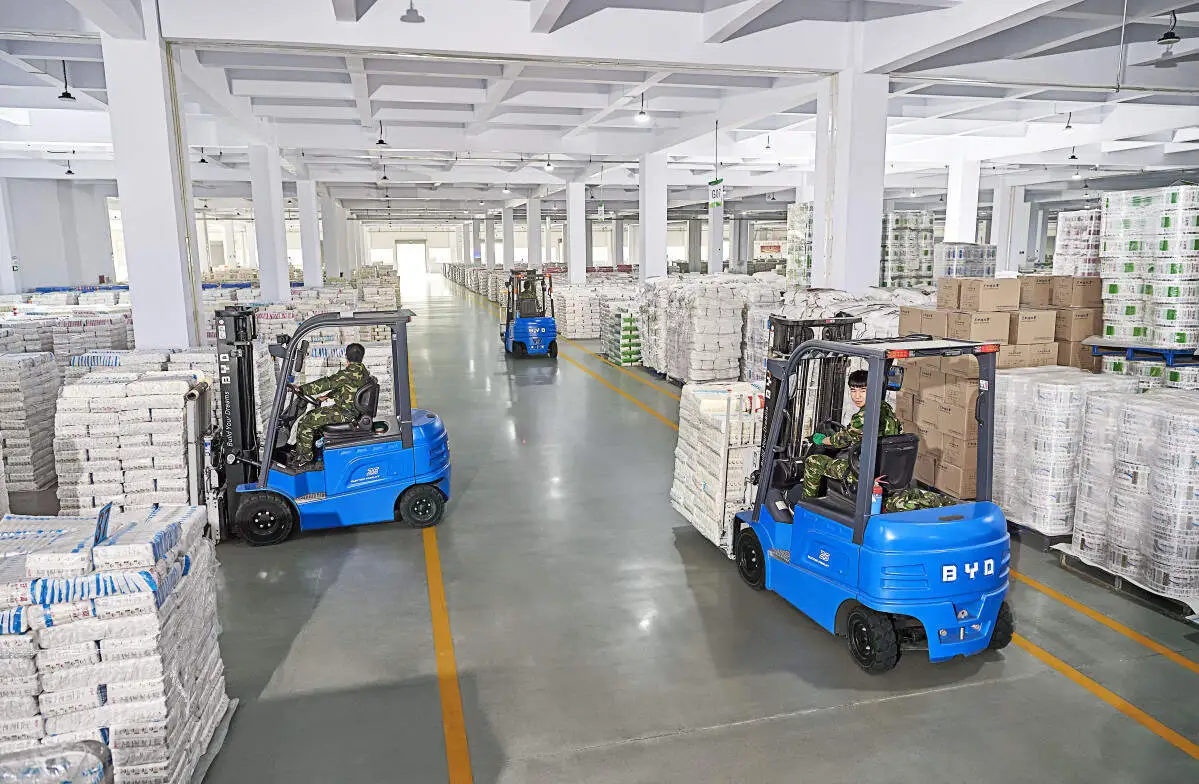
In modern warehousing and logistics operations, electric forklifts are indispensable tools for efficient material handling. To expand their functionality, many operators utilize various extension accessories. While these attachments enhance versatility, they also have a direct impact on the forklift’s actual load capacity, a factor that demands careful consideration to ensure safe and efficient operations.
One of the most common extension accessories is the fork arm extender. Designed to reach farther into pallet racks or handle longer loads, this accessory alters the forklift’s load center—the distance from the front face of the forks to the center of gravity of the loaded material. When fork arms are extended, this distance increases, shifting the center of gravity forward. Basic physics principles dictate that a longer load arm reduces the maximum weight the forklift can safely lift. For instance, extending fork arms by 50% may lead to a 20-30% reduction in the rated load capacity, depending on the forklift’s original design. Operators must consult the manufacturer’s load chart to determine the adjusted capacity when using this accessory.
Side shift attachments are another widely used accessory that affects load capacity. These devices allow the forks to move horizontally, making it easier to align with pallets without repositioning the entire forklift. However, side shift units add extra weight to the forklift’s front end, modifying the overall balance. This additional weight reduces the available payload capacity, as the forklift’s total weight (including the accessory) must stay within its structural limits. Moreover, when the forks are shifted to either side, the load center moves laterally, further impacting the safe load limit. Operators need to account for both the accessory’s weight and the lateral load shift when calculating the actual load capacity.
Rotating attachments, used for handling specialized loads like barrels or crates, also influence load capacity. These accessories add significant weight to the forklift’s front, and their rotating function introduces dynamic forces during operation. When rotating a load, the center of gravity shifts continuously, putting additional stress on the forklift’s hydraulic system and structural components. As a result, the actual load capacity is lower compared to using standard forks, and operators must adhere to reduced load limits specified for this attachment type.
Safety is paramount when using any extension accessory. Operators should receive proper training on how each accessory affects load capacity and handling dynamics. Regular inspections of accessories are essential to ensure they are in good working condition and properly installed. Additionally, it is crucial to never exceed the adjusted load capacity, as this can lead to forklift tipping, structural damage, or workplace accidents.
At Jianshu New Energy, we specialize in electric forklifts and provide expert guidance on selecting and using extension accessories safely. If you have questions about load capacity adjustments or need advice on optimizing your electric forklift operations, feel free to contact us at 17399989919@163.com.