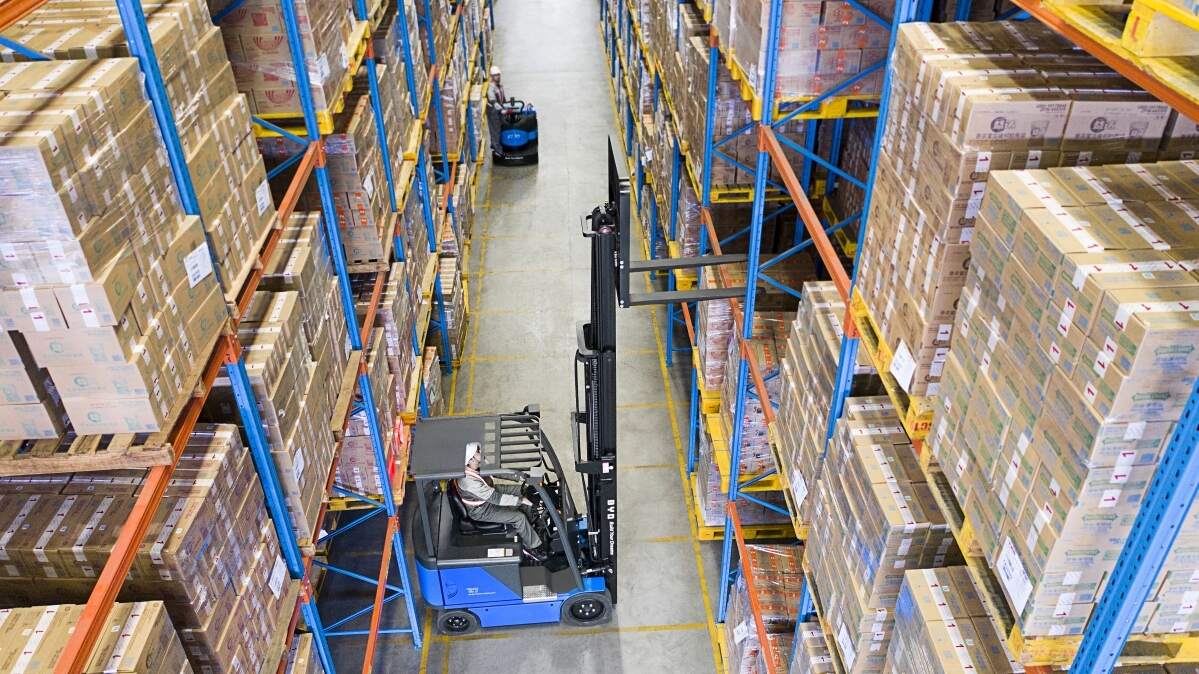
In busy warehouses, distribution centers, and industrial facilities, efficient weighing operations are critical to maintaining smooth material flow and accurate inventory management. Traditional weighing methods often involve transporting loads to a fixed scale, a process that consumes time, increases labor costs, and introduces the risk of product damage during extra handling steps. Enter forklift scale forks—a specialized solution designed to integrate weighing capabilities directly into the forklift, transforming how businesses handle load measurement.
Forklift scale forks replace standard forklift tines, incorporating precision load cells and digital display systems that capture weight data as the forklift lifts a load. The load cells detect the force exerted by the load, converting it into an accurate weight reading that appears on a dashboard-mounted screen. This on-board technology eliminates the need to move loads to a separate scale, allowing operators to weigh items in real time while completing their regular lifting and transporting tasks.
One of the primary benefits of forklift scale forks is the significant reduction in operational steps. Instead of lifting a load, transporting it to a scale, recording the weight, and then moving it to its final destination, operators can weigh the load the moment it’s lifted. This cuts down on unnecessary trips, minimizes fuel consumption, and reduces the time spent on each task, directly boosting overall productivity. Additionally, by eliminating the need for extra handling, the risk of product damage is lowered, protecting valuable inventory and reducing associated costs.
Accuracy is another key advantage. Traditional manual weighing processes are prone to human error, from incorrect weight readings to data entry mistakes. Forklift scale forks provide precise, consistent measurements, with many systems offering features like tare weight adjustment to account for pallets or containers. Some models also integrate with inventory management software, allowing weight data to be automatically logged and stored. This seamless data transfer reduces administrative work and ensures inventory records are always up-to-date, supporting better decision-making for stock levels and order fulfillment.
Forklift scale forks are versatile tools suitable for a wide range of industries. In manufacturing facilities, they can weigh raw materials as they’re delivered, ensuring accurate receipt of goods and preventing over or under deliveries. In distribution centers, they help verify outgoing shipments, ensuring customers receive the correct amount of product. Even in construction sites, these forks can weigh building materials like gravel or lumber, helping manage supply levels and avoid waste.
As businesses continue to seek ways to optimize operations and reduce costs, forklift scale forks emerge as a practical, efficient solution for streamlining weighing processes. By combining the functionality of a forklift with precise weighing capabilities, they eliminate bottlenecks, reduce errors, and enhance productivity across multiple industries. For any organization looking to improve their material handling and weighing operations, integrating forklift scale forks is a strategic investment that delivers long-term benefits.