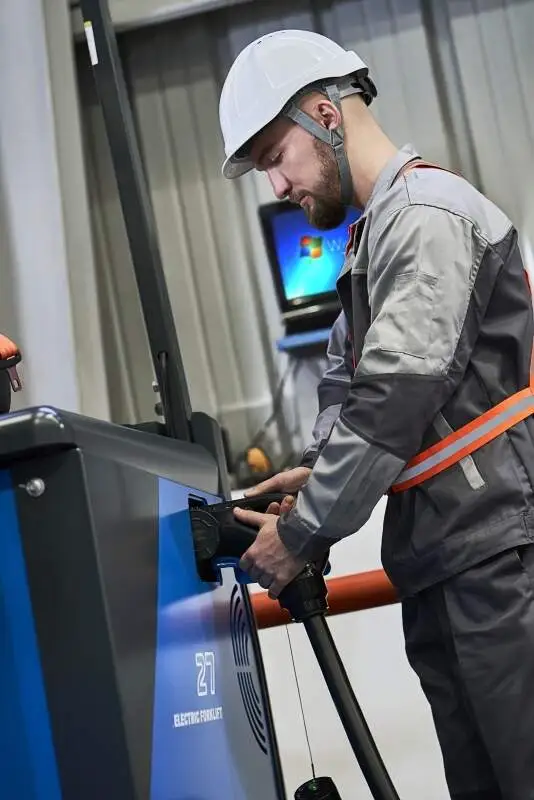
Outdoor work environments range from smooth asphalt loading docks to uneven gravel yards and muddy construction sites, each presenting unique challenges that directly impact electric forklift performance and suitability. Choosing the right model requires a thorough assessment of on-site conditions to ensure safety, efficiency, and long-term reliability.
Terrain is one of the most critical factors shaping forklift selection. For flat, paved surfaces like warehouse loading bays or commercial parking lots, standard electric forklifts with solid rubber tires suffice. These models offer stable handling and energy efficiency, ideal for repetitive, light to medium load tasks. However, rough terrains—such as unpaved construction sites, agricultural fields, or mountainous storage yards—demand specialized rough terrain electric forklifts. Equipped with large, knobby tires and higher ground clearance, these units navigate ruts, loose gravel, and steep inclines without compromising traction. They also feature reinforced frames to withstand the stress of uneven surfaces, preventing premature wear and tear.
Weather conditions play a pivotal role in determining forklift durability and functionality. In regions with frequent rain or high humidity, electric forklifts must have a high IP (Ingress Protection) rating to shield electrical components from water and moisture. This prevents short circuits and extends battery life. For extreme high-temperature environments, models with advanced battery cooling systems are essential to maintain optimal performance and prevent overheating. Conversely, in cold climates, forklifts should be equipped with cold-resistant batteries and heated controls to ensure reliable operation when temperatures drop below freezing. Even moderate temperature fluctuations can affect battery efficiency, so selecting a model tailored to the local climate is key.
Space constraints and site layout also influence choice. In narrow outdoor spaces, such as crowded construction zones or tight farm storage areas, compact electric forklifts with tight turning radii are preferred. These models maneuver easily around obstacles, reducing the risk of collisions and improving workflow efficiency. In contrast, open outdoor areas with wide pathways can accommodate larger electric forklifts with higher load capacities, designed to handle heavy materials like steel beams or bulk agricultural products. Additionally, sites with overhead obstacles, such as low-hanging power lines or warehouse awnings, require forklifts with adjustable mast heights to avoid collisions during lifting operations.
Finally, load requirements must align with site conditions. Heavy loads in rough terrains demand forklifts with stronger lifting capacities and stable weight distributions to prevent tipping. For outdoor tasks involving bulky or irregularly shaped loads, models with specialized attachments—like side shifters or clamp attachments—enhance versatility. It’s important to balance load capacity with maneuverability: a forklift that can handle heavy loads but struggles on uneven ground will not meet the needs of a rough-terrain site.
By carefully evaluating terrain, weather, space, and load factors, businesses can select an electric forklift that not only meets their outdoor work needs but also improves operational efficiency and reduces maintenance costs over time.