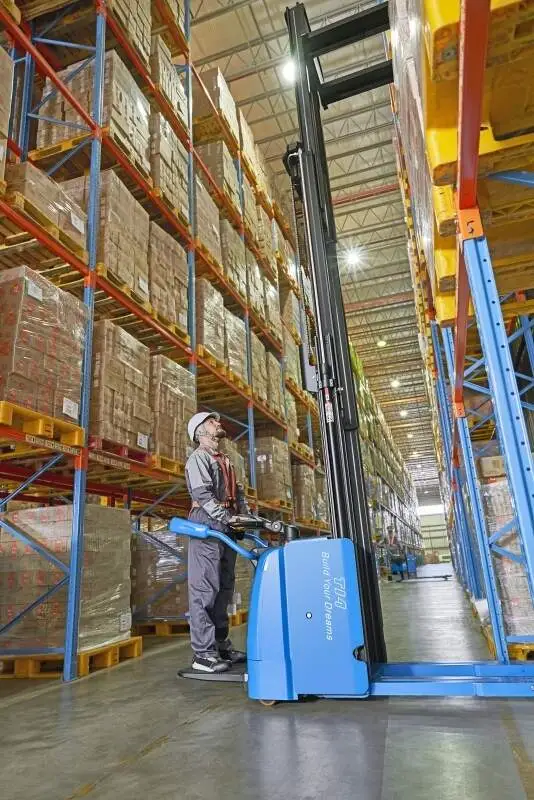
Checking the weight of warehouse forklifts is a critical aspect of maintaining operational safety, ensuring compliance with load capacity regulations, and prolonging equipment lifespan. Different types of warehouse forklifts have distinct weight distributions and components, so their weight-checking processes vary slightly. Below is a practical guide to accurately verifying the weight of common warehouse forklift types.
Electric Counterbalance Forklifts
These forklifts rely on heavy rear-mounted battery packs to counterbalance front loads. To check their weight: Start by parking the forklift on a flat, level surface with forks fully lowered and no load attached. Slowly drive it onto a certified industrial scale, ensuring all wheels are centered on the platform. Wait for the scale reading to stabilize before recording the total weight. For detailed component breakdowns, you can safely remove the battery (following proper safety protocols) and weigh it separately, then subtract this value from the total to calculate the chassis weight if needed.
Electric Reach Forklifts
Designed for narrow aisle operations, reach forklifts feature a telescoping mast. When weighing these units: Park the forklift on a level scale with the mast fully retracted to maintain balanced weight distribution. Ensure forks are empty and lowered. The mast’s position can affect readings, so keeping it retracted ensures accuracy. If you need to check the weight of the extended mast, extend it slowly while monitoring the scale closely to avoid tipping risks.
Electric Pallet Jacks (Walkie/Rider)
Compact and used for short-distance pallet movement, these forklifts require careful weighing. For walkie models, place the entire unit on a small precision industrial scale, ensuring all wheels sit fully on the platform. Rider pallet jacks, with larger chassis and operator seats, need a larger scale. Always keep forks empty and in the lowest position before taking a reading to avoid skewed results.
General Guidelines for Reliable Weight Checks
Regardless of forklift type, follow these steps to ensure accuracy:
- Calibrate the industrial scale before use, adhering to local regulatory requirements for regular calibration.
- Remove any loose attachments, tools, or debris that could add unnecessary weight to the forklift.
- Ensure the weighing surface is flat and stable to prevent tipping and ensure even weight distribution across the scale.
- Wait for the scale reading to stabilize completely before recording; fluctuating readings often indicate an unstable position or uncalibrated equipment.
Safety Precautions
Prioritize safety during all weight-check procedures:
- Never stand on or near the scale while the forklift is positioned on it; maintain a safe distance to avoid injury from potential shifts.
- Follow lockout/tagout procedures if removing components like batteries to weigh them separately.
- Operate the forklift slowly when moving onto or off the scale to maintain full control at all times.
Regular weight checks help ensure forklifts operate within their designed capacity, reducing accident risks, equipment damage, and regulatory non-compliance. By following these type-specific and general guidelines, you can accurately verify warehouse forklift weights and maintain a safe, efficient working environment.