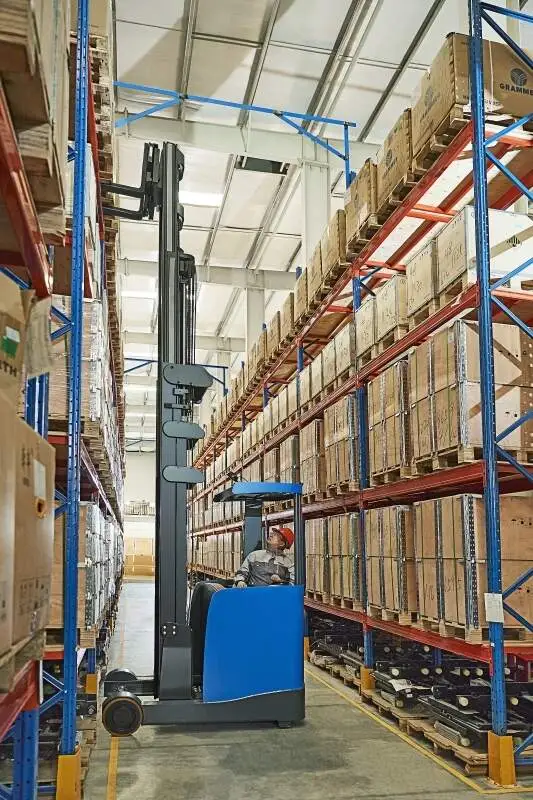
In industrial operations where moving heavy, bulky loads is a daily necessity, heavy-duty large-capacity forklifts emerge as indispensable workhorses. Unlike standard forklifts designed for light to medium-weight tasks, these specialized machines are engineered to handle substantial load capacities, making them a cornerstone of sectors ranging from manufacturing and warehousing to construction and port logistics.
At the core of heavy-duty large-capacity forklifts is their robust structural design. Reinforced frames, high-torque engines, and heavy-duty hydraulics enable them to lift and transport loads that far exceed the capabilities of conventional models. Many are equipped with extended lift heights, allowing access to high storage racks in large warehouses or stacking materials at elevated sites in construction zones. Additionally, advanced stability systems are integrated to prevent tipping during heavy load maneuvers, ensuring safe operation even in uneven terrain.
The versatility of these forklifts makes them suitable for a wide array of industrial scenarios. In large-scale warehouses, they facilitate the efficient movement of palletized goods, raw materials, and oversized equipment, reducing manual labor and accelerating inventory turnover. Construction sites rely on them to transport building materials such as steel beams, concrete blocks, and prefabricated structures, where quick and precise material placement is critical to project timelines. Port and intermodal terminals also utilize these forklifts to handle shipping containers and heavy cargo, streamlining the loading and unloading processes that keep global supply chains running smoothly.
Beyond their load-handling capabilities, heavy-duty large-capacity forklifts contribute significantly to operational safety and efficiency. Their ergonomic operator cabins are designed to reduce fatigue during long shifts, with intuitive controls that enhance precision and reduce the risk of human error. Many models incorporate advanced monitoring systems that track load weight, lift height, and equipment performance, providing real-time feedback to operators and maintenance teams. This proactive approach not only minimizes accidents but also extends the lifespan of the equipment through timely maintenance.
As industrial operations continue to scale and demand for heavy material handling grows, the role of heavy-duty large-capacity forklifts will only become more critical. By combining strength, versatility, and advanced safety features, these machines enable businesses to optimize their workflows, reduce operational costs, and maintain compliance with industry safety standards. Whether in a bustling warehouse, a busy construction site, or a busy port, these forklifts are essential tools that drive productivity and support the smooth functioning of modern industrial ecosystems.