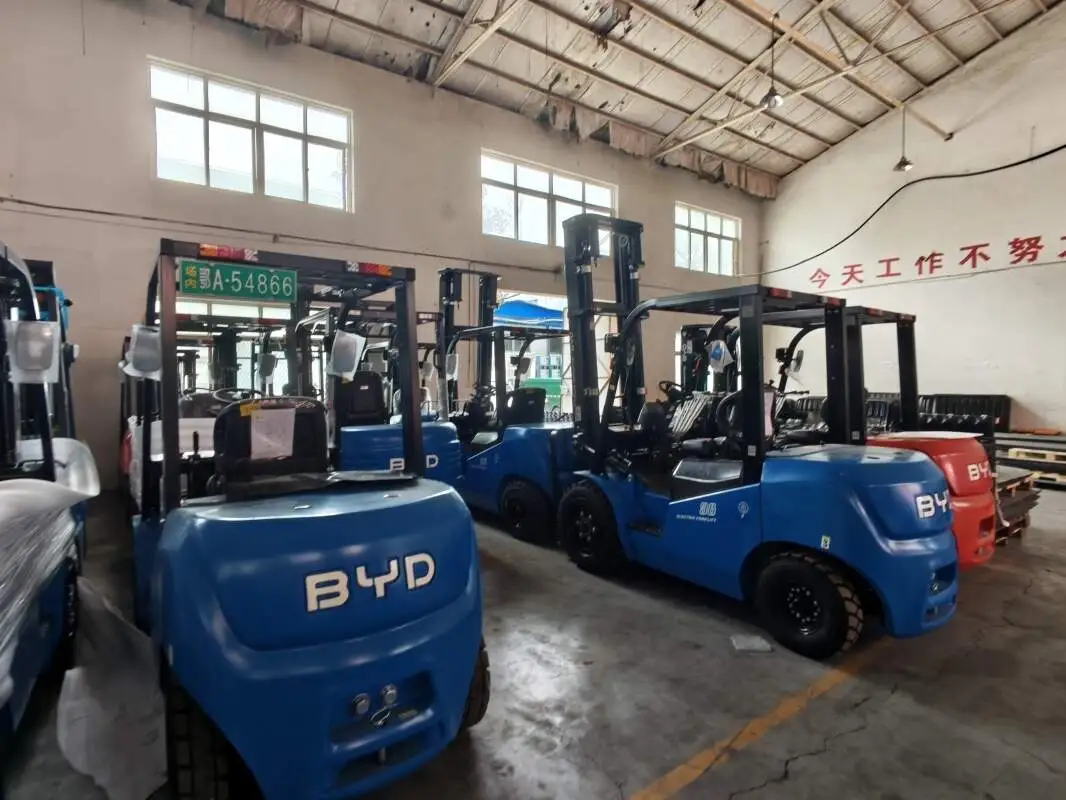
Warehouses often face the challenge of maximizing operational efficiency while working with limited floor space, and the storage layout of electric forklifts plays a critical role in this equation. A poorly designed layout can lead to wasted space, reduced workflow speed, and increased safety risks, making it essential to implement targeted optimization strategies.
First, conduct a comprehensive space and needs assessment to lay the foundation for effective layout planning. Start by mapping the entire warehouse space, noting dimensions, fixed structures like columns or support beams, and existing storage zones. Analyze your fleet of electric forklifts, including their sizes, turning radii, and operational requirements—for example, narrow-aisle models have different space needs than standard electric forklifts. Additionally, evaluate how frequently each forklift is used and how much idle storage time it requires, as this will help determine the optimal balance between storage capacity and operational accessibility.
Next, optimize aisle design to enhance maneuverability and reduce unnecessary space consumption. Electric forklifts, especially narrow-aisle variants, are designed to operate in tighter spaces, so adjust aisle widths to match your forklifts’ minimum turning requirements without compromising safety. Mark clear aisle boundaries with bright, durable tape or paint to guide forklift operators and prevent accidental collisions with storage racks or other equipment. For high-traffic areas, consider implementing one-way aisles to streamline workflow and reduce the risk of conflicts between moving forklifts.
Leveraging vertical storage solutions is another key strategy to maximize limited warehouse space. Electric forklifts typically have impressive lifting capacities, making them suitable for accessing elevated storage racks. Install high-rise storage systems that allow forklifts to store pallets or equipment at elevated levels, freeing up valuable floor space for other operations. Ensure that these racks are properly anchored and rated to support the weight of stored items, and regularly inspect them for signs of wear or damage to maintain safety.
Adopt dynamic storage strategies to align forklift storage with operational needs. Position frequently used forklifts in storage zones close to primary work areas, such as loading docks or picking stations, to minimize travel time during shifts. For less frequently used models, allocate storage spaces in more remote areas of the warehouse, utilizing underutilized corners or areas near warehouse walls. Additionally, integrate forklift charging stations into the storage layout, placing them in dedicated zones that are easily accessible but separated from high-traffic work areas to reduce safety hazards.
Finally, integrate safety and efficiency into every aspect of the layout design. Ensure that forklift storage zones have clear overhead clearance to accommodate the height of the vehicles when parked or being moved. Install safety barriers or guardrails around storage zones to prevent unauthorized access and protect stored forklifts from accidental damage. Regularly review and adjust the layout based on operational feedback, making tweaks to address bottlenecks or evolving warehouse needs over time.
By implementing these targeted strategies, warehouses can optimize electric forklift storage layouts to make the most of limited space, improve operational efficiency, and maintain a safe working environment for all staff.