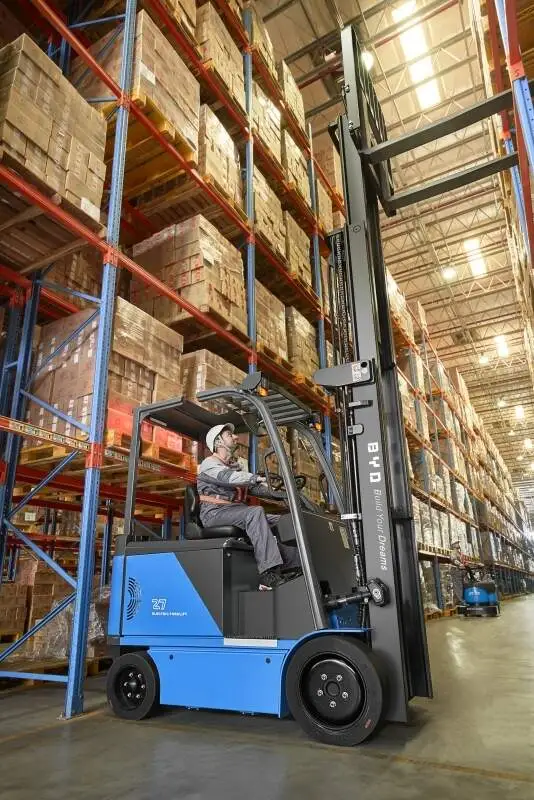
Many businesses face the challenge of storing idle electric forklift units during slow operational periods or fleet restructuring. Poor storage practices not only waste valuable warehouse space but can also accelerate equipment deterioration, leading to increased maintenance costs over time. Implementing targeted space optimization strategies can address these issues while ensuring forklifts remain in good condition for future use.
First, classified storage is a foundational step. Group idle electric forklifts based on their model, size, and anticipated frequency of future use. Forklifts that are rarely deployed can be stored in less accessible areas of the warehouse, such as upper mezzanines or back corners, while those kept on standby for immediate use should be positioned near loading docks or exits. This targeted grouping minimizes unnecessary movement and maximizes the use of available floor space, as similar-sized units can be arranged closely without compromising safety.
Second, leverage vertical space to expand storage capacity. Warehouses often underutilize vertical areas, which is a missed opportunity for storing idle electric forklifts. Install heavy-duty, specialized racks designed to support the weight of electric forklifts, including their battery components. Vertical storage systems allow you to stack forklifts safely, reducing the floor space required by up to 50% compared to traditional ground-level parking. Ensure these racks meet safety standards to prevent accidents and protect both the equipment and warehouse staff.
Third, detach non-essential components to reduce each unit’s footprint. Electric forklifts are equipped with heavy batteries that contribute significantly to their overall size. Removing batteries and storing them in dedicated, temperature-controlled storage areas not only frees up space for the forklift itself but also helps maintain battery health, as extreme temperatures can shorten battery lifespan. Additionally, detachable accessories like forks or attachments can be stored separately in compact racks, further reducing the space each idle forklift occupies.
Fourth, optimize the warehouse layout for efficient forklift storage. Designate clearly marked parking zones with precise spacing to eliminate wasted space between units. Use narrow but safe access paths that allow staff to retrieve forklifts without disrupting other stored equipment. Consider implementing compact parking arrangements, such as angled parking, which requires less space than traditional parallel parking while still ensuring easy access.
Finally, prioritize regular maintenance and inspections for idle forklifts. Even when not in use, periodic checks for tire pressure, fluid levels, and battery condition can prevent issues that might require additional space for repairs. Keeping forklifts in optimal condition also means they can be quickly redeployed when needed, reducing downtime and ensuring your storage space is used only for truly idle units.
If you need professional guidance on storing your idle BYD electric forklifts or have questions about fleet management and space optimization, feel free to contact us via 17399989919@163.com. As specialists in BYD electric forklifts, we are dedicated to helping businesses maximize space efficiency and maintain their equipment in peak condition.