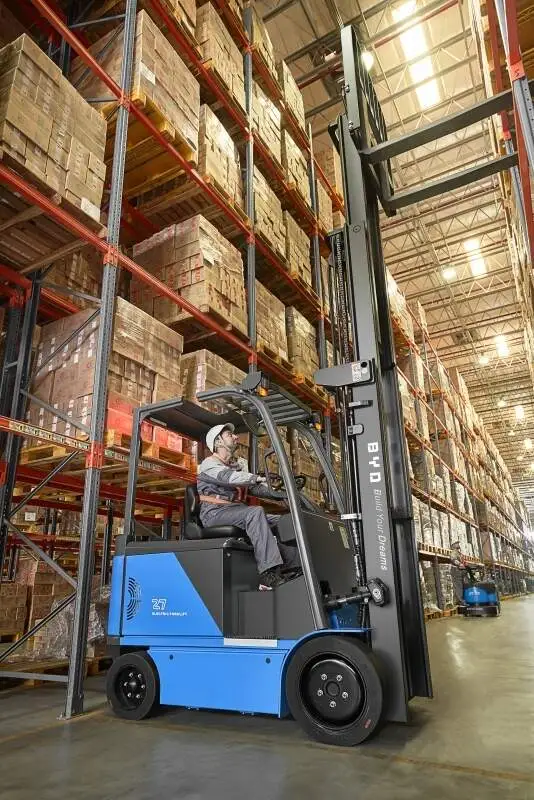
Load-lifting performance is a core indicator of an electric forklift’s operational reliability and safety, as it directly impacts material handling efficiency and workplace risk prevention. Incorrectly verified performance can lead to load drops, structural damage, or workplace accidents, making systematic verification essential for daily operations.
Before initiating any load-lifting tests, complete a pre-verification checklist to ensure accurate results. First, confirm the battery’s state of charge is at least 80% to avoid power shortages during the test cycle. Next, inspect the hydraulic fluid: check the level against standard guidelines and ensure the fluid is free of contamination or leaks, as compromised hydraulics can skew performance data. Finally, examine critical components like mast chains, rollers, and fork tines for signs of wear, corrosion, or deformation—damaged parts can affect lifting stability and test accuracy.
Static load verification is the foundation of performance testing. Start with the forklift’s rated load: position the load evenly on the forks, lift it to the maximum specified height, and hold it for 10 to 15 seconds. Observe for mast deflection, hydraulic leaks, or unexpected load descent, which may indicate structural or system issues. For a rigorous check in line with safety standards, conduct a short-duration test with 125% of the rated load to confirm the forklift’s structural integrity. Always perform static tests on a flat, level surface to eliminate external variables that could distort results.
Dynamic load testing assesses performance in real-world operational conditions. With the rated load lifted to half the maximum height, operate the forklift to travel forward and backward, and make gentle turns. Monitor for any instability, unusual vibrations, or delayed hydraulic response. Additionally, test lifting and lowering the load while moving to evaluate the system’s responsiveness and control. These tests replicate daily material handling scenarios, ensuring the forklift performs reliably during routine tasks.
After completing all tests, document every observation and result, including any anomalies detected. Regularly repeat these verification procedures—monthly for high-usage forklifts, quarterly for moderate usage—to maintain consistent performance. For specialized support in maintaining and optimizing electric forklift performance, you can contact Jianshu New Energy, which specializes in BYD electric forklifts, at 17399989919@163.com for professional guidance tailored to your equipment.