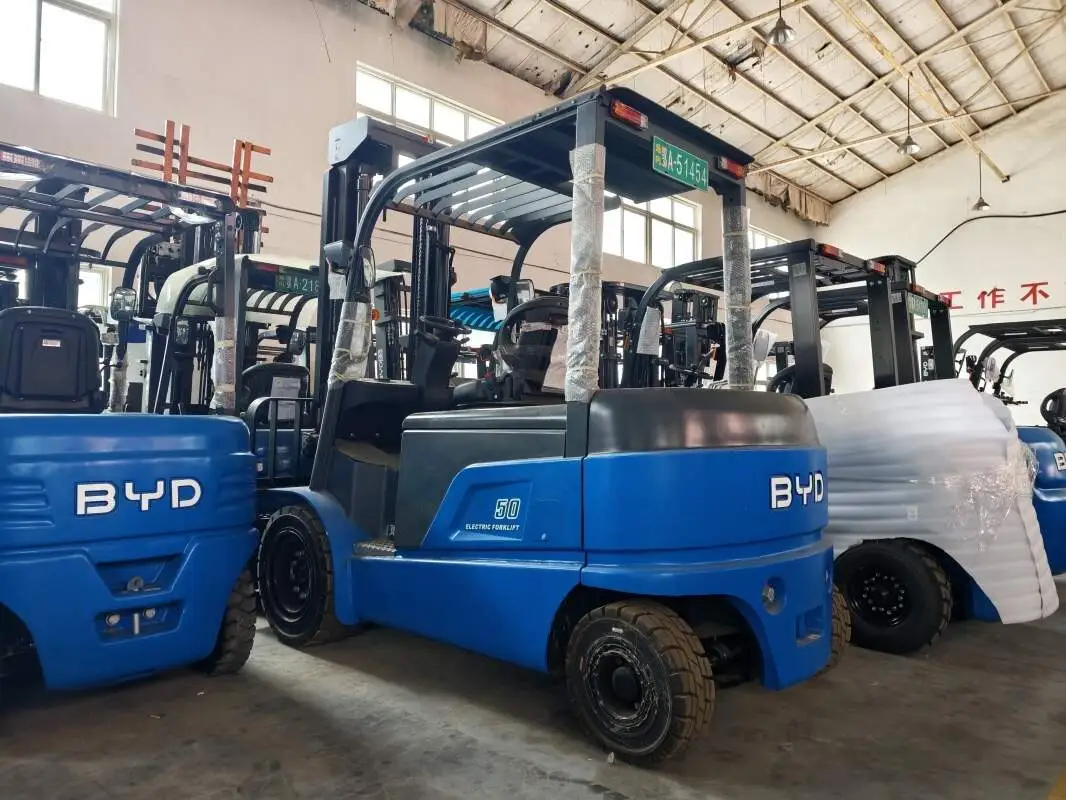
In modern factory production lines, efficient material handling and accurate weighing are critical to maintaining operational efficiency and inventory accuracy. forklift scales, which integrate weighing functions directly into forklifts, eliminate the need for separate weighing stations, saving time and reducing manual handling errors. Choosing the right forklift scale requires careful consideration of several key factors tailored to your production environment and needs.
First, evaluate your load capacity requirements. Different production lines handle materials of varying weights, from small components to heavy raw materials. It’s essential to select a scale that can accommodate your daily maximum load, while also leaving a reasonable safety margin to avoid overloading. For light-duty assembly lines handling small parts, a lower-capacity scale may suffice, while heavy manufacturing facilities dealing with bulk materials will need scales designed for high load ranges to ensure stable and accurate weighing during operation.
Second, prioritize precision needs based on your production processes. Industries such as food processing, pharmaceuticals, and chemical manufacturing often require high-precision weighing to meet quality control standards and ensure correct ingredient proportions. In contrast, general warehouse or logistics operations may tolerate slightly lower precision levels as long as inventory counts remain reliable. When selecting a forklift scale, check its accuracy specifications, including repeatability and linearity, to ensure it aligns with your production’s precision demands.
Third, consider environmental adaptability. Factory environments can vary significantly, with some exposed to dust, moisture, extreme temperatures, or heavy vibrations. Look for forklift scales with appropriate protection ratings to withstand these conditions. For example, scales with higher IP ratings are suitable for damp or dusty areas, preventing water and debris from damaging internal components. Additionally, scales built with shock-resistant features can maintain accuracy even when forklifts operate on uneven floors or during frequent stops and starts.
Fourth, assess ease of use and system integration. The forklift scale should have an intuitive interface that allows operators to quickly read weights and perform basic functions without extensive training. Furthermore, opt for scales that can integrate with your existing production management or inventory systems. Real-time data transfer from the scale to these systems reduces manual data entry errors, streamlines record-keeping, and provides better visibility into material flow across the production line.
Finally, factor in maintenance and durability. A durable forklift scale made from robust materials will have a longer service life, reducing replacement costs over time. Additionally, choose a model with easily accessible components for routine maintenance, such as calibration and cleaning. Regular calibration is essential to maintain accuracy, so selecting a scale that simplifies this process can save time and resources for your maintenance team.
By carefully evaluating these factors—load capacity, precision, environmental adaptability, ease of use, and maintenance needs—you can select a forklift scale that seamlessly integrates into your factory production line, enhancing operational efficiency and ensuring accurate weighing throughout your material handling processes.