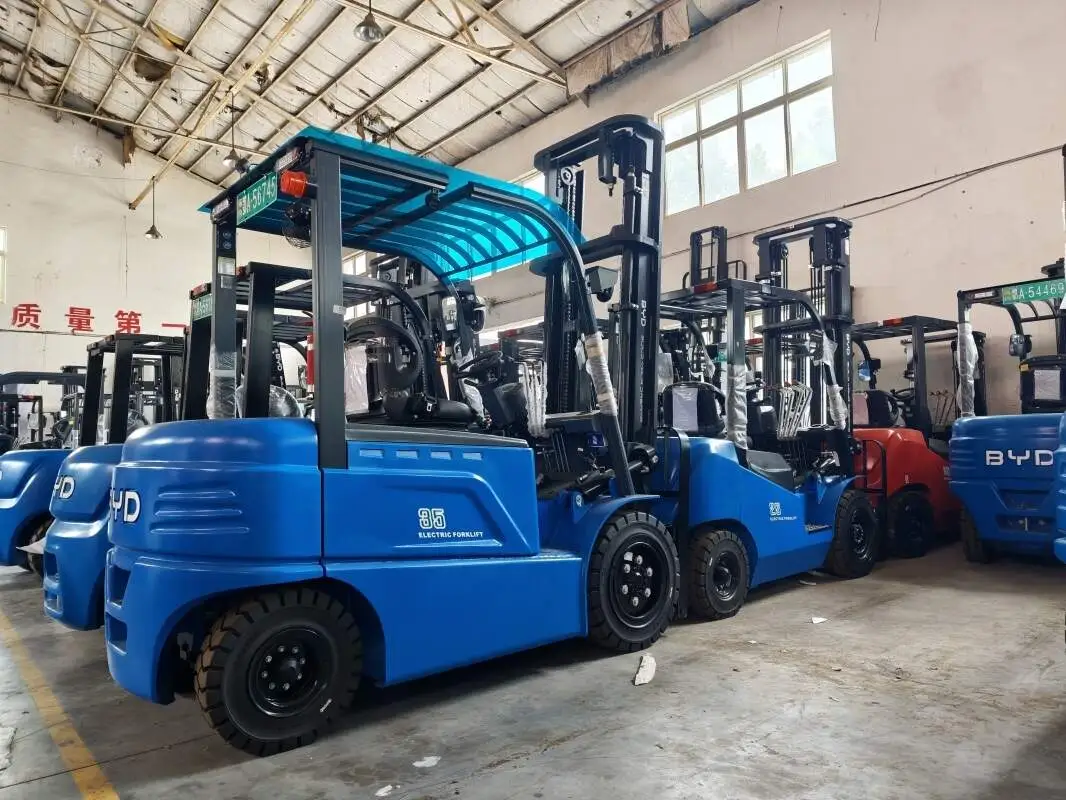
When designing or optimizing a warehouse operation, one of the most critical yet often overlooked factors is how internal dimensions shape forklift equipment configuration. The size and layout of a warehouse directly dictate which types of forklifts can operate safely, efficiently, and cost-effectively, as mismatched equipment can lead to reduced productivity, safety hazards, and unnecessary operational costs.
The width of warehouse aisles is a primary determinant of forklift type. Standard counterbalance forklifts, for instance, require wider aisles—typically around 12 to 14 feet—to accommodate their turning radius and maneuvering space. In contrast, warehouses with narrower aisles (often 6 to 8 feet) need specialized equipment such as narrow aisle reach trucks or order pickers, which are designed with tighter turning radii and compact frames. Failing to match aisle width to forklift maneuverability can result in frequent collisions with racks or walls, slowing down material handling processes and increasing maintenance costs.
Ceiling height and rack height directly influence the lift capacity and mast design of forklifts. Warehouses with high ceilings and tall storage racks (up to 30 feet or more) benefit from high-lift forklifts or telescopic handlers, which can reach upper storage levels without compromising stability. Conversely, warehouses with low ceilings require forklifts with shorter masts to avoid overhead collisions. It’s also important to consider the vertical clearance needed for forklift masts when fully extended, as insufficient headroom can limit access to upper storage tiers and reduce overall storage utilization.
Beyond aisle width, the arrangement of storage racks affects forklift configuration. For warehouses with deep-reach racking systems, where pallets are stored multiple rows deep, deep-reach forklifts are essential. These machines have extendable forks that can reach into deep racking without requiring additional aisle space. In warehouses with selective racking, where each pallet is accessible from the aisle, standard counterbalance or reach trucks may suffice. Additionally, the presence of obstacles such as support columns or mezzanines requires forklifts with enhanced maneuverability, like articulated forklifts that can navigate around tight corners.
Warehouses focused on maximizing storage density often use automated or semi-automated forklifts, such as very narrow aisle (VNA) trucks or automated guided vehicles (AGVs). VNA trucks operate in aisles as narrow as 5 feet, allowing for more storage racks to be installed within the same floor space. However, these specialized forklifts require precise warehouse dimensions, including consistent aisle widths and flat flooring, to operate effectively. For warehouses handling heavy or oversized loads, heavy-duty forklifts with higher weight capacities are necessary, which in turn require wider aisles and reinforced flooring to support their weight.
In conclusion, warehouse internal dimensions are a foundational factor in determining forklift equipment configuration. By carefully assessing aisle width, ceiling height, rack layout, and storage density, warehouse managers can select the right forklift types to optimize productivity, ensure safety, and maximize storage efficiency. Regular audits of warehouse dimensions and equipment performance can also help identify opportunities for adjustments, ensuring that material handling operations remain aligned with evolving warehouse needs.