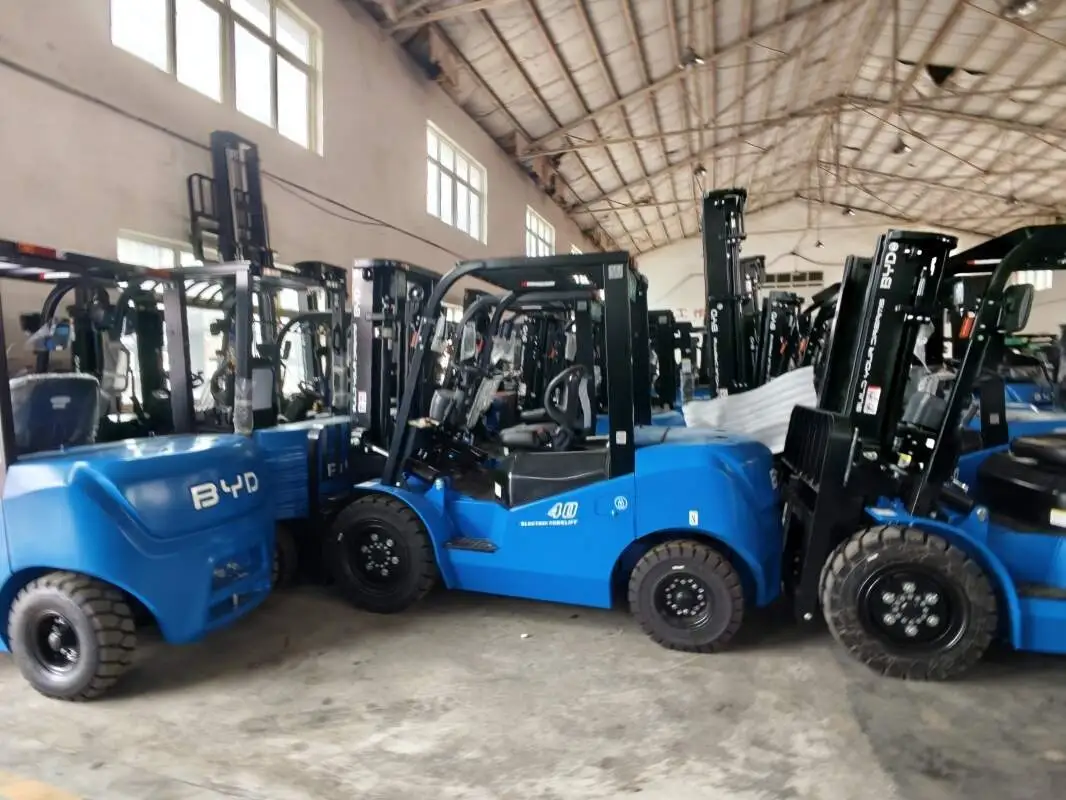
When evaluating or purchasing used forklifts, understanding their types and key nomenclature is critical to making informed decisions. Industrial facilities rely on these machines for efficient material handling, and choosing the right model depends on recognizing distinct features and interpreting technical terms correctly.
Counterbalance forklifts are the most widely used type. They feature a weight at the rear to offset the load being lifted, eliminating the need for external support structures. Ideal for both outdoor and indoor use on flat surfaces, used counterbalance models are commonly found in warehouses, construction sites, and distribution centers, capable of lifting pallets to moderate heights.
Reach trucks are designed specifically for narrow aisle environments. Their extending mast allows them to reach deep into storage racks, making them perfect for high-density warehouses where space is limited. When inspecting used reach trucks, pay close attention to the mast’s extension mechanism and load stability features to ensure they function as intended.
Pallet jacks, or pallet trucks, are compact machines used for moving pallets over short distances. Available in manual and electric variants, electric pallet jacks are preferred for heavier loads and longer shifts. Used pallet jacks offer a cost-effective solution for small warehouses, retail stockrooms, and last-mile delivery operations.
Order pickers are built to facilitate picking individual items from storage racks. These machines elevate the operator along with the load, providing easy access to mid-level and high-level storage. When assessing used order pickers, verify the operator platform’s safety features and confirm the lift height capacity matches your storage requirements.
Understanding common forklift nomenclature is equally important for accurate identification. Key terms include:
- Load Capacity: The maximum weight a forklift can safely lift. Used forklifts may have reduced capacity due to wear, so verifying this specification through inspection is vital.
- Lift Height: The maximum height the forklift can raise a load. For warehouse operations, ensure this matches the dimensions of your storage racks.
- Mast Type: Masts come in simplex, duplex, and triplex configurations, each offering varying lift heights and flexibility. Selecting the right mast type ensures the forklift aligns with your operational needs.
- Fuel Type: Used forklifts can run on gasoline, diesel, propane, or electricity. Electric models are quieter and emission-free, suitable for indoor use, while diesel models are better suited for heavy-duty outdoor tasks.
By familiarizing yourself with these used forklift types and nomenclature, you can confidently evaluate pre-owned models, ensuring they meet your operational requirements. Whether you’re a buyer, operator, or maintenance professional, this guide provides foundational knowledge to navigate the used forklift market effectively.