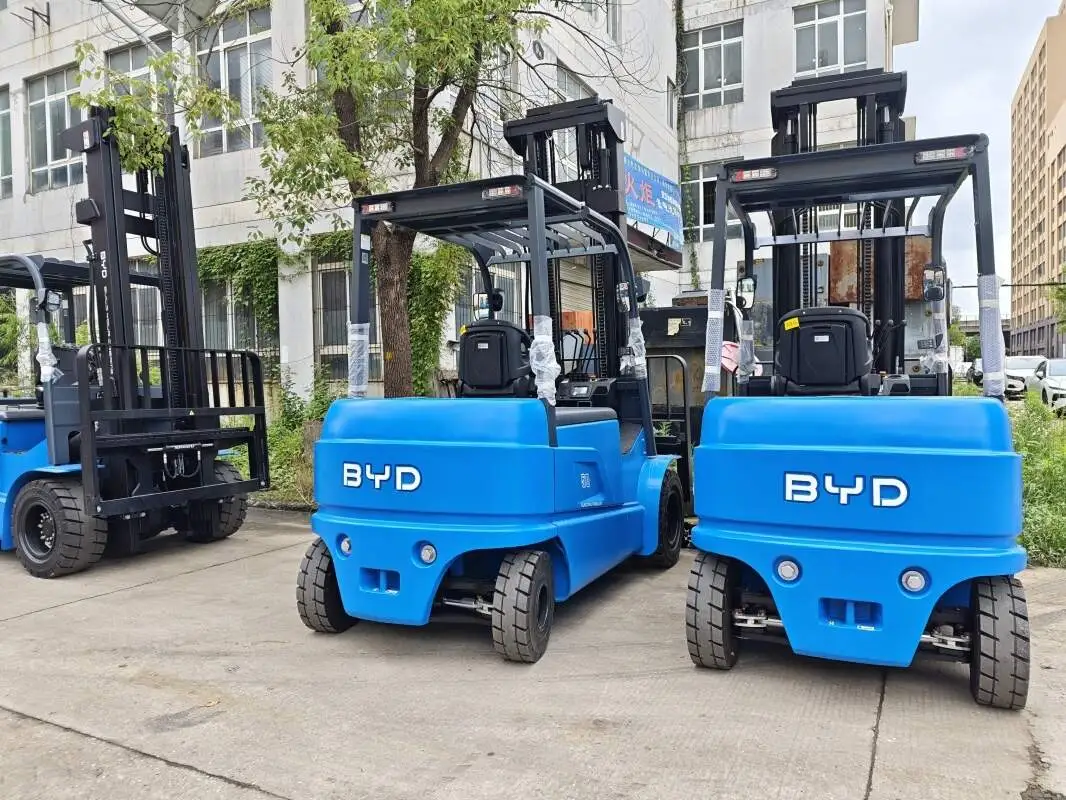
When operating or selecting a 7-ton heavy-duty forklift, understanding critical dimension references is essential for ensuring safe operation, optimizing facility space utilization, and meeting material handling requirements. Overlooking these key measurements can lead to inefficient workflows, safety hazards, or compatibility issues with storage infrastructure.
One of the most fundamental dimensions is the load center, typically defined as the distance from the face of the forks to the center of gravity of the rated load. For 7-ton heavy-duty forklifts, a standard load center is often around 600 mm, though this can vary based on design. Adhering to this specification is critical because exceeding the recommended load center can compromise the forklift’s stability, increasing the risk of tipping during lifting or transporting heavy loads. Operators must ensure that the load’s center of gravity aligns with this dimension to maintain optimal balance.
Mast dimensions play a pivotal role in determining the forklift’s usability within warehouse or industrial settings. The closed mast height refers to the total height of the forklift when the mast is fully lowered, which impacts its ability to navigate under low ceilings or overhead structures. For 7-ton models, this height usually ranges between 2,500 mm and 3,000 mm. Meanwhile, the maximum lift height indicates how high the forklift can raise a load, a key consideration for stacking pallets in high-rise storage racks. Typical maximum lift heights for these forklifts fall between 4,000 mm and 6,000 mm, though customized options may be available for specialized applications.
The turning radius is another critical dimension that directly affects maneuverability in tight spaces. This measurement refers to the smallest circular path the forklift can navigate when making a full turn. For 7-ton heavy-duty forklifts, the outer turning radius generally ranges from 3,500 mm to 4,200 mm. A smaller turning radius allows the forklift to operate efficiently in narrow aisles, reducing the need for wide maneuvering spaces and optimizing warehouse layout. Conversely, a larger turning radius requires more open area, which may limit its suitability for compact facilities.
The overall length and width of the forklift are essential for assessing compatibility with warehouse aisles and loading docks. The total length, including the forks in their retracted position, usually measures between 4,500 mm and 5,500 mm for 7-ton models. The width, excluding side attachments, typically ranges from 1,200 mm to 1,500 mm. These dimensions must be matched to the width of aisles and entry points to ensure the forklift can move freely without causing damage to racks, walls, or other equipment.
In summary, understanding these critical dimension references for 7-ton heavy-duty forklifts is vital for both operators and facility managers. By considering load center, mast dimensions, turning radius, and overall dimensions, you can select the right forklift for your needs, ensure safe operation, and optimize material handling efficiency. Always refer to the manufacturer’s specifications for precise measurements tailored to your specific model, as slight variations may exist based on design and configuration.