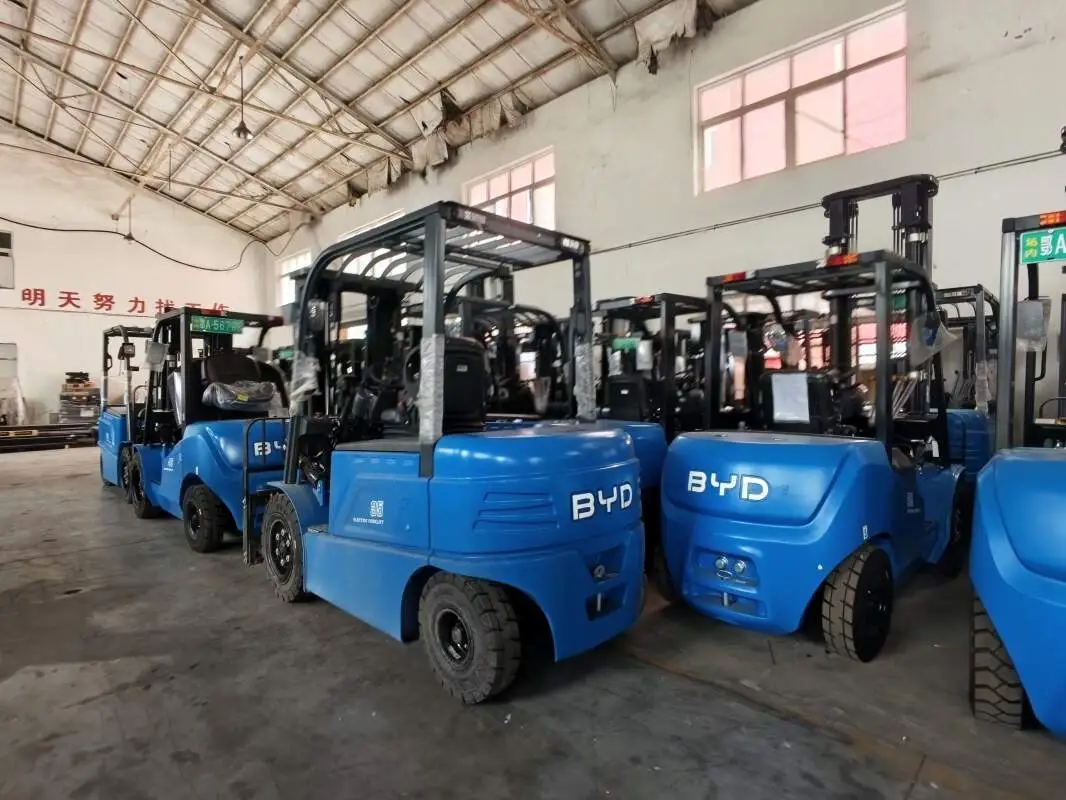
The hydraulic system is the core component that enables electric forklifts to perform lifting, tilting, and material handling tasks smoothly. Even minor hydraulic oil leaks can trigger a cascade of issues: reduced lifting power, increased energy consumption, potential safety incidents from slippery surfaces, and costly repairs due to prolonged component wear. As Jianshu New Energy, a dedicated specialist in BYD electric forklifts, we have developed comprehensive guidance to help operators and fleet managers effectively avoid hydraulic oil leakage risks.
1. Regular Visual and Operational Inspections
Consistent inspections are the first line of defense against hydraulic oil leaks. Conduct daily pre-operation checks to examine hydraulic hoses, fittings, seals, and cylinders for signs of damage, such as cracks, bulges, or corrosion. Pay close attention to connection points, as loose or worn fittings are common leak sources. Additionally, monitor the hydraulic oil level in the reservoir before each shift; a sudden drop in oil level often indicates an undetected leak. Keep detailed inspection logs to track trends and identify recurring issues early.
2. Proper Maintenance of Hydraulic Components
Timely maintenance of key hydraulic components is critical for preventing leaks. Replace worn seals and gaskets according to the manufacturer’s recommended schedule, using high-quality, compatible parts to ensure a tight seal. Regularly change hydraulic oil as specified—contaminated oil can accelerate component wear, leading to leaks. Install and maintain effective filtration systems to remove dirt, debris, and moisture from the oil, which can degrade seals and cause internal component damage.
3. Adhere to Standardized Operational Practices
Rough handling and improper operation can significantly increase hydraulic system pressure, leading to leaks over time. Train operators to avoid sudden, jerky movements when lifting or lowering loads, as these actions create pressure spikes that strain seals and hoses. Always adhere to the forklift’s load capacity limits; overloading not only poses safety risks but also puts excessive stress on the hydraulic system. Encourage operators to operate the forklift at steady speeds, especially when carrying heavy loads, to reduce unnecessary pressure on hydraulic components.
4. Control Operating Environment
The operating environment plays a role in preventing hydraulic oil leaks. Store and operate electric forklifts in dry, well-ventilated areas to avoid exposure to moisture and corrosive substances, which can damage hydraulic components and seals. Regularly clean the hydraulic system’s external components to remove dust and debris that can wear down seals or block vents. If operating in outdoor environments, protect the forklift from extreme temperatures, as excessive heat or cold can affect the viscosity of hydraulic oil and the integrity of seals.
By implementing these proactive measures, you can minimize hydraulic oil leakage risks, extend the service life of your electric forklift’s hydraulic system, and ensure reliable, safe operations. For professional maintenance support or personalized advice for your BYD electric forklift, reach out to Jianshu New Energy at 17399989919@163.com. Our team of experienced experts is ready to assist you with tailored solutions to keep your forklifts running at peak performance.