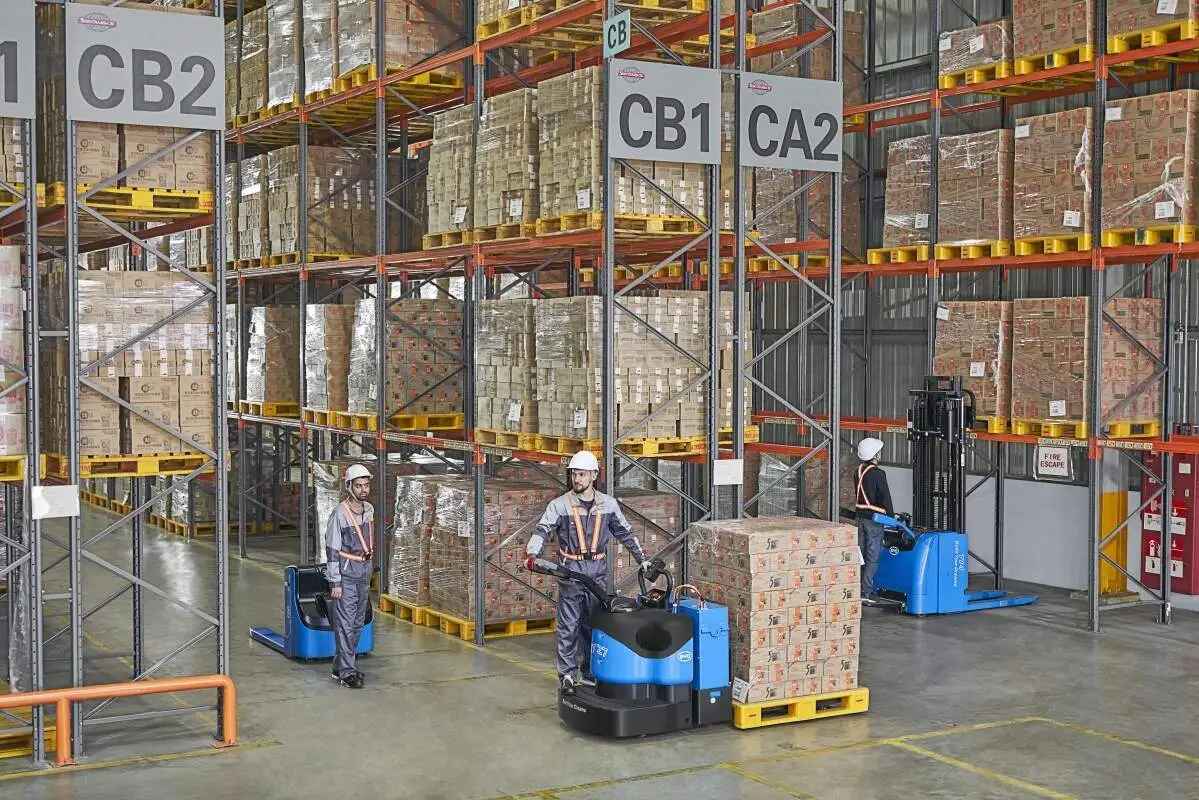
Warehouse operations often face unique challenges when managing long cargo such as pipes, lumber, and steel beams, especially in narrow aisle environments where space is at a premium. Traditional forklifts struggle to maneuver these lengthy items without compromising safety or causing damage to inventory or infrastructure. This is where industrial sideloader forklifts step in, offering tailored solutions to streamline material handling in such constrained spaces.
The core design of industrial sideloader forklifts sets them apart from standard models. Unlike conventional forklifts that carry cargo in front of their cab, sideloaders are engineered to load and transport long goods alongside their chassis. This configuration eliminates the need for wide turning radii, allowing them to navigate narrow aisles with ease. The side-mounted forks can be adjusted to accommodate varying lengths of cargo, ensuring a secure hold during transport and reducing the risk of shifting or damage. Additionally, many sideloader models feature low-profile masts that maximize vertical space utilization, enabling warehouses to stack long cargo higher without sacrificing accessibility.
One of the key advantages of sideloader forklifts is their versatility across multiple industries. In construction supply yards, they efficiently move long steel beams and prefabricated building components through tight storage areas. In lumber yards, they handle large wooden planks and logs, minimizing the need for expansive maneuvering zones. Even in manufacturing facilities with narrow production lines, sideloaders transport raw material stock to assembly stations without disrupting workflow. This adaptability makes them a valuable asset for businesses looking to optimize their storage and operational efficiency.
To ensure safe and effective operation of industrial sideloader forklifts, proper training and maintenance are essential. Operators should receive specialized training on navigating narrow aisles, securing long cargo, and understanding the forklift’s unique controls. Regular maintenance checks, including inspections of fork alignment, hydraulic systems, and tire condition, help prevent breakdowns and extend the equipment’s lifespan. Additionally, warehouse managers should design aisle layouts that account for the sideloader’s dimensions, ensuring sufficient clearance for safe movement and loading operations.
By integrating industrial sideloader forklifts into their material handling strategies, businesses can unlock significant benefits. They can maximize the use of available warehouse space, reducing the need for costly expansion. The ability to safely transport long cargo in narrow aisles also minimizes product damage, lowering inventory losses. Furthermore, improved operational efficiency translates to faster order fulfillment and reduced labor costs, contributing to overall business productivity.