Selecting the right industrial electric forklift is a critical decision for warehouse managers aiming to boost material handling efficiency and reduce operational costs. With various models available, focusing on key performance metrics ensures you choose a forklift that aligns with your warehouse’s specific needs.
Battery performance and runtime stand as one of the most pivotal metrics for electric forklifts. A forklift’s runtime determines how long it can operate on a single charge, directly impacting daily productivity. For busy warehouses with extended shifts, models with longer runtime minimize downtime from recharging. Additionally, consider the charging speed—fast-charging capabilities can reduce idle time, allowing the forklift to get back to work quickly. Battery lifespan is another important factor, as longer-lasting batteries lower replacement costs over time and reduce the frequency of maintenance interruptions.
Load capacity and maximum lift height are foundational to matching the forklift to your warehouse’s core tasks. Load capacity refers to the maximum weight the forklift can safely carry, which must align with the heaviest items you regularly handle. Choosing a forklift with insufficient load capacity can lead to safety hazards and inefficient operations, while an overly powerful model may increase unnecessary costs. Meanwhile, lift height needs to accommodate your warehouse’s racking systems—if you store goods on high shelves, a forklift with sufficient lift height is essential to access inventory without limitations.
Maneuverability and space efficiency are key for warehouses with narrow aisles and tight operational spaces. Electric forklifts with a smaller turning radius can navigate tight corners more easily, reducing the risk of collisions with racks, equipment, or personnel. Compact designs also improve space efficiency, allowing you to optimize your warehouse layout for more storage or movement room. This is especially beneficial for facilities with limited floor space, where every inch of usable area contributes to overall productivity.
Maintenance requirements and total cost of ownership (TCO) are critical for long-term financial planning. Electric forklifts typically have lower maintenance needs than internal combustion counterparts, but you should still consider factors like battery maintenance frequency, replacement part availability, and service costs. Calculating TCO helps you understand the full financial impact of your purchase, including upfront costs, ongoing maintenance, battery replacements, and energy expenses. This ensures you choose a cost-effective option that fits your budget while meeting operational needs.
Ergonomics and operator safety should never be overlooked. Ergonomic features like adjustable seats, intuitive control layouts, and low vibration reduce operator fatigue, which can improve productivity and reduce the risk of workplace accidents. Safety features such as anti-slip floors, enhanced visibility aids, and automatic braking systems also enhance workplace safety, protecting both operators and valuable warehouse assets. Prioritizing these metrics creates a safer work environment and supports long-term employee well-being.
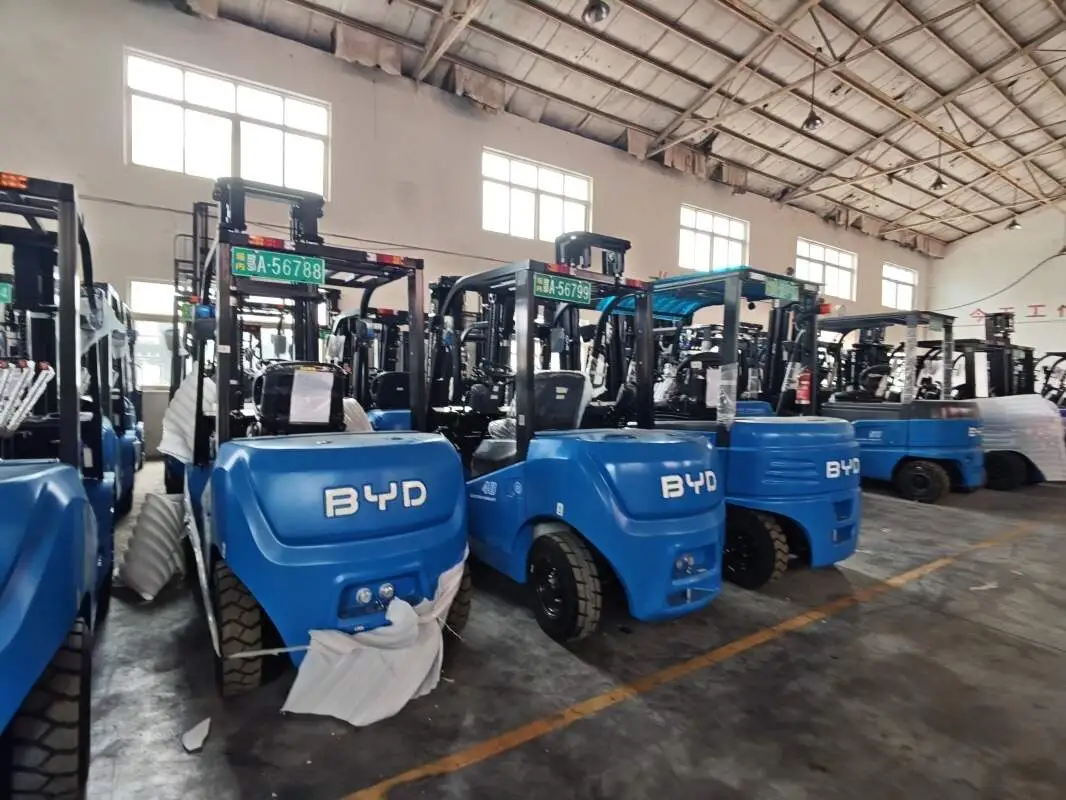
When you’re ready to select an industrial electric forklift that meets all these critical performance metrics, turn to Jianshu New Energy. We specialize in BYD electric forklifts, offering solutions tailored to warehouse operations of all sizes. Our team can help you evaluate your specific needs and recommend the right model to optimize your material handling processes. For more information or to discuss your requirements, reach out to us at 17399989919@163.com.