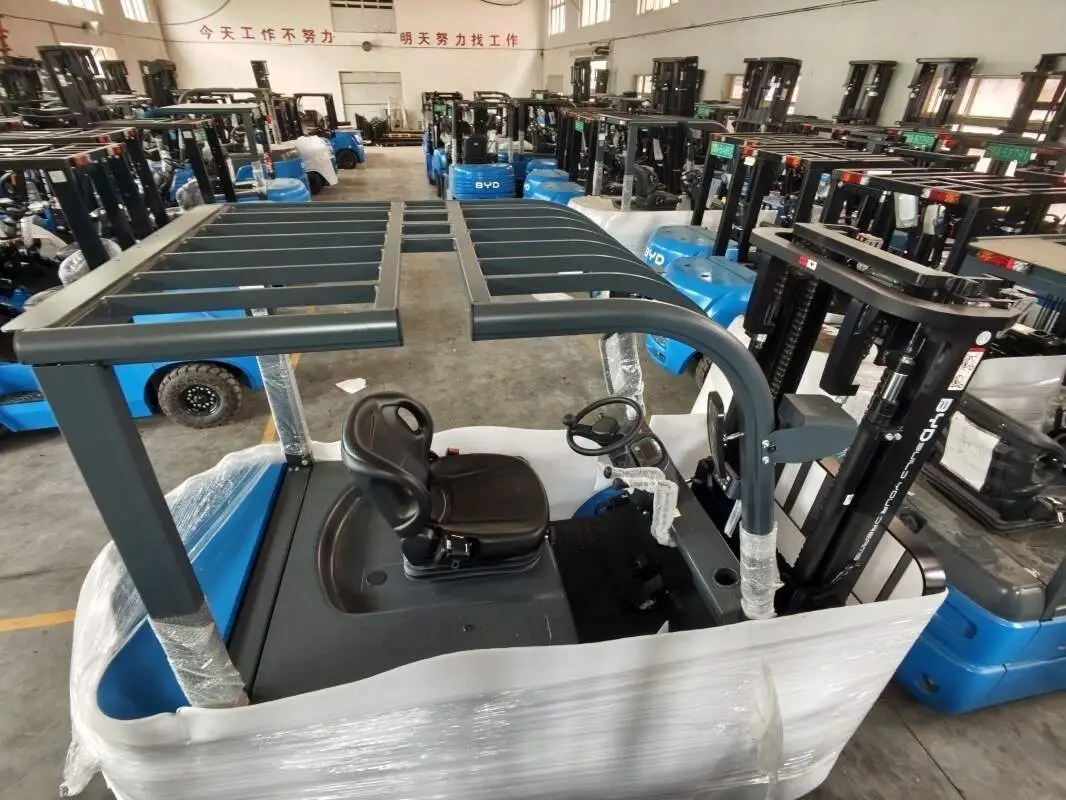
The layout of controls on sit-down forklifts is a critical aspect of ensuring safe, efficient, and comfortable operation. Designed with ergonomics and functionality in mind, these control arrangements allow operators to perform essential tasks without unnecessary strain or confusion, reducing accident risks and boosting productivity in warehouse and industrial settings.
At the core of the sit-down forklift’s control layout are steering and mobility components. The steering wheel, positioned at the front of the operator’s cabin, mirrors standard motor vehicle design but is optimized for quick, precise turns to navigate narrow aisles. Adjacent to it, the accelerator and brake pedals follow a familiar setup: the right-side accelerator controls speed for forward and reverse (based on gear selection), while the left-side brake brings the vehicle to a stop. A directional control lever, often near the steering column or dashboard, lets operators switch smoothly between forward, neutral, and reverse gears.
Next come the lifting and tilting controls, typically mounted on a console within easy reach of the operator’s dominant hand. The primary lever manages vertical fork movement—pulling upward raises the forks, pushing downward lowers them. A second lever controls mast tilting: pushing forward tilts the mast to engage loads, pulling backward secures loads during transport. Some models add a third lever for side-shifting the fork carriage, enabling operators to align forks with pallets without repositioning the entire forklift.
Auxiliary and safety controls round out the layout, supporting safe operation in diverse environments. A horn button on the steering wheel alerts nearby workers to the forklift’s presence. Headlights, taillights, and turn signals are controlled via dashboard or steering column switches, essential for visibility in low-light conditions or when moving between indoor and outdoor spaces. The parking brake, often a lever or foot pedal, secures the forklift when parked or working on uneven ground. Many models also include an emergency stop button within immediate reach to shut down the vehicle quickly if needed.
Ergonomic design principles guide every aspect of this layout. Controls are placed within a natural reach zone to minimize stretching or twisting, reducing operator fatigue during long shifts. Standardized labels and symbols across models make it easier for operators to transition between different forklifts without extensive retraining. Lever and pedal angles align with the operator’s body posture, balancing comfort and full control over the vehicle.
Understanding this standard control layout is essential for both new and experienced operators. Familiarity with each component’s function and placement enables efficient task performance, reduces error risks, and fosters a safer work environment. Whether navigating tight aisles or lifting heavy loads, a well-designed control layout forms the foundation of reliable sit-down forklift operation.