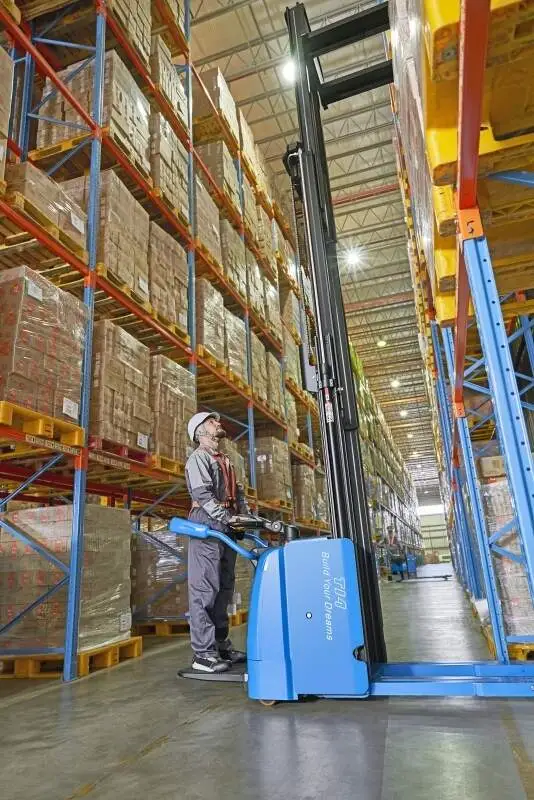
electric forklifts are essential tools in warehouses and distribution centers, but side overturns remain a leading cause of workplace accidents and equipment damage. Implementing proper load balancing practices is critical to mitigating this risk, ensuring operator safety and operational efficiency.
Accurate load assessment is the first step in preventing overturns. Before lifting any load, operators must determine its exact weight and dimensions. Overloading exceeds the forklift’s rated capacity, shifting the center of gravity and increasing tipping risk. Always refer to the forklift’s load capacity plate, which outlines maximum weights for different lift heights and load centers. Avoid guessing weights; use certified scales if unsure to comply with safety standards.
Maintaining the correct load center position is equally vital. The load center is the distance from the front of the forks to the load’s center of gravity, typically 24 inches for standard forklifts. Placing loads beyond this point reduces effective capacity. Operators should fully insert forks under loads, ensuring even distribution on both forks. Adjust fork width to match the load’s dimensions to prevent uneven weight distribution that can cause one-sided tipping.
Safe maneuvering is key to preserving balance while operating. When turning, reduce speed drastically, especially with heavy loads. Sharp turns at high speeds create centrifugal force that shifts the load’s center of gravity, leading to overturns. Avoid uneven or sloped surfaces; if necessary, travel with the load facing uphill to maintain stability. Never brake suddenly or accelerate rapidly, as these actions disrupt load balance.
Regular equipment maintenance prevents balance-related issues. Inspect tires for proper inflation and tread depth—uneven pressure causes the forklift to lean. Check steering and suspension systems for wear; faulty components impair maneuverability and stability. Schedule routine checks with qualified technicians to address issues before they lead to accidents.
Comprehensive operator training forms the foundation of safe operation. Trainees should learn load balancing principles, including load center calculation and weight assessment. Training must cover safe driving, emergency procedures, and hazard identification. Regular refresher courses reinforce skills, keeping operators updated on safety guidelines.
By adopting these practices, businesses can significantly reduce electric forklift side overturn risks. Prioritizing safety protects operators and equipment, minimizing downtime from accidents. Investing in training, maintenance, and load management creates a safe, productive workplace.