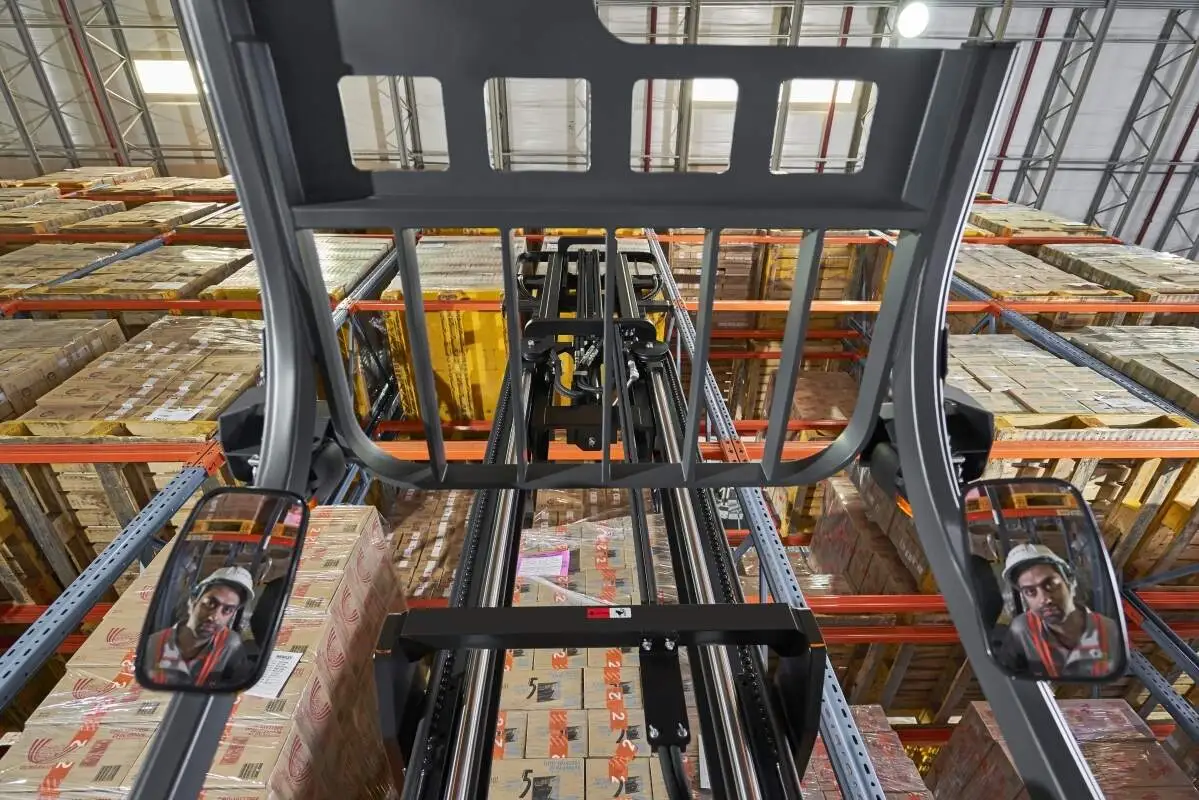
Stand-up forklifts are essential tools for efficient material handling, especially in confined warehouse spaces where maneuverability is key. Understanding their load capacity is critical to ensuring safe operations and preventing equipment damage or workplace incidents. Load capacity isn’t a fixed number; it varies across different models and is influenced by several key factors.
First, let’s explore the factors that impact stand-up forklift load capacity. The load center, typically measured as 24 inches from the front face of the forks, is a primary factor. If a load is placed beyond this standard center, the effective load capacity decreases significantly. Lift height also plays a role: as the forks rise to higher levels, the forklift’s stability reduces, lowering its maximum safe load. Additionally, terrain conditions matter—smooth indoor floors allow for full rated capacity, while uneven outdoor surfaces or ramps may require reducing the load weight to maintain stability. Attachments like side shifters or clamps can also reduce capacity by altering the forklift’s balance.
Different stand-up forklift models are engineered for specific tasks, each with distinct load capacity ranges. Narrow-aisle stand-up forklifts are designed for tight warehouse layouts, where space is limited. These models usually have a load capacity between 3,000 and 4,000 pounds at standard lift heights, but this drops to around 2,500 pounds when lifting to 20 feet or higher, making them ideal for high-density storage operations where vertical space is maximized.
Standard stand-up forklifts offer versatility for general indoor material handling tasks. Their load capacity typically ranges from 4,000 to 6,000 pounds, suitable for moving pallets, stacking goods at moderate heights, and handling a variety of inventory types. While capacity decreases with higher lifts, these models maintain reliable performance across most common warehouse tasks.
Heavy-duty stand-up forklifts are built to handle heavier loads in industrial settings such as manufacturing facilities or construction supply yards. With load capacities ranging from 6,000 to 10,000 pounds, these models feature robust frames and enhanced stability systems. However, they require flat, stable flooring and specialized operator training to ensure safe operation at full capacity.
To ensure safe and efficient use, always refer to the forklift’s data plate for precise capacity ratings based on your specific operating conditions. Never exceed the rated load, as this can lead to tip-overs or equipment failure. Regular maintenance checks, including inspections of brakes, tires, and hydraulic systems, also help maintain the forklift’s rated capacity over time. By understanding the load capacity references for different stand-up forklift models, you can select the right equipment for your needs and promote a safe workplace environment.