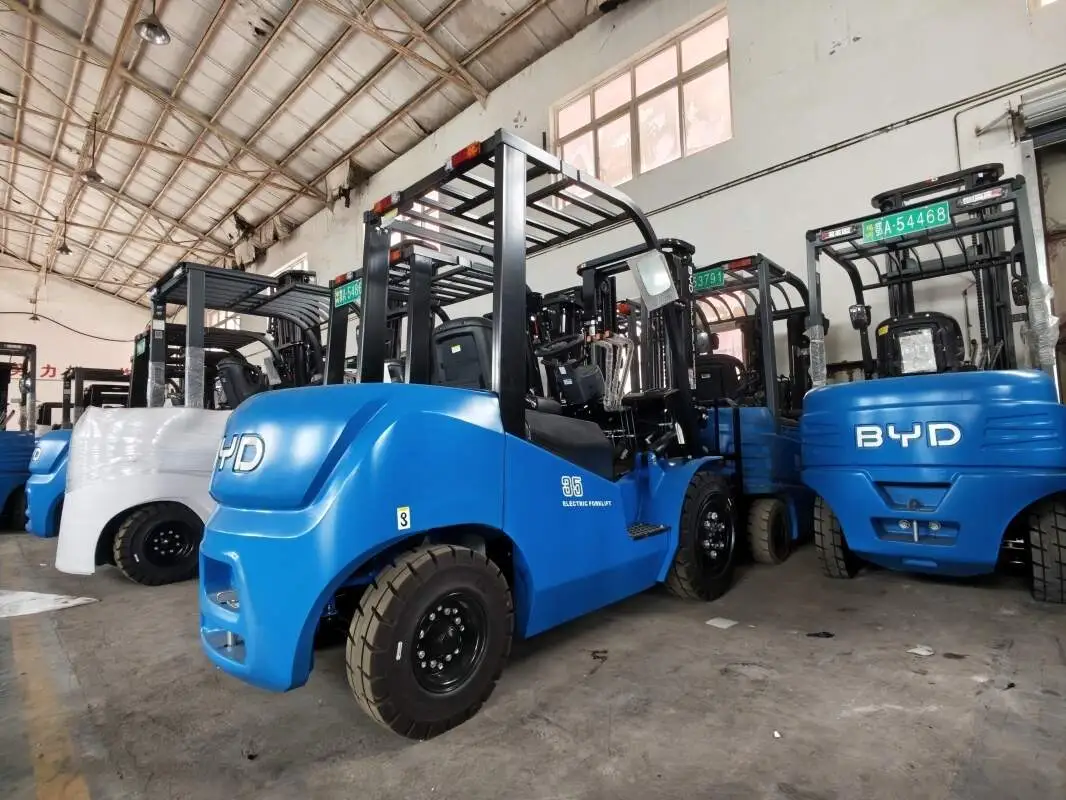
Stand-up warehouse forklifts are widely favored in modern storage facilities for their compact design and maneuverability, making them ideal for tight spaces and frequent material handling tasks. Understanding their load capacity references is critical for ensuring operational safety and efficiency, as load limits are not fixed values but vary based on multiple key factors.
One of the primary factors influencing load capacity is the forklift’s design specifications. The structural integrity of the frame, power of the electric motor, and stability of the counterweight system all play roles in determining how much weight the equipment can safely carry. Models engineered for heavy-duty tasks typically have reinforced frames and more powerful motors, supporting higher base load capacities compared to those designed for light-duty pallet moving.
Lift height is another crucial consideration. As the forklift raises a load to greater heights, the center of gravity shifts, reducing the maximum safe load capacity. For example, a stand-up forklift with a base load capacity of 3,000 pounds may only safely carry 2,200 pounds when lifting to a height of 12 feet. Operators must consult the manufacturer’s load capacity data corresponding to specific lift heights to avoid overloading.
Operating environmental conditions also impact load limits. Uneven or slippery floors can compromise the forklift’s stability, requiring a reduction in carried weight to prevent tipping. Similarly, operating on ramps or inclines demands lower load capacities, as the gravitational force adds stress to the equipment’s structure. In narrow aisle warehouses where maneuvering is frequent, operators may need to reduce loads slightly to maintain control during turns.
In practical warehouse operations, load capacity references should align with task requirements. For routine pallet moving on flat, even floors with low lift heights, operators can adhere to the forklift’s base load capacity. For high-level storage tasks or operations in uneven terrain, adjusting the load to match the reduced capacity at those conditions is essential.
Regular maintenance is also vital for preserving the forklift’s load capacity. Inspecting tires for proper inflation, checking hydraulic systems for leaks, and ensuring the counterweight is securely in place help maintain the equipment’s stability and load-bearing capabilities. Neglecting maintenance can lead to gradual degradation of performance, potentially reducing safe load limits over time.
By understanding these key factors and following load capacity references tailored to specific operational scenarios, warehouse teams can optimize material handling efficiency while minimizing the risk of accidents or equipment damage. Always prioritize consulting the equipment’s official documentation and conducting pre-operation checks to ensure compliance with safe load practices.