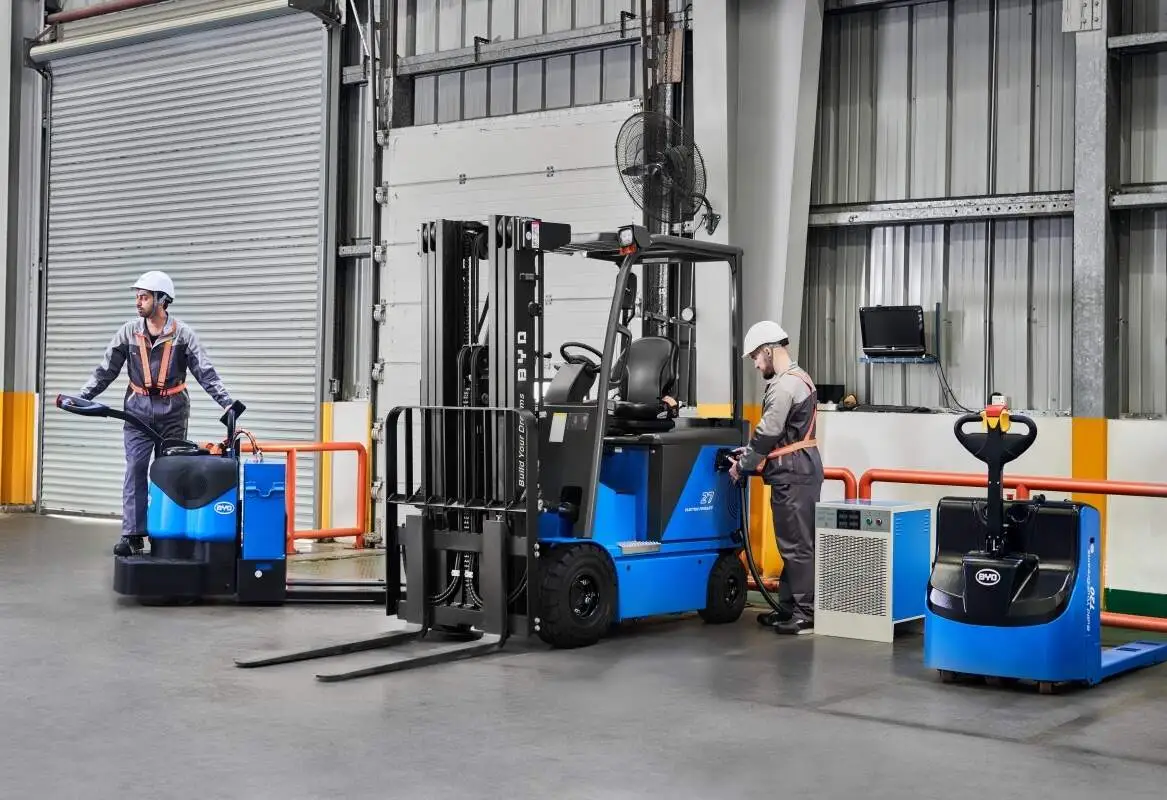
Industrial forklifts are core material handling equipment for manufacturing, warehousing and logistics sites, with their service lifespan directly tied to operational efficiency and long-term equipment investment value. Multiple interconnected factors determine how long a forklift can stay in safe, reliable working condition, rather than a fixed metric set during production.
Daily operational practices serve as a foundational influence on long-term equipment condition. Operating units within rated load limits, following site-specific speed rules for different terrain, and avoiding abrupt acceleration, braking or sharp turns reduces excess stress on structural frames, powertrains and braking systems. Consistent overloading, reckless operation on rough unmaintained surfaces, or misuse of forks to push heavy loads creates persistent strain that speeds up premature part wear, shortening usable service life over time.
Routine preventive maintenance is another key pillar supporting extended forklift lifespan. Sticking to scheduled checks for fluid levels, tire condition, brake wear, fork alignment and powertrain status for all unit types including electric models lets maintenance teams resolve minor issues before they escalate into system-wide damage. Skipping required service, using ill-fitting replacement parts, or ignoring early warning signs like unusual noises or reduced lifting capacity can trigger cascading failures that cut equipment life short while raising on-site safety risks.
Worksite environment also creates steady, long-term impact on wear rates. Units operating in settings with extreme temperatures, high abrasive dust, corrosive materials or constant moisture experience faster part degradation than those in clean, temperature-controlled indoor spaces. Targeted protective steps matched to site conditions help reduce unnecessary wear, supporting sustained reliable forklift performance.