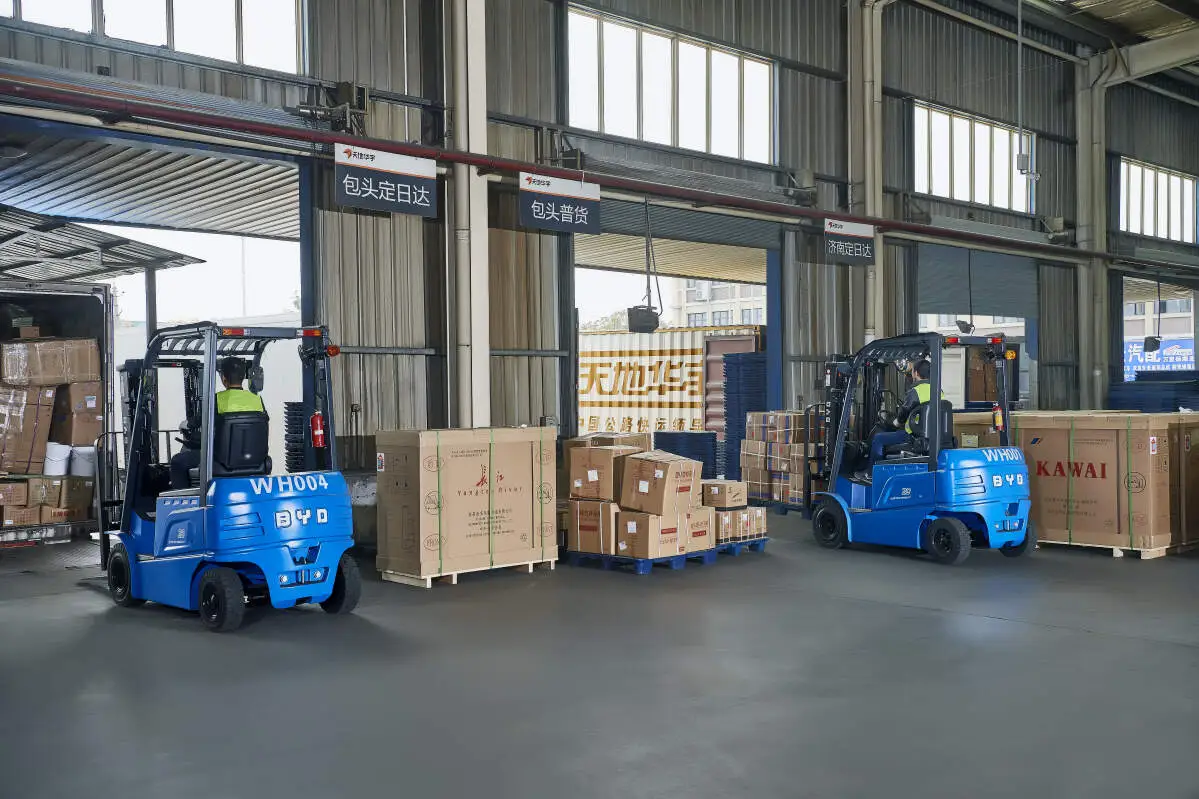
In light handling scenarios such as small-scale warehouses, retail stockrooms and workshop component transfer, hand-operated electric forklifts have emerged as practical and eco-friendly equipment, thanks to their compact size and easy maneuverability. Selecting the right model hinges on understanding core parameters that match specific operational requirements.
Load capacity is a primary consideration for light handling tasks. Most hand-operated electric forklifts designed for this purpose offer a load capacity ranging from 1 ton to 2 tons. This range is well-suited for moving small batches of cartons, packaged goods or lightweight industrial components. Matching the forklift’s capacity to the maximum weight of items regularly handled ensures safe operation and prevents unnecessary wear on the equipment.
Lifting height is another critical parameter. In typical light handling environments, a lifting height between 2 meters and 3 meters suffices for stacking goods on low-to-medium storage shelves. If upper-level storage access is required, models with higher lifting heights are available, but it’s important to note that increased height may slightly reduce the forklift’s stability. Thus, this should be evaluated based on actual site storage needs.
Turning radius plays a vital role in confined spaces. Light handling areas often feature narrow aisles and limited maneuvering room, so a compact turning radius is essential. Hand-operated electric forklifts usually boast a turning radius of 1.2 meters to 1.8 meters, allowing them to navigate tight corners and around obstacles with ease. This directly enhances operational efficiency in cramped workplaces.
Battery performance also matters for continuous light-duty operations. A battery life of 4 to 6 hours of continuous use is generally adequate for most daily light handling tasks. Additionally, fast-charging capabilities—enabling full battery recharge in 2 to 3 hours—can minimize downtime during peak working periods. Proper battery maintenance, such as regular charging cycles and cleaning, helps extend its service life.
Self-weight is linked to the forklift’s stability when lifting loads. For light handling tasks, a self-weight ranging from 1.5 tons to 2.5 tons strikes a balance between stability and agility. A heavier unit may offer better load stability but could be less responsive in tight spaces, while a lighter one might lack sufficient balance for heavier light loads. Assessing the work environment helps determine the ideal self-weight.
If you’re seeking reliable hand-operated electric forklifts tailored for light handling needs, Jianshu New Energy specializes in BYD electric forklifts, providing models optimized for various light-duty scenarios. For more product details and consultation, please reach out to us via email at 17399989919@163.com.